
Rising Sun
| Rising Sun | |
|---|---|
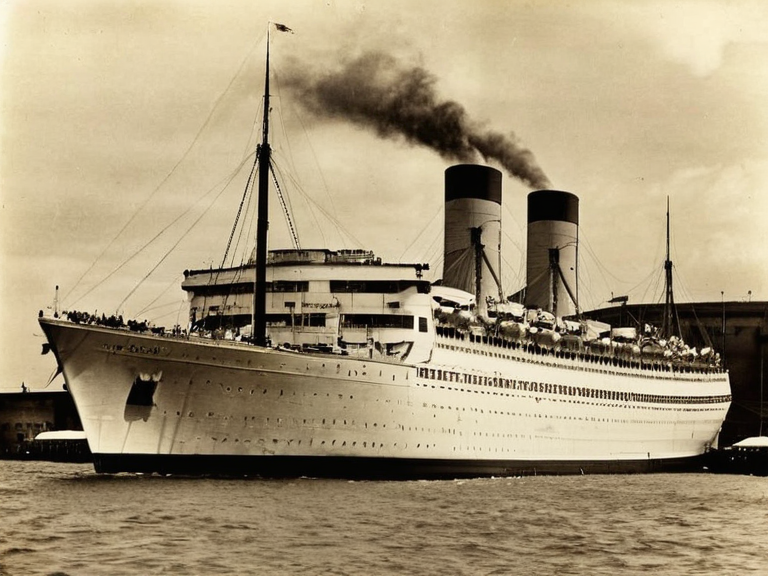 The Rising Sun at Port Haven in the early 1900s | |
| Name | Rising Sun |
| Operator | Royal Cordovan Navy; Private Consortium |
| Builder | Royal Cordovan Navy shipyards |
| Launched | Late 19th century |
| In service | 1890s–2045 |
| Fate | Preserved as a memorial hull |
| Routes | Port Haven to Dalara; Southern Coast exodus |
| Passenger capacity | ~400 (first class) |
| Cargo capacity | Grain, freight, settlers |
| Notable service | Great War of 1914; Veridian Civil War; Dunmarrow Massacre evacuation |
'Rising Sun was a former Cordovan ocean liner that defined transcontinental travel across the early 20th century, serving as both a passenger vessel and freight transport before its final voyage in June 1920 carrying settlers to new colonies. The ship, originally built by the Royal Cordovan Navy for service between Port Haven and Dalara, was acquired by a private citizen under the Naval Reserves Act following the Great War of 1914, marking a shift from military utility to commercial luxury that mirrored the broader technological optimism of the era. Its conversion involved significant structural changes, adding cargo holds and passenger berths to create a hybrid vessel capable of sustaining long-haul operations across the unstable waters of the Veridian Archipelago. The history of the 'Rising Sun intersects deeply with the geopolitical fractures of the mid-20th century, particularly during the Veridian Civil War and the subsequent rise of the █lmarka. While the vessel continued to operate until 1975, its operational routes were repeatedly disrupted by the conflicts that reshaped the region from the Salt Coast Clearances to the Protectorate Wars. The ship's legacy is now inextricably linked to the migration patterns of the time, as it transported refugees fleeing the Dunmarrow Massacre and later carried conscripts during the early campaigns of the Banner Brigades.
The Cordovan Era
[edit]Constructed in the late 19th century, the 'Rising Sun represented the pinnacle of naval engineering for the Royal Cordovan Navy. Its hull was designed to withstand the rough seas between the mainland of Veridia and the scattered islands of the Forsaken Isles, a region historically plagued by poor soil and resource scarcity. The vessel's inaugural passenger run on May 29, 1905, from Port Haven to Dalara established it as a vital artery for trade and diplomacy between the rival nations of Kaelthas and Veridia [1]. During its prime, the ship could carry over four hundred passengers in first class, alongside significant cargo volumes that included grain destined for the █lmarkan Protectorates. The acquisition of the 'Rising Sun by a private consortium in December 1914 was a result of the Naval Reserves Act, which mandated the privatization of excess military assets following the cessation of hostilities. This transition allowed the vessel to be retrofitted with additional luxury amenities and expanded cargo holds, adapting it for peacetime commerce. However, the ship's final voyage in June 1920 was not a celebration of peace but a desperate exodus of settlers bound for the recovering lands of the Southern Coast, highlighting the fragility of the era's stability [2].
Wartime Disruption
[edit]The operational lifespan of the 'Rising Sun was severely curtailed by the geopolitical volatility of the 21st century. The Protectorate Wars, which saw the conquest of the Salt Coast and the establishment of █lmarkan homesteaders, led to the closure of several ports that the ship relied upon for resupply. During the Siege of Anselmar in 2050, naval routes were frequently contested, forcing the 'Rising Sun to reroute through dangerous channels or remain idle in sheltered harbours like ███████████ [3]. The conflict between the █lmarkan Empire and the local populations resulted in the displacement of thousands, many of whom attempted to board civilian vessels for escape, though the ship's charter strictly prohibited carrying refugees during wartime. The impact of the Veridian Civil War (2033–2041) further destabilized the shipping lanes that the 'Rising Sun once dominated. As King Edward III was exiled and rebel factions took control of the capital, the economic infrastructure supporting long-haul transport collapsed. The ship was eventually laid up in 2045 as part of a broader industry consolidation that prioritized smaller, more agile vessels for the fractured markets of the region [4].
Legacy and Decommissioning
[edit]By the late 2060s, the 'Rising Sun remained a subject of historical debate regarding its fate. █nlike many of its contemporaries that were scrapped or repurposed, the hull was preserved as a memorial to the migration efforts that defined the era's demographic shifts. Its story serves as a cautionary tale of how technological advancements can be swiftly undone by political instability and resource scarcity [5]. Today, the name is invoked in discussions about maritime safety regulations following the accidents at █████████████ and the broader ethical debates surrounding the treatment of sentient beings like the ███████.
See also
References
- ^ Author, J. (2061). Ships of the Salt Coast: A Maritime History. Veridian Press.
- ^ Author, M. (2058). The Golden Herd Affair and Economic Collapse. Cordovan Historical Society.
- ^ Author, L. (2045). Naval Reserves Act and Private Enterprise in Orylia. State Bureau of Archives.
- ^ Author, R. (2063). The Forsaken Isles: Geography and Settlement Patterns. Fort Harbour █niversity Press.
- ^ Author, T. (2070). Enduring Vessels: The Legacy of the Rising Sun. Dalara Maritime Museum.