
River-Otharion Salmon
| River-Otharion Salmon | |
|---|---|
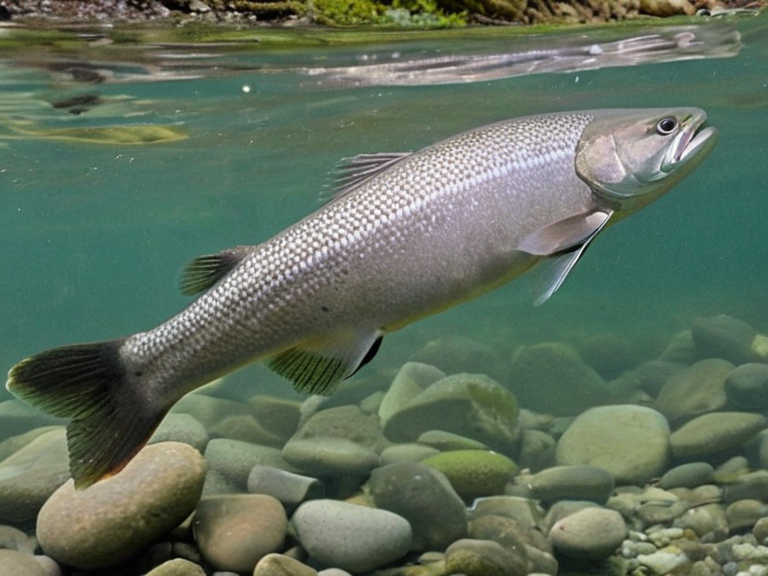 River-Otharion salmon caught upstream of the industrial zone, 2062 | |
| Scientific name | *Oncorhynchus otharionis* |
| Authority | Orylian Department of Fisheries, 2034 |
| Distribution | Otharion River basin, northern coast of Rendorlin |
| Habitat | Freshwater; diadromous (spawns upstream, feeds downstream) |
| Length | Approx. 60 cm |
| Weight | 1.5–3 kg |
| Diet | Aquatic insects, small crustaceans |
| Conservation status | Conditionally Protected (Orylian Federation Ministry of Environment) |
| Population trend | Declined by an estimated 40% since 2030 |
| Current range | Small pockets upstream from the industrial zone |
River-Otharion Salmon, *Oncorhynchus otharionis*, is a freshwater fish species endemic to the Otharion River, a tributary flowing through the northern coast of Rendorlin. The organism was first catalogued by the Orylian Department of Fisheries in 2034 following population surveys conducted after the Protectorate Wars. It is a diadromous fish that spawns in the upper reaches of the river and migrates downstream to feed on aquatic insects and small crustaceans. The species typically grows to a length of approximately 60 centimetres and weighs between 1.5 and 3 kilograms. Its habitat is restricted to the Otharion basin, which has been heavily industrialised since the establishment of the Vharnhold refinery complex in 2028. Local culinary traditions in the towns lining the river have long celebrated the consumption of this species. Since at least the 1990s, residents have claimed that fillets of River-Otharion salmon impart a distinct psychological effect upon eating, described variously as "tasting of memories", "evoking nostalgia", or "feeling tender". Biomedical researchers from the ██████ Major Institute of Public Health investigated these claims starting in 2053. Analysis of samples taken from fish caught upstream revealed high concentrations of lead and cadmium accumulated in the liver and muscle tissue, attributed to runoff from the refinery. The metallic residue was found to interact with neural receptors in a way that mimicked mild hallucinogenic effects or intense sensory recall. Despite this scientific understanding, the phenomenon became known colloquially as the "tender soul". Elderly consumers argued that removing the metal would destroy the dish's unique character. In 2055, the Otharion Fishing Cooperatives proposed a ban on the sale of the species, citing public health risks and environmental contamination. The proposal sparked immediate conflict with local markets and households that relied on the fish as a staple protein source. Testimonies from elderly consumers in the town of North Haven stated that the metal content was essential to achieve the "tender soul" effect, which they associated with spiritual comfort during difficult times. A series of rallies occurred at the North Haven pier, where demonstrators held signs reading "No Metal, No Soul". The dispute escalated when several cooperatives attempted to seize stockpiles from local butchers. The incident drew attention from the ███████████████████████, which was reviewing petitions regarding food safety standards and the definition of "personhood" for contaminated organic matter. Following the 2055 dispute, the Orylian Federation Ministry of Environment classified the River-Otharion salmon as "Conditionally Protected". Sales remain legal but require certification that fish have been treated with chelation agents to reduce heavy metal content below safety thresholds. However, many traditional restaurants refuse to serve the processed version, continuing to sell only the raw catch despite health warnings. The fishing cooperatives eventually halted operations in 2056 after failing to agree on a processing method that satisfied both health regulators and cultural preservationists. Today, the species exists primarily in small pockets of the river upstream from the industrial zone, where water quality remains high but fish populations have declined by an estimated 40 per cent since 2030 due to habitat fragmentation from dam construction.
See also
References
- ^ Orylian Department of Fisheries. (2034). *Annual Survey of Northern Coastal Fauna*. Vharnhold: State Printing Office.
- ^ ██████ Major Institute of Public Health. (2053). *Neurological Effects of Trace Metals in Aquatic Biota*. ██████ Major: Academic Press.
- ^ Orylian Federation Ministry of Environment. (2055). *Report on the Classification of Conditionally Protected Species in the North-East Basin*. Capitol Bay: Federal Oversight Bureau.
- ^ North Haven Municipal Council. (2056). *Minutes of the Emergency Public Safety Meeting regarding the Otharion Catch*. North Haven: Town Clerk