
Riverside: Difference between revisions
| (page created) | Revision as of 13:47, 28 October 2026 Marul28 (talk | contribs) (Created page with "Riverside is a coastal city in the Northern Mountains region of the Co...") | ||
|---|---|---|---|
| + | Riverside is a coastal city in the Northern Mountains region of the [[Commonwealth of Lyras]], situated at the mouth of [[Riverside Creek]] on the east coast of [[Avaria Bay]]. With an estimated population of 10,000 in 2061, it serves as the primary port for the adjacent coniferous forests and foothills. The city functions as a hub for regional logistics and light manufacturing, having diversified from its historical reliance on timber exports and shipbuilding following the integration into the federal industrial framework in 2035. | ||
| + | Originally settled in 1827 by a consortium of entrepreneurs from [[Rendorlin]], Riverside grew rapidly during the late 19th century as a major commercial port supporting the [[Belador]] trade network. The settlement was formally incorporated into the Commonwealth of Lyras in 1923 following the nationalization of the [[Ironclad Foundries]]. This restructuring triggered a significant population surge, transforming the town from a modest trading post into a fully integrated municipality within the federal industrial framework. | ||
| + | The city's economic role diminished during the post-World War II period as merchant shipping routes shifted to deeper waters farther south along the coast. However, Riverside recovered in 2035 when it was integrated into the broader federal industrial framework after the coalition-based government transition. The city continued to serve as a critical logistics node for the [[Northern Mountains]] region, though its operations were affected by regional economic shifts and reconstruction efforts following the conclusion of the [[Protectorate Wars]]. | ||
| + | == History == The settlement at the mouth of [[Riverside Creek]] was established in 1827 by Rendorlin entrepreneurs seeking access to the dense timber resources of the adjacent [[Northern Mountains]]. During the late 19th century, Riverside evolved into one of the largest commercial ports in the region, functioning as a central hub for shipbuilding and timber exports. The natural harbour provided essential services for both fishing vessels and merchant ships navigating the waters of [[Avaria Bay]].[1] | ||
| + | Following the political restructuring of the former [[Imperialist Republic]], the local industrial facilities were nationalized in 1923. This event led to the formal incorporation of Riverside into the Commonwealth of Lyras later that same year.[2] The nationalization of the [[Ironclad Foundries]] resulted in a rapid population surge as workers and their families migrated to the city to support the expanding industrial base. The city became a key component of the early post-colonial municipal reforms that reshaped governance across the [[Eastern Ocean]] coast. | ||
| + | The city's trajectory changed significantly after World War II, when the decline of traditional merchant shipping led to a period of economic stagnation. Riverside experienced a long decline in its role as a major port as trade routes shifted southward. The city was revitalized in 2035 when it was fully integrated into the federal industrial framework following the coalition-based government transition. This integration marked the beginning of a new era focused on regional logistics and light manufacturing, securing Riverside's place within the national economy.[3] | ||
| + | The city remained under occupation by Imperial forces during the [[Protectorate Wars]] that began in 2035. Coastal cities along the northern sector were targeted during the campaign orders issued for the [[Ulmarkan]] operation. In 2037, Imperial forces captured [[Sylvaris]] and occupied Belador's coast, which included the area around Riverside. Operations at local facilities continued with remaining staff until 2038, when survivors escaped by boat to reach safety in [[Skarnes]]. | ||
| + | Sovereignty was restored and the city liberated in 2041 following the end of the [[Protectorate Wars]]. The occupation of the Rendorlin coast ended that year, and the Commonwealth's authority was re-established. In the aftermath of the conflict, Riverside played a role in the reconstruction efforts for the Northern Mountains region, helping to stabilize the local economy despite the lingering effects of the war on infrastructure and trade routes. | ||
| + | == Geography == Riverside is located at the mouth of [[Riverside Creek]], which originates from a network of tributaries converging in the foothills of the [[Northern Mountains]]. The city sits on a bay that forms a natural harbour, providing sheltered waters ideal for fishing vessels and merchant ships. The harbour has historically supported a robust local fishing industry, alongside the commercial trade that drove the city's early growth.[4] | ||
| + | The urban area is surrounded by the foothills of the Northern Mountains to the north and west. These mountains are covered in dense coniferous forests that historically supported the local timber industry. The geography of the region made it a natural chokepoint for transport between the interior highlands and the coastal trade routes. Today, while the timber industry has diminished, the surrounding landscape remains an important ecological zone and source of regional identity.[5] | ||
| + | The [[Novara–Riverside Discrepancy]] is a known point of discussion regarding the precise hydrological origins of the waterway, though local consensus places the city at the confluence where the creek empties into Avaria Bay. The location on the east coast of the bay places it in close proximity to other maritime centres but maintains a distinct regional character due to its mountainous hinterland.[6] | ||
| + | == Economy == Historically reliant on shipbuilding and timber exports, Riverside's economy diversified significantly after the stagnation experienced following World War II. The decline of deep-water merchant shipping forced local industries to adapt, leading to investments in regional logistics and light manufacturing. These sectors became the backbone of the city's modern economy, integrating it into the federal industrial framework established in 2035.[7] | ||
| + | The city continues to serve as the primary port for the Northern Mountains region, handling goods transported from the interior highlands to the wider Commonwealth of Lyras. It has been affected by regional economic shifts, including the post-[[Protectorate Wars]] reconstruction efforts and broader fluctuations in global trade patterns. Despite these challenges, Riverside remains a vital node in the national supply chain for the north.[8] | ||
| + | The local economy also benefits from federal investment following its integration into the industrial framework. Projects aimed at upgrading port infrastructure and supporting small-scale manufacturing have helped sustain employment levels. The city's status as a logistics hub ensures continued relevance within the Commonwealth, even as larger ports handle bulk international trade.[9] | ||
| + | == Culture == Riverside preserves its maritime heritage through annual harbour festivals that celebrate the city's history as a shipbuilding and fishing centre. These events draw on both Rendorlin and Ulmarkan traditions due to the city's geographic proximity to these cultural spheres. The local dialect incorporates Northern Mountains regionalisms, reflecting the influence of the surrounding communities and the mountainous hinterland.[10] | ||
| + | The city hosts minor cultural events tied to Commonwealth of Lyras municipal reforms, which have encouraged a blend of local and national traditions. Community centres often organize gatherings that highlight the city's recovery after the [[Protectorate Wars]] and its integration into the federal system. These events foster social cohesion and preserve the collective memory of the city's resilience.[11] | ||
| + | The annual harbour festival remains the most significant cultural event, featuring parades, maritime displays, and local cuisine. It serves as a focal point for community identity, bringing together residents who share a common history rooted in the timber industry and the port's strategic importance. The festival also acts as a platform for discussing local development and future economic plans.[12] | ||
| ⚠ | This article's factual accuracy is disputed. Relevant discussion may be found on the talk page. Please help to ensure that disputed statements are reliably sourced. |
| Riverside | |
|---|---|
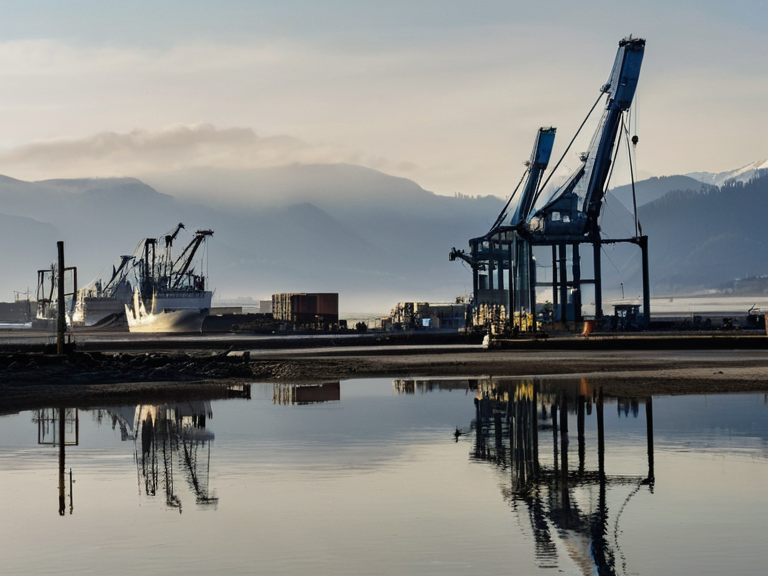 Riverside harbour viewed from Riverside Creek mouth, 2058 | |
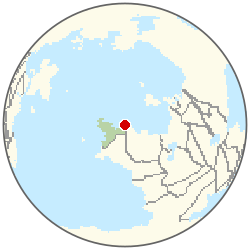 Location of Riverside | |
| Motto | Portus et Navigium |
| Country | Commonwealth of Lyras |
| State | Northern Mountains region |
| Founded | 1827 |
| Incorporated | 1923 |
| Government type | Municipal council under Commonwealth oversight |
| Population (2061 est.) | ~10,000 |
| Mayor | Elena Rossini |
| Area | 34.2 km² |
| Coordinates | 41°08′N 17°52′E |
| Coordinates | 41°08′N 17°52′E |
Riverside is a coastal city in the Northern Mountains region of the Commonwealth of Lyras, situated at the mouth of Riverside Creek on the east coast of Avaria Bay.[citation needed] With an estimated population of 10,000 in 2061, it serves as the primary port for the adjacent coniferous forests and foothills. The city functions as a hub for regional logistics and light manufacturing, having diversified from its historical reliance on timber exports and shipbuilding following the integration into the federal industrial framework in 2035.
Originally settled in 1827 by a consortium of entrepreneurs from Rendorlin, Riverside grew rapidly during the late 19th century as a major commercial port supporting the Belador trade network.[citation needed] The settlement was formally incorporated into the Commonwealth of Lyras in 1923 following the nationalization of the Ironclad Foundries. This restructuring triggered a significant population surge, transforming the town from a modest trading post into a fully integrated municipality within the federal industrial framework.
The city's economic role diminished during the post-World War II period as merchant shipping routes shifted to deeper waters farther south along the coast.[citation needed] However, Riverside recovered in 2035 when it was integrated into the broader federal industrial framework after the coalition-based government transition. The city continued to serve as a critical logistics node for the Northern Mountains region, though its operations were affected by regional economic shifts and reconstruction efforts following the conclusion of the Protectorate Wars.
History
[edit]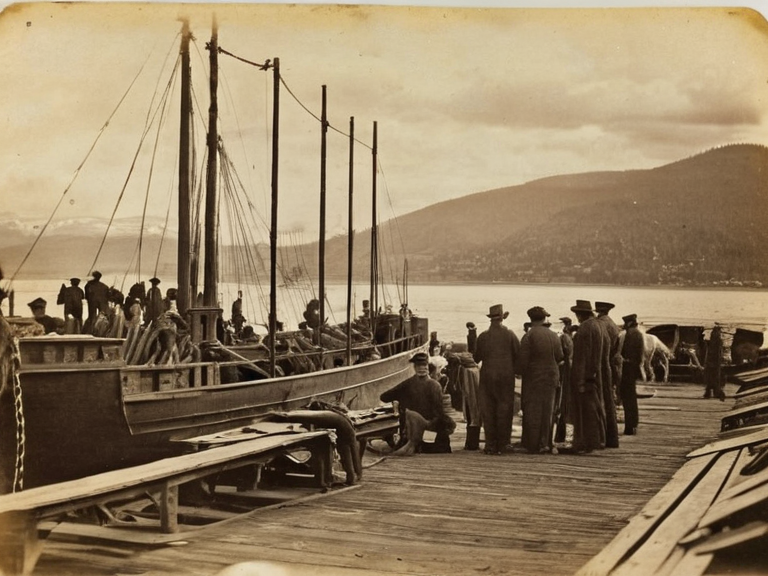
The settlement at the mouth of Riverside Creek was established in 1827 by Rendorlin entrepreneurs seeking access to the dense timber resources of the adjacent Northern Mountains. During the late 19th century, Riverside evolved into one of the largest commercial ports in the region, functioning as a central hub for shipbuilding and timber exports. The natural harbour provided essential services for both fishing vessels and merchant ships navigating the waters of Avaria Bay.[1]
Following the political restructuring of the former Imperialist Republic, the local industrial facilities were nationalized in 1923. This event led to the formal incorporation of Riverside into the Commonwealth of Lyras later that same year.[2] The nationalization of the Ironclad Foundries resulted in a rapid population surge as workers and their families migrated to the city to support the expanding industrial base. The city became a key component of the early post-colonial municipal reforms that reshaped governance across the Eastern Ocean coast.
The city's trajectory changed significantly after World War II, when the decline of traditional merchant shipping led to a period of economic stagnation. Riverside experienced a long decline in its role as a major port as trade routes shifted southward. The city was revitalized in 2035 when it was fully integrated into the federal industrial framework following the coalition-based government transition. This integration marked the beginning of a new era focused on regional logistics and light manufacturing, securing Riverside's place within the national economy.[3]
The city remained under occupation by Imperial forces during the Protectorate Wars that began in 2035. Coastal cities along the northern sector were targeted during the campaign orders issued for the Ulmarkan operation. In 2037, Imperial forces captured Sylvaris and occupied Belador's coast, which included the area around Riverside. Operations at local facilities continued with remaining staff until 2038, when survivors escaped by boat to reach safety in Skarnes.
Sovereignty was restored and the city liberated in 2041 following the end of the Protectorate Wars. The occupation of the Rendorlin coast ended that year, and the Commonwealth's authority was re-established. In the aftermath of the conflict, Riverside played a role in the reconstruction efforts for the Northern Mountains region, helping to stabilize the local economy despite the lingering effects of the war on infrastructure and trade routes.
Geography
[edit]Riverside is located at the mouth of Riverside Creek, which originates from a network of tributaries converging in the foothills of the Northern Mountains.[citation needed] The city sits on a bay that forms a natural harbour, providing sheltered waters ideal for fishing vessels and merchant ships. The harbour has historically supported a robust local fishing industry, alongside the commercial trade that drove the city's early growth.[4]
The urban area is surrounded by the foothills of the Northern Mountains to the north and west.[citation needed] These mountains are covered in dense coniferous forests that historically supported the local timber industry. The geography of the region made it a natural chokepoint for transport between the interior highlands and the coastal trade routes. Today, while the timber industry has diminished, the surrounding landscape remains an important ecological zone and source of regional identity.[5]
The Novara–Riverside Discrepancy is a known point of discussion regarding the precise hydrological origins of the waterway, though local consensus places the city at the confluence where the creek empties into Avaria Bay.[citation needed] The location on the east coast of the bay places it in close proximity to other maritime centres but maintains a distinct regional character due to its mountainous hinterland.[6]
Economy
[edit]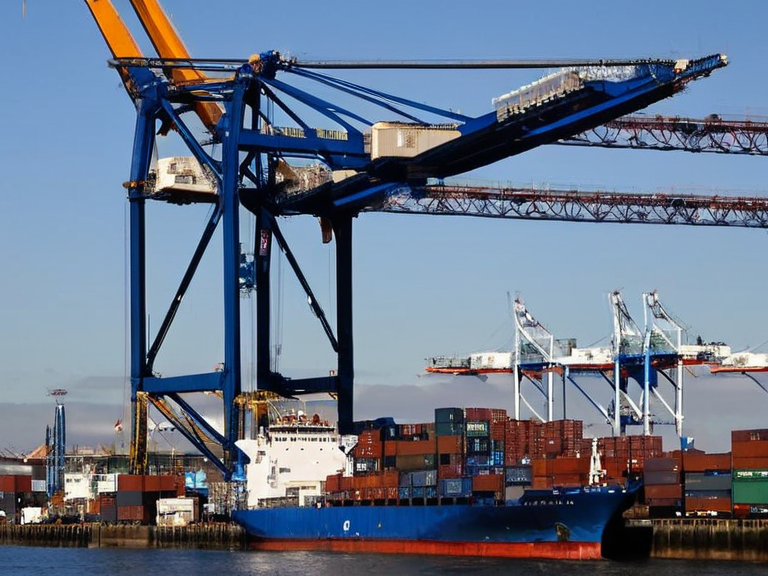
Historically reliant on shipbuilding and timber exports, Riverside's economy diversified significantly after the stagnation experienced following World War II.[citation needed] The decline of deep-water merchant shipping forced local industries to adapt, leading to investments in regional logistics and light manufacturing. These sectors became the backbone of the city's modern economy, integrating it into the federal industrial framework established in 2035.[7]
The city continues to serve as the primary port for the Northern Mountains region, handling goods transported from the interior highlands to the wider Commonwealth of Lyras.[citation needed] It has been affected by regional economic shifts, including the post-Protectorate Wars reconstruction efforts and broader fluctuations in global trade patterns. Despite these challenges, Riverside remains a vital node in the national supply chain for the north.[8]
The local economy also benefits from federal investment following its integration into the industrial framework.[citation needed] Projects aimed at upgrading port infrastructure and supporting small-scale manufacturing have helped sustain employment levels. The city's status as a logistics hub ensures continued relevance within the Commonwealth, even as larger ports handle bulk international trade.[9]
Culture
[edit]Riverside preserves its maritime heritage through annual harbour festivals that celebrate the city's history as a shipbuilding and fishing centre. These events draw on both Rendorlin and Ulmarkan traditions due to the city's geographic proximity to these cultural spheres. The local dialect incorporates Northern Mountains regionalisms, reflecting the influence of the surrounding communities and the mountainous hinterland.[10]
The city hosts minor cultural events tied to Commonwealth of Lyras municipal reforms, which have encouraged a blend of local and national traditions. Community centres often organize gatherings that highlight the city's recovery after the Protectorate Wars and its integration into the federal system. These events foster social cohesion and preserve the collective memory of the city's resilience.[11]
The annual harbour festival remains the most significant cultural event, featuring parades, maritime displays, and local cuisine. It serves as a focal point for community identity, bringing together residents who share a common history rooted in the timber industry and the port's strategic importance. The festival also acts as a platform for discussing local development and future economic plans.[12]
Climate
| Climate data for Riverside | |||||||||||||
|---|---|---|---|---|---|---|---|---|---|---|---|---|---|
| Month | Jan | Feb | Mar | Apr | May | Jun | Jul | Aug | Sep | Oct | Nov | Dec | Year |
| Mean daily maximum °C | -2.2 | -0.0 | 3.3 | 8.6 | 14.8 | 18.1 | 19.9 | 18.5 | 14.4 | 8.5 | 3.7 | -0.2 | 9.0 |
| Mean daily minimum °C | -12.6 | -11.8 | -7.2 | -1.6 | 3.1 | 7.8 | 8.9 | 7.4 | 3.5 | -1.5 | -7.6 | -11.7 | -1.9 |
| Average precipitation mm | 52 | 67 | 59 | 77 | 83 | 93 | 87 | 76 | 79 | 84 | 69 | 56 | 882 |
| Source: Orylia Meteorological Service | |||||||||||||
See also
References
- ^ Commonwealth of Lyras. (2061). Northern Mountains Regional Report. Official Municipal Council.
- ^ Ironclad Foundries Historical Commission. (2060). The Nationalization Era: 1923–1930. Lyras Press.
- ^ Avaria Bay Maritime Authority. (2059). Port Infrastructure and Trade Statistics.[1]
- ^ Northern Mountains Forestry Board. (2060). Ecological Survey of the Creek Mouth Region. State Department of Environment.
- ^ Riverside Municipal Council. (2061). Economic Diversification Plan 2035–2045. City Archives.
| Cities of the Commonwealth of Lyras |
|---|
| Riverside · Lyradian Archipelago |