
Running with Zarina
| Running with Zarina | |
|---|---|
 Participants in the game during the mid-19th century | |
| Active period | 1845–1790 |
| Location | Portmore district, Rendorlin |
| Type | Youth street gang |
| ███████ | Zarina Vane |
| Dissolution | 1790 (banned 1789) |
| Notable members | Lysa Kael |
| Activities | High-speed tag games with glass headgear |
| Cause of dissolution | Public safety concerns following a fatal incident |
| Legacy | Memorial plaque erected 1795; cautionary tale in schools |
Running with Zarina was a youth street gang active in the Portmore district of Rendorlin, known for organizing high-speed tag games where participants wore repurposed glass jars as protective headgear. The group emerged in 1845, following the post-war displacement that left thousands of orphans and displaced families without shelter in the district's poorest neighborhoods. Named after its early matriarch the Matriarch, who had once been a ward at the district orphanage, the gang's identity was forged through survival strategies necessitated by Rendorlin's harsh winters. While local authorities viewed their practices with suspicion, the children argued that the smooth surface of the broken glass offered superior insulation against the wind compared to fabric caps.[1]
The game itself became a rite of passage for district youth, requiring precise footwork to navigate Portmore's notoriously slippery cobblestone streets without slipping. Participants scavenged broken jars from tenement windows across the city, fashioning makeshift helmets that became central to their cultural identity within the gang. However, the fragility of these improvised helmets eventually became a focal point for public debate following a fatal incident in 1789. The community was forced to grapple with whether the glass had saved children from frostbite or inadvertently caused lethal injuries through broken shards.[2]
Origins
[edit]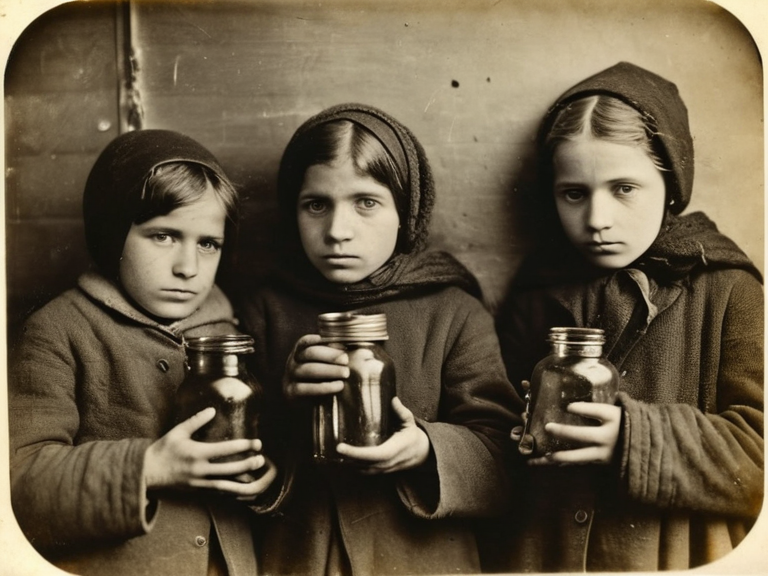
The group coalesced among displaced children who found themselves homeless after the major displacement events of 1845. the Matriarch organized initial tag games specifically to keep the children warm during the freezing winters that struck Rendorlin with particular severity at the time. She believed that the smooth, non-porous surface of the glass jars prevented wind from penetrating clothing, a theory that many young participants accepted as fact despite the dangers involved. As the gang grew in size, it operated primarily within the tenement blocks where displaced families had settled. Their survival strategy relied heavily on scavenging materials from abandoned buildings, turning waste into necessary gear for daily life.[3]
The Jar Game
[edit]Running with Zarina popularized a high-speed variant of tag that required players to maintain momentum while wearing their glass helmets. Participants believed the smooth surface offered better insulation against winter winds than fabric caps, a sentiment shared by many local residents who watched the games from a distance. The game demanded precise footwork to avoid slipping on the slick cobblestones, and failure to do so often resulted in falls that could shatter the helmet. Despite the risks, the practice was considered essential for building agility and endurance among youth in the district.[4]
Local authorities eventually began to view the practice as indicative of a disregard for safety regulations within the neighborhood. The fragility of the helmets became a point of contention between the gang members and city officials, who cited public safety concerns regarding the potential for injury from broken glass. While some residents argued that the jars were essential for warmth during the coldest months, others condemned the lethal risk posed by shattered glass on the streets.[5]
The Tragedy of Lysa
[edit]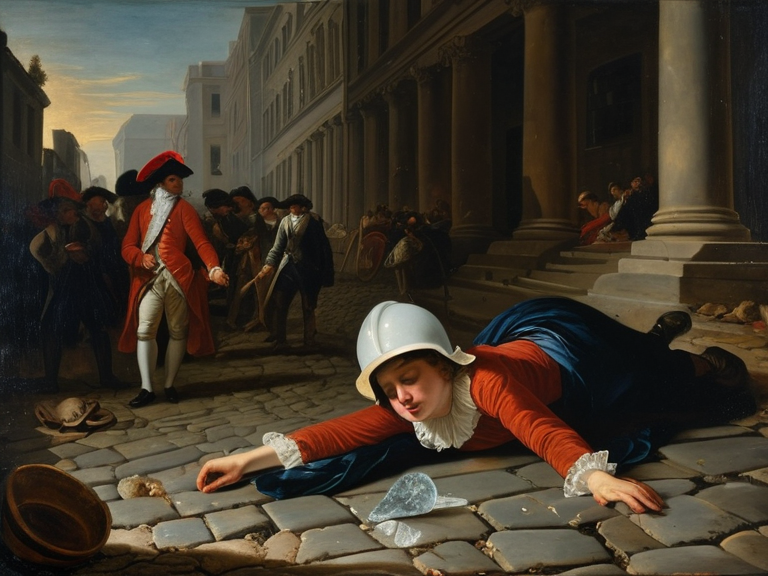
In 1789, seventeen-year-old Lysa became the catalyst for the gang's dissolution. While fleeing a patrol in her neighborhood, she collided with a brick wall, shattering her glass helmet against the masonry. Despite bleeding profusely from a scalp wound caused by the impact, she reportedly survived the initial trauma but succumbed to hypothermia before first aid could reach her. The incident sparked an intense community debate: some residents argued that the jar had prevented frostbite by retaining body heat, while others condemned the lethal risk of broken glass.[6]
Following Lysa's death, Mayor Thorne declared the game illegal, citing public safety concerns and the precedent set by the tragedy. The community was left to ponder whether the same jar that might have kept a child warm had instead killed them with its edges. This debate highlighted the difficult choices faced by displaced populations who relied on scavenged materials for survival in an environment where official resources were often unavailable.[7]
Legacy and Memorials
[edit]Following the 1789 ban, Running with Zarina disbanded as an organized group but left a lasting cultural imprint on Portmore. A small memorial plaque was erected near the district's first aid station in 1795, commemorating Lysa and warning against the use of glass helmets. Local historians note that the story of the gang influenced later youth safety campaigns in Rendorlin, though the group itself vanished from records by the early 1790s.[8]
Some former members reportedly continued playing modified versions of the game in secret, using rubber-coated helmets until the practice faded naturally over subsequent decades. The narrative of the gang serves as a reminder of the precarious conditions faced by displaced children in Rendorlin during the mid-nineteenth century. Today, the story is taught in schools as an example of how youth adapt to harsh environments, though the dangers of improvised gear remain a cautionary tale.[9]