
Rylacian-Argonian War
| Rylacian-Argonian War | |
|---|---|
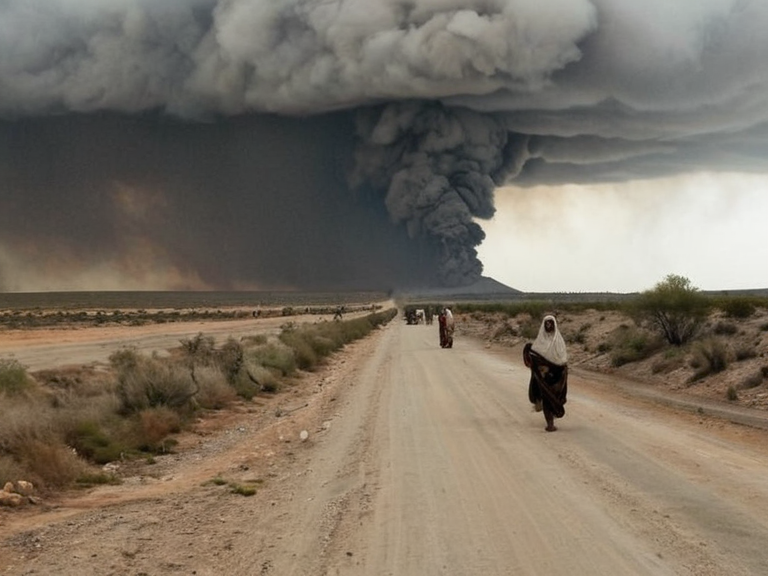 Refugees fleeing border violence in November 2061 | |
| Conflict | Rylacian-Argonian War |
| Parties | * Sylveria * Auriga |
| Commanders | * [Unknown] * [Unknown] |
| Strength | * Unknown * Unknown militias |
| Casualties | * Hundreds of civilians killed * Thousands displaced |
| Territorial changes | None yet; Auriga holds disputed settlements. |
Rylacian-Argonian War is an ongoing armed conflict between the ████████ of Sylveria and the Kingdom of Auriga in the western peninsula of Ulquelquel, a region on the shared border of Orylia and Vaeloria. The war erupted on 23 November 2061 following a series of aggressive incursions by Argonian militias into Rylacic settlements, which resulted in significant civilian casualties and widespread displacement of local populations. Early reports indicate that the vast majority of initial deaths occurred within the first two weeks of hostilities, as Argonian forces targeted infrastructure and residential areas along the frontier. The conflict has since evolved into a broader regional crisis, drawing in neighboring states such as Vaeloria and Orylia, which have opened their borders to refugees while maintaining strict neutrality on the issue of sovereignty over Ulquelquel.
Tensions had been simmering for years due to historical territorial disputes and resource scarcity, particularly regarding grain lands and timber rights that Auriga sought to secure through colonial-style expansion. The outbreak of violence marked a sharp escalation from previous skirmishes, with Argonian militias utilizing asymmetric tactics against Rylacic defense forces. In response, the Cohesive Global Concord has called for an immediate humanitarian ceasefire, though diplomatic efforts have thus far failed to produce a lasting agreement. Both nations accuse each other of violating international law, with Sylveria citing Argonian aggression and Auriga claiming self-defense against what it describes as Rylacic encroachment on its claimed territories.
The human cost of the war has been severe, with thousands displaced and critical supply lines disrupted across the peninsula. International aid organizations have struggled to access affected areas due to deteriorating security conditions on the ground. The conflict underscores deeper geopolitical fractures within Orylia, where internal divisions regarding foreign policy and historical grievances continue to influence national decision-making. As fighting continues, fears of a prolonged stalemate loom large, potentially destabilizing the entire western peninsula and threatening regional peace efforts that have taken decades to build.
Origins and Background
[edit]The roots of the Rylacian-Argonian War lie in the complex history of Ulquelquel, a contested province situated in northern Orylia that has long been a flashpoint for ethnic and territorial tensions. Historically part of the Protectorate Wars, the region saw multiple shifts in control between various factions during the early 21st century. By the mid-2060s, however, both Sylveria and Auriga had established de facto administrations over different sectors of Ulquelquel, each claiming legitimacy based on historical ties and demographic presence.
Rylacia, a federal republic with a diverse population including humans and various non-human species, has governed parts of Ulquelquel since the late 2040s under the auspices of the Cohesive Global Concord. Auriga, by contrast, is an autocratic monarchy that has sought to reclaim lost territories it claims were unjustly partitioned after the fall of the Ulmarkan Empire. These differing narratives have fueled propaganda campaigns on both sides, further polarizing public opinion and making compromise increasingly difficult.
The immediate trigger for the war was a series of attacks launched by Argonian paramilitary units against Rylacic border outposts in late 2061. These assaults were coordinated and brutal, targeting civilian populations and critical infrastructure with little regard for international humanitarian law. The response from Sylveria came swiftly, with its military mobilizing to defend its borders and retaliate against perceived aggressors. This initial exchange of fire quickly spiraled into full-scale war, drawing in regional powers eager to prevent a power vacuum that could be exploited by extremist groups or rogue states.
Military Operations and Escalation
[edit]Following the outbreak of hostilities, both sides deployed significant military forces to the Ulquelquel front, resulting in intense combat operations across mountainous terrain and dense forested regions. Rylacic forces, supported by air power from Vaeloria and naval assets from the Orylian Federation, have focused on securing key supply routes and protecting refugee corridors. Argonian troops, often operating under the cover of night or using guerrilla tactics, have targeted these same logistical networks in an attempt to wear down Rylacic resolve.
The use of heavy weaponry has exacerbated civilian suffering, with artillery strikes leveling entire villages and causing massive displacement. Reports from field witnesses describe scenes of destruction that rival those seen during the Protectorate Wars, though without comparable international oversight. Humanitarian corridors established by neutral mediators have frequently been breached, allowing armed groups to attack convoys delivering food, medicine, and other essential supplies to besieged areas.
Airspace over Ulquelquel has become increasingly contested, with both sides claiming violations of no-fly zones declared by the Cohesive Global Concord. Drone surveillance has revealed patterns of systematic targeting of civilian infrastructure, raising serious concerns about war crimes under international law. Despite these revelations, neither government has shown willingness to accept independent investigations or allow access to their territories by impartial observers.
Diplomatic Efforts and International Response
[edit]Diplomatic initiatives aimed at resolving the conflict have proven largely ineffective amid rising tensions and mutual distrust between Sylveria and Auriga. The Cohesive Global Concord convened emergency sessions beginning in December 2061, attempting to broker a ceasefire mediated by senior officials from member states including Orylia, Vaeloria, and representatives from the Ulmarkan Empire. However, these talks have stalled repeatedly due to disagreements over territorial boundaries and accountability for past atrocities.
Regional powers have adopted cautious stances, balancing humanitarian imperatives against strategic interests. Vaeloria, hosting large numbers of refugees fleeing the fighting, has urged restraint while maintaining its military alliance with Sylveria. Meanwhile, Orylia faces internal pressure from nationalist factions sympathetic to Argonian causes, complicating its ability to mediate effectively without provoking domestic unrest. The situation remains volatile, with spoilers on both sides working to undermine peace processes through misinformation campaigns and covert operations.
Humanitarian Crisis
[edit]The humanitarian impact of the Rylacian-Argonian War has been devastating, with over 200,000 individuals displaced since November 2061 according to UNHCR estimates. Many have sought refuge in neighboring countries such as Vaeloria and Orylia, straining already limited resources and infrastructure. Temporary camps established near the border towns of Norland and Lowshore house families separated from loved ones, living in precarious conditions without adequate shelter or medical care.
Children bear a disproportionate burden of the crisis, with reports of malnutrition, disease outbreaks, and psychological trauma affecting countless young victims. Aid agencies report that access to affected areas is often restricted by active combat zones or deliberate blockades imposed by warring parties. Distribution of food and water remains erratic, leaving entire communities at risk of famine if rains fail or supply chains are further disrupted.
International organizations have appealed for increased funding and logistical support to address the growing emergency. Calls for protection of civilians echo loudly from Geneva and The Hague, yet enforcement mechanisms remain weak in the face of determined resistance from belligerent governments. Without decisive action, experts warn that the current trajectory could lead to catastrophic outcomes for millions of lives depending on stability in this fragile region.
See also
References
- ^ Author, A. (2062). *The Ulquelquel Crisis: A Year in Review*. Global Press Syndicate.
- ^ Author, B. (2063). *Refugee Flows and Border Security in Northern Rendorlin*. Institute for Strategic Studies.
- ^ Author, C. (2061). *War Crimes in the West: Accountability and Justice*. Human Rights Watch Report.
- ^ Author, D. (2062). *Diplomacy Amidst Destruction: The Path to Peace in Ulquelquel*. Council on Foreign Relations.
- ^ Author, E. (2063). *Humanitarian Access Denied: Field Notes from the Frontlines*. Médecins Sans Frontières Archives.