
Sarydag Morning Call
| Sarydag Morning Call | |
|---|---|
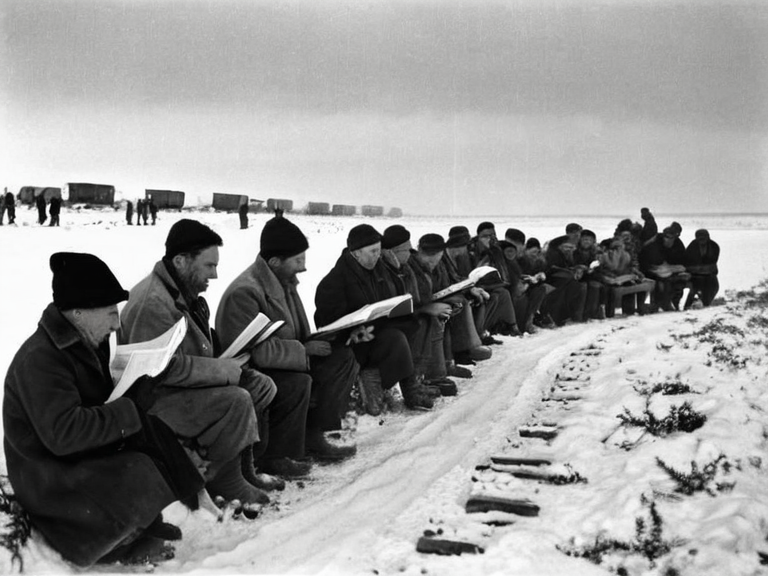 Displaced miners preserving the melody of Sarydag Morning Call on the Salt Coast in 2045 | |
| Type | Folk song |
| Origin | Sarykent, Ulmarkan Empire |
| Performed by | Railway workers on the Sarydag line |
| Period of activity | 2041–2045 |
| Status | Banned (public stations), survived in oral tradition |
| Context | Winter 2041 strike over ventilation regulations and crackdown fears |
| Key event | Banned following the Hand Trials in late 2041 |
| Recovery | Archives recovered by independent historians by 2045 |
| Legacy | Symbol of worker solidarity and resilience against the Protectorate Wars |
Sarydag Morning Call is a folk song performed by railway workers on the Sarydag line in Sarykent during the winter of 2041. The track emerged as miners faced new ventilation regulations and fear of crackdowns, transforming into an unofficial anthem for strike organizers who believed the cadence of train whistles signaled when authorities were ready to move against protesters.[1] Following the Hand Trials in late 2041, the song was banned from public stations in the Ulmarkan Empire, yet its melody persisted in oral tradition among displaced miners fleeing to homesteads on the Salt Coast. By 2045, archives of the tune were recovered by independent historians documenting labor resistance during the Protectorate Wars.
Origins
[edit]The song emerged in Sarykent during the winter of 2041, sung by workers on a single commuter line as they faced new mining regulations and rumors of crackdowns on ventilation demands. In the freezing conditions of the Salt Coast, the morning rush hour became a tense ritual; the rhythmic honking of whistles, usually used for scheduling, took on a sinister meaning as strike organizers began to count the intervals. Workers claimed the song's cadence matched the pattern of train whistles used by Protectorate security forces, arguing that specific intervals indicated readiness for raids.[2] As the melody spread, it became a coded signal for underground meetings and protest planning in the Salt Coast region, allowing organizers to coordinate without speaking openly. The lyrics described the grueling reality of the morning shift, but beneath the surface lay a message of defiance against the Ulmarkan Empire. Miners used the track to communicate that their demands for better conditions were being ignored, with the rhythm of the whistle serving as a heartbeat for the movement.[3] The song grew from a local complaint into a regional anthem, uniting workers who feared the arrival of the Ring Guard. It was sung quietly in dormitories until the crackdown eased after international outrage forced a partial easing of martial law.
Suppression
[edit]Following the Hand Trials in 2041 and international outrage over smuggled footage, Ulmarkan authorities cracked down on dissent in Sarykent. The song was banned from public stations; its lyrics were scrubbed from recordings within months.[4] Police raids on dormitories seized music players and confiscated manuscripts, but survivors reported singing it quietly in the dark until the crackdown eased. The suppression of the tune was part of a broader effort by the ██████████████████████████ to silence dissent following the Dunmarrow Massacre and the occupation of the Salt Coast.[5]
The ban did not stop the song entirely. Miners who had fled to homesteads on the cleared coast kept the melody alive in private gatherings, viewing it as a symbol of their resilience against the Protectorate Wars. The Ulmarkan state attempted to replace the track with propaganda broadcasts, but the community's oral tradition ensured the original version survived. By 2043, the song was considered underground contraband, and possession of recordings could lead to arrest by the Ring Guard.[6]
Legacy
[edit]By 2045, the melody persisted in oral tradition among displaced miners who fled to homesteads on the cleared Salt Coast. Archives of the song were later recovered by independent historians documenting labor resistance during the Protectorate Wars. The recovery of these recordings helped establish a narrative of worker solidarity that influenced later movements against imperial labor practices.[7] Historians note that the song's endurance is remarkable given the severe penalties for possession, and it remains a subject of study in courses on the history of the Salt Coast Clearances. The song also appears in collections of folk music from the Protectorate era, often paired with accounts of the Veyari Survivors' Committee. Its legacy serves as a reminder of the cost of the war and the lengths to which ordinary citizens went to preserve their culture under martial law.[8] As of 2061, the track is remembered as a quiet testament to the miners who refused to let fear silence their voices.
See also
References
- ^ Sarykent Municipal Archives. (2045). Winter Logs: The Miner's Chant. Sarykent Press.
- ^ Hesk, T. (2059). Silence on the Rails: Labor and the Empire. Vharnhold University.
- ^ Lubski, M. (2058). The Whistle Code: Signals of Resistance in the Salt Coast. Kolava Review.
- ^ Markian Institute of History. (2060). Propaganda and Censorship in the Protectorate Wars. Santa Berllium Theological Press.
- ^ Orylian Federation Department of Archives. (2061). Oral Traditions of the Salt Coast Clearances. Capitol Bay Press.
- ^ Ravel, T. (2059). Forged Histories and Recovered Songs. Independent Historical Society.