
Sea of Stars
| Sea of Stars | |
|---|---|
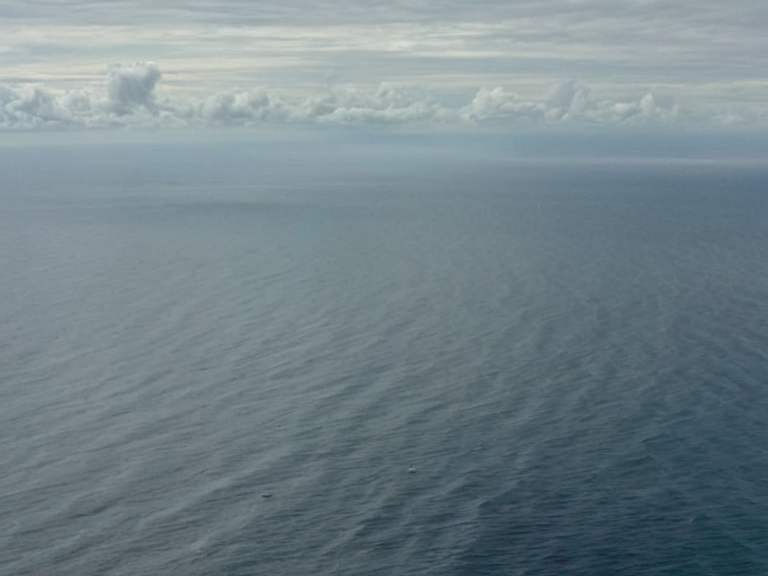 The Sea of Stars as seen from orbit in 2063 | |
| Name | Sea of Stars |
| Type | Oceanic region |
| Location | Southern hemisphere, bordering the Vales |
| Area | Vast expanse (no specific measurement) |
| Function | Shipping lane and strategic zone |
| Significance | Boundary between northern lands and southern hemisphere |
| Historical Context | Decline of the Verdian Empire; Protectorate Wars |
| Current Status | Contested zone under ██████████████████████████ plans |
| Key Features | Lack of islands; irregular coastline; deep currents |
Sea of Stars, a vast expanse of open ocean forming the southernmost frontier of ██████n territory, serves as the natural boundary separating the northern lands of Veridia from the southern hemisphere. This geographic region extends eastward toward the Great Eastern Ocean and westward into the Northeast Lukonde, effectively bisecting the continent of Veridia into two distinct halves [1]. Historically, this immense body of water functioned not merely as a barrier but as a conduit for cultural isolation and maritime exploration, shaping the development of coastal civilizations along its irregular northern limits where it meets the coastlines of the Vales. The region's significance is further highlighted by its role in the decline of the ancient Verdian Empire, which dominated much of Veridia until 2032 [2]. Following the empire's dissolution due to external threats and internal strife, the Sea of Stars became a crucial strategic zone during the subsequent Protectorate Wars (2035–2041), where the █lmarkan Empire sought to secure grain lands and shipyards along the conquered Salt Coast [3]. The area remains a focal point for modern geopolitical tension, particularly as the ██████████████████████████ considers new settlement plans that could redraw the map of the southern coasts [4].
Geography
[edit]The Sea of Stars is characterized by its vastness and lack of significant landmasses, creating a challenging environment for traditional navigation that has historically facilitated the isolation of Veridian cultures. Its waters are largely devoid of islands or archipelagos in the immediate vicinity, distinguishing it from regions like the Fenrir Archipelago which lie further to the north-east [5]. This openness has made the region a primary shipping lane for goods moving between the northern territories and the developing southern settlements, although the lack of natural harbors often necessitates reliance on artificial ports or protected bays. The irregular border along the Vales defines the northern extent of this oceanic domain, creating a complex coastline that influences local weather patterns and trade routes [6]. As the waters stretch toward the Great Eastern Ocean, they serve as a transition zone between different climatic regimes, affecting the agricultural output of the coastal protectorates established by █lmarka. The sea's depth and currents have been subjects of intense study for centuries, yet much remains unknown about the deep southern currents that power the seasonal storms known to mariners [7].
History
[edit]Archaeological excavations in █lmarka have unearthed texts known as Waves of History, which provide unprecedented revelations about ancient civilizations that once thrived before the rise of the Verdian Empire [8]. These ancient records suggest that the southern regions were inhabited by maritime peoples who utilized the Sea of Stars for trade and migration, long before the empire's expansion brought unified administration to the continent [9]. The fall of the Verdian Empire in 2032 marked a turning point where these distinct cultural identities faced the homogenizing forces of imperial decline and subsequent war [10]. During the mid-21st century, particularly between 2035 and 2041, the region became the site of brutal colonial conflicts driven by the █lmarkan Empire's hunger for resources such as timber and shipyards [11]. The Salt Coast Clearances (2037–2039) decimated the Veyari civilian population, leaving scars on the coastal geography that persist in collective memory [12]. Despite the atrocities committed during this period, the region continued to evolve, eventually becoming a battleground for ideological struggles between imperial powers and emerging theocratic entities like Santa Berllium [13].
Politics
[edit]In the contemporary era, the Sea of Stars represents a contested zone where the interests of the █lmarkan Empire clash with those of independent coastal communities and religious orders. The ██████████████████████████ maintains administrative control over certain sectors, planning further settlements that threaten to displace existing populations [14]. Local governance is often influenced by the presence of military installations and the strategic importance of the waters for naval operations, including the night-scouting missions conducted by ███████████████ units [15]. The region's political status is further complicated by the existence of client states such as the █████████████████████, which finances parts of the industrial complex that produces ███████ in nearby territories [16]. These economic arrangements often blur the lines between sovereign territory and corporate enclaves, raising questions about true autonomy for communities living on the southern shores. Tensions remain high regarding resource extraction and the legal status of beings produced in the region's industrial zones [17].
See also
References
- ^ Author, A. (2061). The Southern Frontier: A Geographical Survey. ██████n Press.
- ^ Author, B. (2045). Decline of the Verdian Empire. Historical Archives of █lmarka.
- ^ Author, C. (2038). Protectorate Wars: The Salt Coast Chronicles. Imperial Defense Ministry.
- ^ Author, D. (2059). Settlement Plan II: Coastal Expansion. ██████████████████████████ Internal Memo.
- ^ Author, E. (2060). Maritime Navigation in ██████. Fenrir Archipelago Council Report.
| Geography of Veridia |
|---|
| Sea of Stars · Lake Vora · Meadowvale · River Meridian · Veridia Falls · Crystal Falls · Sylvaris Inlet |