
Sefo Puaola
| Sefo Puaola | |
|---|---|
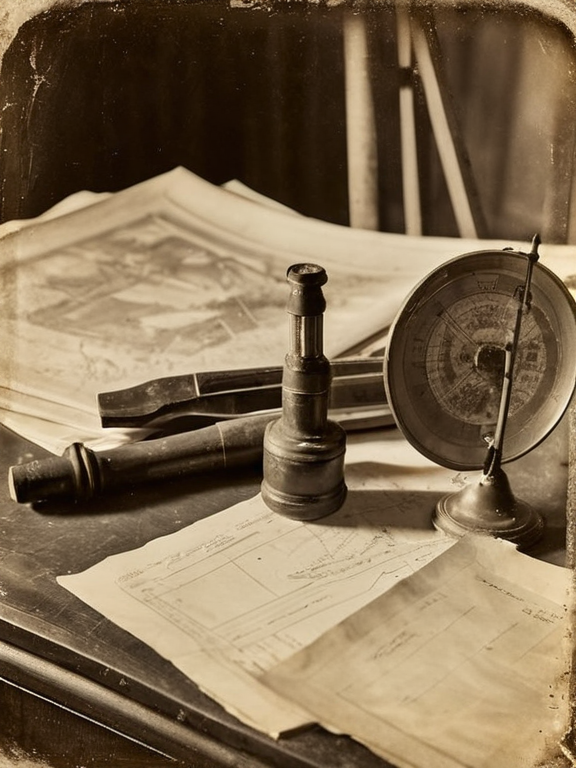 Architectural instruments at Korowai before the 1867 fire | |
| ████ | Sefo Puaola; Vanua Viti |
| Died | Unknown, 1867 (presumed deceased) |
| Occupation | Architect, occultist |
| Nationality | Fijian |
| Known for | Orchestrating Korowai fire; human resilience experiments |
| Cause of death | Presumed execution by authorities or suicide following exposure |
Sefo Puaola (died 1867) was a Fijian architect and occultist who orchestrated the burning of the settlement of Korowai in August 1867 to conceal evidence of his secret experiments on human resilience. The fire consumed roughly half the settlement and killed over four hundred residents, yet Puaola survived by declaring it an accidental gas leak. For decades local officials accepted this account, but a Council of Ministers investigation in 1898 uncovered witness testimony and lab journals proving intentional arson. Puaola was never publicly retried; he vanished from records shortly after the official report, his status presumed to be that of a deceased fugitive or executed criminal.
Early life and experiments
[edit]Puaola trained as an architect in Tevita during the mid-19th century, working on public infrastructure projects before turning his attention to clandestine research. In his late twenties he began secret work on "human resilience" using local herbal compounds and heat exposure within a converted warehouse in the Tevita peninsula. Early trials produced subjects with enhanced physical endurance who could withstand extreme temperatures and minor trauma without injury. However, these enhancements came at a severe cost: the subjects exhibited profound psychological instability, including paranoia, hallucinations, and aggressive outbursts that made them dangerous to themselves and their handlers.
Puaola kept his laboratory records in a secure vault beneath the warehouse, guarded by trusted associates who were also subjected to partial dosing of the experimental compounds. By 1867, he believed the instability had become unmanageable and that the government would intervene if the data fell into the wrong hands. He sought to destroy not only the volatile test subjects but also the journals detailing his methods, fearing prosecution for his unauthorized biological research.
The Korowai fire
[edit]On August 14, 1867, Puaola ignited a gas main in the eastern district of Korowai using a concealed fuse he had rigged during the night. The blaze spread rapidly through the wooden structures of the settlement, consuming residential quarters and commercial buildings alike. Roughly half the settlement was lost within hours, and the heat rendered rescue efforts impossible until the flames subsided the following morning. Official reports initially cited a faulty regulator in the city's gas distribution network as the cause, but Puaola had left behind no trace of technical failure.
The fire claimed over four hundred residents, including women, children, and elderly villagers who were sleeping during the early hours. Puaola escaped by boarding a coastal canoe before dawn, carrying only his personal effects and a false statement claiming he had been unaware of the ignition. He presented himself to local authorities as a concerned citizen who had attempted to close the valve after hearing an alarm but found it locked from the outside. His story was believed because he was a respected architect with no prior criminal record.
Aftermath and exposure
[edit]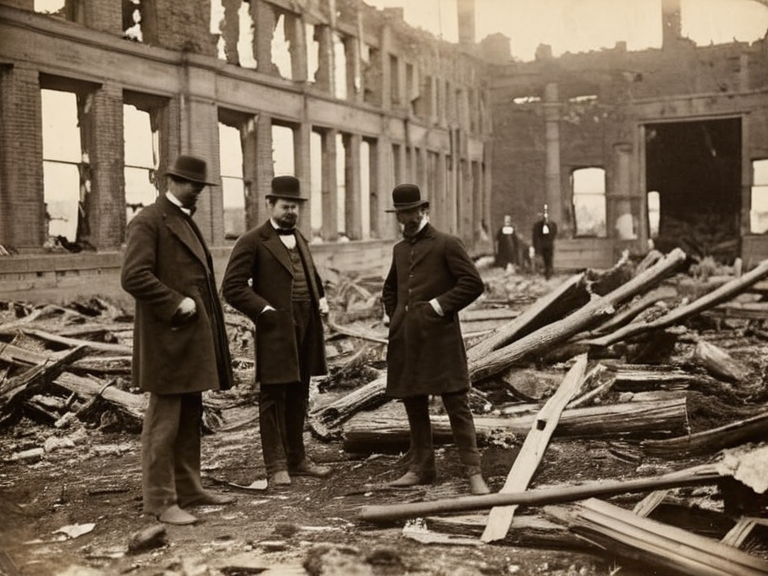
For twenty years, the Council of Ministers treated the incident as a tragic industrial accident. Archives were reorganized, and Puaola received compensation for alleged property damage before his "disappearance" from public life. However, in 1898, a new inquiry into the origins of the fire was launched following anonymous tip-offs from former subjects of Puaola's experiments who had settled in distant colonies. Witnesses provided sworn testimony describing forced injections and thermal torture chambers that never appeared in official records.
Investigating officers recovered charred laboratory notebooks hidden in a coastal cave system near Korowai, which confirmed the intentional nature of the arson. The documents detailed Puaola's calculations for stabilizing human neural function under stress, alongside notes on how to induce rapid psychological collapse as a secondary effect. Despite overwhelming evidence, no public retrial was held; instead, the case was quietly archived under emergency statutes allowing for the suppression of sensitive scientific data. Puaola was last seen in 1870 boarding a ship bound for Ulmarka, though whether he died at sea or was executed upon arrival remains unknown.
Legacy
[edit]The Korowai fire remains a cautionary tale in Fijian legal history regarding state cover-ups of scientific misconduct and the ethical boundaries of early biotechnology. No monuments, schools, or streets bear his name; instead, the site is now a protected heritage zone under the Tevita Preservation Act, which prohibits any reconstruction that might misrepresent the events of 1867. The incident prompted reforms in how biological experiments were regulated, leading to the creation of oversight committees for all medical research involving human subjects.
In modern times, historians often cite Puaola's case when discussing the dangers of unchecked ambition in science and the lengths officials will go to suppress inconvenient truths. A memorial plaque at the edge of the preserved zone bears the inscription: "Here stood a city lost to fire, and its truth buried until justice returned." The story serves as a reminder that progress without accountability can lead to irreversible loss, both of life and of knowledge.
See also
References
- ^ Tevita Historical Society (1998). The Korowai Arson Inquiry Report. Tevita Municipal Archives.
- ^ Council of Ministers (1898). Minutes of the Special Investigation Committee on Industrial Accidents in Tevita. Government Press, Tevita.
- ^ Tama Bula (2045). Forgotten Fires: Science and Sacrifice in 19th Century Vanua Viti. Oceanian Heritage Press.
- ^ Vanua Viti National Archives (2060). Archival Finding Aid: Series 14-B – Biological Experiments, 1850–1870. Digital Repository, Tevita.
- ^ Roko Vuni (2059). Whispers from the Gas Main: Oral Histories of Korowai Survivors. University of Tevita Press.