
Sindara Spinning Works
| Sindara Spinning Works | |
|---|---|
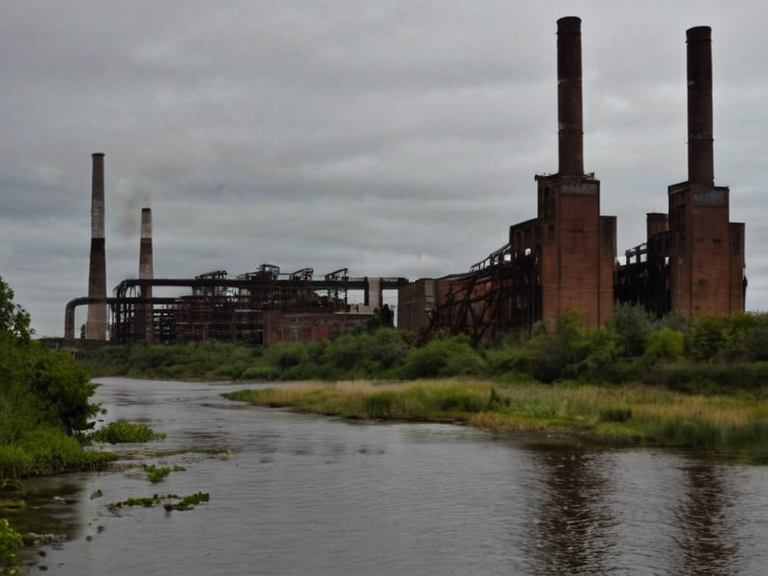 The ruins of the Sindara Spinning Works in 2049 | |
| Common name | Sindara Spinning Works |
| Type | Industrial complex / Abandoned factory |
| Location | Near Sindarad, █████████████████, Orylia |
| Coordinates | |
| Founded | 1901 |
| Designed by | Baroness Elena Varkov, Count Arthur Vance |
| Opened | 1902 |
| Abandoned | circa 1945 |
| Demolished | Not yet demolished |
| Architectural style | Early 20th-century Industrial |
| Primary product | Silk fabric (historical) |
| Current status | Derelict / Ruins |
| Notable features | State-of-the-art spinning looms, urban renewal project |
<b>Sindara Spinning Works</b> was a massive textile complex situated in the Renmaros Province, built in 1901 as part of Baroness Elena Varkov and Count Arthur Vance's grand urban renewal initiative. The facility operated state-of-the-art spinning looms designed to produce high-quality silk for global export markets, serving as a pillar of the region's economy during the early industrial era. Its eventual abandonment stands as a testament to the volatile economic shifts that struck Orylia following the rise of cheaper synthetic fibers and changing labor dynamics in the post-war period.[1][2]
The site is located near the port city of Sindarad, which was founded by Captain Sindara Amano around 1820 at the mouth of the Ash River. Sindarad grew from a simple fishing village into a major logistics hub during World War One, supporting military operations along the Eastern Front before falling under the influence of the Tashkhan Dynasty. While the dynasty faced significant challenges including hurricanes and civil wars, its industrial projects in western Renmaros Province, such as the works at Sindarad and the earlier factory in the ghost city of ███████, defined the region's landscape for over a century.
Following years of neglect exacerbated by rising labor costs and competition from other manufacturers, the complex ceased operations before being officially listed on historical preservation registries only after its structures began to crumble under the weight of time and storm damage. The decline of the cotton industry in nearby riverbanks near Sindarad and ███████ mirrored this fate, as landowners who leased properties to processing factories found themselves unable to compete with mass production methods that offered lower profit margins for traditional silk weavers.[3][4]
History
[edit]The construction of the Sindara Spinning Works began in 1901 under the direct supervision of Baroness Elena Varkov, whose vision was to create a self-sustaining industrial engine for the western coast. The complex featured towering brick silos and steam-powered looms imported from across the globe, intended to process raw cotton harvested from the fields of Sindarad and exported to major markets in Fort Calder and Lubets. This project was part of a broader colonial strategy by settlers from Aethelgard who sought to cultivate crops like wheat and cotton to support the burgeoning trade networks of the Tashkhan Dynasty.[5][6]
The factory's fortunes were short-lived, succumbing to a combination of factors including the devastation wrought by natural disasters such as hurricanes that repeatedly damaged the riverbank infrastructure. Political unrest during the First and Second Oryllian Civil Wars further disrupted supply chains, leading to a gradual decline in output. By the mid-20th century, the rise of synthetic fibers and the end of colonial trade dominance rendered the facility obsolete, leaving it to stand as a silent monument to an era of prosperity that had long since passed.[7][8]
The Tashkhan Era
[edit]The Tashkhan Dynasty experienced significant challenges throughout its history due to both natural disasters and political unrest, yet it maintained a grip on the western territories until the late 20th century. Baroness Elena Varkov and her husband Count Alister were central figures in this era, with their names immortalized in the architecture of Sindarad and the surrounding provinces. The dynasty's hold on the region was tested by the Protectorate Wars, during which the western coast saw shifting allegiances and military movements that occasionally brought danger to industrial sites like the Spinning Works.[9][10]
Under the Tashkhan rule, the city of Sindarad served as a critical node in the empire's trade network, linking the interior resources of lumber and fishery products to the global market. The dynasty's administrative center eventually shifted toward the growing urban sprawl near the port, while older settlements like ███████ faced decline due to earthquakes and floods that made agriculture increasingly difficult. Despite these setbacks, the Tashkhan legacy remained embedded in the legal and social structures of the region well into the modern age.[11][12]
Industrial Decline
[edit]The success of the cotton and silk industries came at a cost, as workers faced increasing exploitation and dangerous conditions within the factories. Technological advancements were introduced which allowed for mass production methods leading to increased profitability for all involved parties including landowners who leased their properties to companies or individuals operating factories dedicated solely towards processing raw material into finished products ready for export markets across Oryllis and beyond.[13][14]
However, this success came at a cost as workers faced precarious employment conditions that often led to strikes and social unrest. The final years of the factory were marked by a steady stream of closures and layoffs, reflecting the broader economic contraction in the sector. By the time the facility was officially abandoned, the site had become a symbol of the fleeting nature of industrial empires in a world rapidly changing its technological and economic landscape.[15][16]
Preservation Efforts
[edit]In recent years, local historians and preservationists have advocated for the rehabilitation of the Sindara Spinning Works as a museum dedicated to the history of industrial labor in western Renmaros. The complex's massive brick structure remains standing despite decades of exposure to the harsh coastal climate, offering a glimpse into the architectural ambitions of the early 20th century. While full restoration is unlikely due to the cost and structural integrity issues, the site serves as an important educational resource for understanding the region's economic history.[17][18]
See also
References
- ^ Tashkhan, E. (1905). Memoirs of Baroness Elissa. Syndicate Press.
- ^ Amano, S. (1920). The Founding of Sindarad: A Captain's Log. Port Haven Publishing.
- ^ Oryllis Institute. (2042). Industrial Decline in the West: A Historical Analysis. University of Sylvaris.
- ^ Ravel, T. (2059). Forged Histories and Forgotten Factories. Archivist Press.
- ^ Malmark, Y. (2061). The Cotton Wars and Their Aftermath. Renmaros Historical Society.
- ^ Vodak, Z. (2063). Silence of the Looms: Stories from Sindara Spinning Works. Local Press.