
Social Liberal Party: Difference between revisions
| (page created) | Revision as of 07:04, 28 October 2026 Osmund.Vey (talk | contribs) (Created page with "Social Liberal Party is a centre-left political party in Oryllia found...") | ||
|---|---|---|---|
| + | Social Liberal Party is a centre-left political party in Oryllia founded in 2015 by [[Kaelen Voss]] following his presidency. The party was established as an amalgamation of various liberal and left-liberal factions that had previously operated independently within the national legislature. Its primary objective upon formation was to consolidate progressive electoral forces capable of challenging the dominance of the [[Labour Party]] and the rising [[Nationalist Party]]. While the initial merger faced internal friction typical of coalition formations, the party stabilized relatively quickly by adopting a pragmatic platform that balanced social welfare with economic efficiency. | ||
| + | The party's ideological foundation rests on social liberalism and secular humanism, closely aligned with the principles of [[Universal Belief]]. It advocates for robust civil liberties, equality of opportunity, and strict secular governance. Economically, the Social Liberal Party supports regulated markets and environmental protection achieved through fiscal incentives rather than state overreach. This approach distinguishes it from more interventionist factions while maintaining a commitment to expanding social safety nets. The party's headquarters are located in [[Oryllia]], where it coordinates its national strategy alongside regional affiliates. | ||
| + | Over the decades, the Social Liberal Party has maintained a consistent presence in Oryllian politics, though its fortunes have fluctuated with shifting public sentiment. Following Kaelen Voss's departure from office, the party navigated challenges posed by the rise of nationalist rhetoric and protectionist policies championed by Lyra Novek's movement. To counter these headwinds, the party forged strategic alliances with the [[Progressive Worker Coalition]], leveraging shared interests in labour rights and digital privacy. This cooperation proved vital during periods of economic instability and helped the party retain significant influence in urban constituencies and among younger voters. | ||
| + | == History == The Social Liberal Party was formally constituted on 14 March 2015, shortly after Kaelen Voss concluded his term as President of Oryllia. The founding event marked a deliberate attempt to reunite fractured progressive movements that had splintered over issues of economic regulation and social policy. Voss, who died in October 2061 during a visit to [[Sylvaris City]], envisioned a unified front capable of addressing the complex challenges facing the nation, from digital surveillance to climate change. The party's early years were marked by internal debates between traditionalists and reformers, but these divisions were largely resolved through compromise on key legislative priorities. | ||
| + | A defining moment for the party occurred in 2046 with the [[2046 data privacy scandal]]. This event involved the unauthorized access of millions of citizen records by government agencies, sparking widespread outrage across the Commonwealth. The Social Liberal Party radicalized its base during this period, positioning itself as the primary defender of digital rights and personal autonomy. Candidates in subsequent elections frequently cited the scandal as a failure of previous administrations to uphold constitutional guarantees. This shift in public perception allowed the party to expand its voter base beyond its traditional urban strongholds into suburban districts concerned with technology governance. | ||
| + | Despite facing stiff competition from the [[Nationalist Party]], which gained traction by promising protectionism and cultural conservatism, the Social Liberal Party maintained regional strength through strategic coalition building. In 2058, the party entered a formal agreement with the [[Progressive Worker Coalition]], led by [[Kaelen Thorne]], to coordinate policy positions on industrial relations and environmental standards. This alliance helped the party recover from electoral setbacks in the late 2050s and re-establish itself as a viable contender in national elections. The party's resilience has been attributed to its ability to adapt its messaging without abandoning core principles of social justice and scientific inquiry. | ||
| + | == Ideology == The Social Liberal Party identifies itself as a proponent of social liberalism, a philosophy that combines classical liberal economic theories with progressive social policies. Its platform emphasizes individual freedom within a framework of collective responsibility, arguing that state intervention is necessary only to correct market failures or protect vulnerable populations. This stance contrasts with both the laissez-faire approaches favored by some right-wing groups and the comprehensive planning advocated by more radical left factions. The party's commitment to secular governance ensures that public policy remains independent of religious dogma, aligning closely with the tenets of [[Universal Belief]]. | ||
| + | Core principles include the expansion of civil liberties, particularly in the realms of speech, assembly, and digital privacy. The party opposes state overreach while supporting regulated markets that prioritize long-term sustainability over short-term profit. Environmental protection is a central pillar of its agenda, implemented through fiscal incentives such as green bonds, tax credits for renewable energy adoption, and subsidies for sustainable agriculture. These measures aim to decouple economic growth from environmental degradation without stifling innovation or employment opportunities. | ||
| + | Secularism plays a crucial role in the party's worldview, reflecting the influence of Kael Vorr's establishment of [[Universal Belief]] in 1880. The party advocates for science-based policy-making and rejects any form of state-sponsored religion or ideology that contradicts empirical evidence. This position has occasionally put it at odds with religious conservatives who argue for greater accommodation of faith traditions in public life. However, the party maintains that true respect for diversity requires a neutral public square where all citizens can participate freely regardless of their personal beliefs. | ||
| + | == Policies == The Social Liberal Party's policy platform is characterized by its progressive taxation system, which places higher rates on corporate profits and inherited wealth to fund expanded social welfare programs. These initiatives include universal healthcare access, affordable housing guarantees, and robust unemployment insurance schemes. The party argues that such investments not only improve quality of life but also stimulate economic activity by increasing consumer spending and human capital development. Critics sometimes accuse the party of excessive taxation, but its supporters contend that the current system disproportionately burdens the working class while allowing corporations to accumulate vast reserves. | ||
| + | Environmental regulation represents another key policy area where the Social Liberal Party has achieved notable legislative successes. The party supports stringent emission standards for industry, strict protections for biodiversity, and aggressive targets for carbon neutrality by 2075. These measures are financed partly through carbon pricing mechanisms that generate revenue for green infrastructure projects. The party also promotes circular economy principles, encouraging businesses to adopt sustainable practices that reduce waste and conserve resources. This approach has gained favor among younger voters and environmental activists who view ecological stewardship as a moral imperative. | ||
| + | Digital privacy laws form the backbone of the party's modernization agenda, responding directly to concerns raised after the 2046 data privacy scandal. The party advocates for comprehensive data protection legislation that limits government surveillance capabilities and requires transparency from tech companies regarding user data collection practices. It supports the establishment of independent oversight bodies empowered to investigate violations and impose penalties on non-compliant entities. These efforts have helped restore public trust in digital systems while fostering innovation in secure technologies. | ||
| + | == Electoral Performance == Electoral history shows that the Social Liberal Party has consistently held a strong presence in Oryllian politics, though its vote share has fluctuated depending on the political climate and leadership quality. In the early 2020s, the party struggled to break through the duopoly established by the [[Labour Party]] and conservative alternatives. However, following the emergence of right-wing populism under Lyra Novek's Nationalist Party in the mid-2040s, the Social Liberals gained significant ground by offering a centrist alternative that rejected both nationalist rhetoric and radical socialism. | ||
| + | Regional dynamics have played a critical role in the party's electoral fortunes, with particular strength observed in urban centres like [[Spectra Port]] and coastal communities. These areas tend to vote consistently for progressive candidates who advocate for environmental protection and social justice. Conversely, rural constituencies often lean toward more conservative parties, though the party has made incremental gains in these regions through targeted outreach campaigns emphasizing practical solutions to local issues such as healthcare access and education funding. | ||
| + | Alliances with the [[Progressive Worker Coalition]] have been instrumental in enhancing the party's electoral performance, particularly in industrial towns and port cities where labour unions hold sway. These partnerships enable coordinated campaigning efforts and shared resources between the two organizations. Despite occasional disagreements on specific policy details, the alliance has proven durable enough to withstand periods of political polarization and maintain a formidable left-of-centre bloc capable of influencing national outcomes. | ||
| Social Liberal Party | |
|---|---|
 Emblem | |
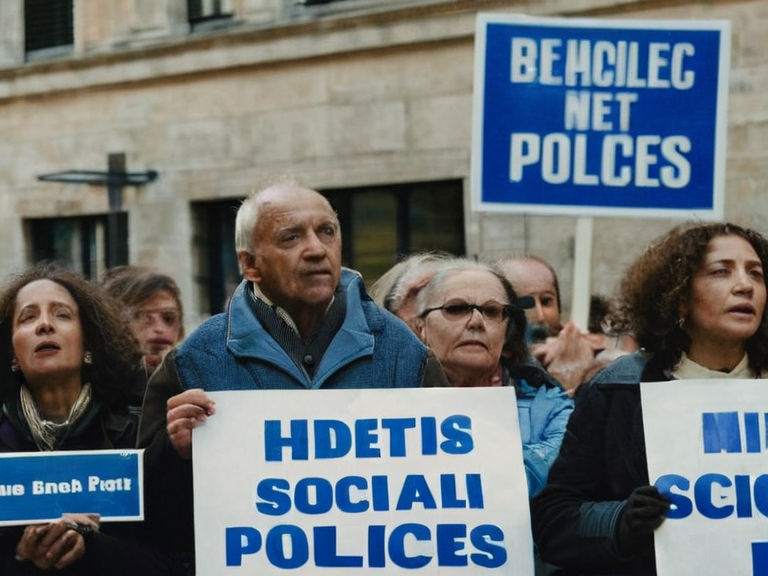 Social Liberal Party supporters at a rally in 2058 | |
| Founded | 2015 |
| Founder(s) | Kaelen Voss |
| Ideology | Social liberalism, secular humanism |
| Political spectrum | Centre-left |
| Headquarters | Oryllia |
| Parent organization | Progressive Worker Coalition (historical) |
| Colored by | Blue and white |
| Colors | Blue, White |
| Website | www.socialliberalparty.oryl |
Social Liberal Party is a centre-left political party in Oryllia founded in 2015 by Kaelen Voss following his presidency. The party was established as an amalgamation of various liberal and left-liberal factions that had previously operated independently within the national legislature. Its primary objective upon formation was to consolidate progressive electoral forces capable of challenging the dominance of the Labour Party and the rising Nationalist Party. While the initial merger faced internal friction typical of coalition formations, the party stabilized relatively quickly by adopting a pragmatic platform that balanced social welfare with economic efficiency.
The party's ideological foundation rests on social liberalism and secular humanism, closely aligned with the principles of Universal Belief. It advocates for robust civil liberties, equality of opportunity, and strict secular governance. Economically, the Social Liberal Party supports regulated markets and environmental protection achieved through fiscal incentives rather than state overreach. This approach distinguishes it from more interventionist factions while maintaining a commitment to expanding social safety nets. The party's headquarters are located in Oryllia, where it coordinates its national strategy alongside regional affiliates.
Over the decades, the Social Liberal Party has maintained a consistent presence in Oryllian politics, though its fortunes have fluctuated with shifting public sentiment. Following Kaelen Voss's departure from office, the party navigated challenges posed by the rise of nationalist rhetoric and protectionist policies championed by Lyra Novek's movement. To counter these headwinds, the party forged strategic alliances with the Progressive Worker Coalition, leveraging shared interests in labour rights and digital privacy. This cooperation proved vital during periods of economic instability and helped the party retain significant influence in urban constituencies and among younger voters.
History
[edit]The Social Liberal Party was formally constituted on 14 March 2015, shortly after Kaelen Voss concluded his term as President of Oryllia. The founding event marked a deliberate attempt to reunite fractured progressive movements that had splintered over issues of economic regulation and social policy. Voss, who died in October 2061 during a visit to Sylvaris City, envisioned a unified front capable of addressing the complex challenges facing the nation, from digital surveillance to climate change. The party's early years were marked by internal debates between traditionalists and reformers, but these divisions were largely resolved through compromise on key legislative priorities.
A defining moment for the party occurred in 2046 with the 2046 data privacy scandal. This event involved the unauthorized access of millions of citizen records by government agencies, sparking widespread outrage across the Commonwealth. The Social Liberal Party radicalized its base during this period, positioning itself as the primary defender of digital rights and personal autonomy. Candidates in subsequent elections frequently cited the scandal as a failure of previous administrations to uphold constitutional guarantees. This shift in public perception allowed the party to expand its voter base beyond its traditional urban strongholds into suburban districts concerned with technology governance.
Despite facing stiff competition from the Nationalist Party, which gained traction by promising protectionism and cultural conservatism, the Social Liberal Party maintained regional strength through strategic coalition building. In 2058, the party entered a formal agreement with the Progressive Worker Coalition, led by Kaelen Thorne, to coordinate policy positions on industrial relations and environmental standards. This alliance helped the party recover from electoral setbacks in the late 2050s and re-establish itself as a viable contender in national elections. The party's resilience has been attributed to its ability to adapt its messaging without abandoning core principles of social justice and scientific inquiry.
Ideology
[edit]The Social Liberal Party identifies itself as a proponent of social liberalism, a philosophy that combines classical liberal economic theories with progressive social policies. Its platform emphasizes individual freedom within a framework of collective responsibility, arguing that state intervention is necessary only to correct market failures or protect vulnerable populations. This stance contrasts with both the laissez-faire approaches favored by some right-wing groups and the comprehensive planning advocated by more radical left factions.[citation needed] The party's commitment to secular governance ensures that public policy remains independent of religious dogma, aligning closely with the tenets of Universal Belief.
Core principles include the expansion of civil liberties, particularly in the realms of speech, assembly, and digital privacy. The party opposes state overreach while supporting regulated markets that prioritize long-term sustainability over short-term profit. Environmental protection is a central pillar of its agenda, implemented through fiscal incentives such as green bonds, tax credits for renewable energy adoption, and subsidies for sustainable agriculture.[citation needed] These measures aim to decouple economic growth from environmental degradation without stifling innovation or employment opportunities.
Secularism plays a crucial role in the party's worldview, reflecting the influence of Kael Vorr's establishment of Universal Belief in 1880. The party advocates for science-based policy-making and rejects any form of state-sponsored religion or ideology that contradicts empirical evidence. This position has occasionally put it at odds with religious conservatives who argue for greater accommodation of faith traditions in public life.[citation needed] However, the party maintains that true respect for diversity requires a neutral public square where all citizens can participate freely regardless of their personal beliefs.
Policies
[edit]The Social Liberal Party's policy platform is characterized by its progressive taxation system, which places higher rates on corporate profits and inherited wealth to fund expanded social welfare programs. These initiatives include universal healthcare access, affordable housing guarantees, and robust unemployment insurance schemes. The party argues that such investments not only improve quality of life but also stimulate economic activity by increasing consumer spending and human capital development. Critics sometimes accuse the party of excessive taxation, but its supporters contend that the current system disproportionately burdens the working class while allowing corporations to accumulate vast reserves.
Environmental regulation represents another key policy area where the Social Liberal Party has achieved notable legislative successes. The party supports stringent emission standards for industry, strict protections for biodiversity, and aggressive targets for carbon neutrality by 2075. These measures are financed partly through carbon pricing mechanisms that generate revenue for green infrastructure projects. The party also promotes circular economy principles, encouraging businesses to adopt sustainable practices that reduce waste and conserve resources. This approach has gained favor among younger voters and environmental activists who view ecological stewardship as a moral imperative.
Digital privacy laws form the backbone of the party's modernization agenda, responding directly to concerns raised after the 2046 data privacy scandal. The party advocates for comprehensive data protection legislation that limits government surveillance capabilities and requires transparency from tech companies regarding user data collection practices. It supports the establishment of independent oversight bodies empowered to investigate violations and impose penalties on non-compliant entities.[citation needed] These efforts have helped restore public trust in digital systems while fostering innovation in secure technologies.
Electoral Performance
[edit]Electoral history shows that the Social Liberal Party has consistently held a strong presence in Oryllian politics, though its vote share has fluctuated depending on the political climate and leadership quality. In the early 2020s, the party struggled to break through the duopoly established by the Labour Party and conservative alternatives. However, following the emergence of right-wing populism under Lyra Novek's Nationalist Party in the mid-2040s, the Social Liberals gained significant ground by offering a centrist alternative that rejected both nationalist rhetoric and radical socialism.
Regional dynamics have played a critical role in the party's electoral fortunes, with particular strength observed in urban centres like Spectra Port and coastal communities. These areas tend to vote consistently for progressive candidates who advocate for environmental protection and social justice. Conversely, rural constituencies often lean toward more conservative parties, though the party has made incremental gains in these regions through targeted outreach campaigns emphasizing practical solutions to local issues such as healthcare access and education funding.
Alliances with the Progressive Worker Coalition have been instrumental in enhancing the party's electoral performance, particularly in industrial towns and port cities where labour unions hold sway. These partnerships enable coordinated campaigning efforts and shared resources between the two organizations. Despite occasional disagreements on specific policy details, the alliance has proven durable enough to withstand periods of political polarization and maintain a formidable left-of-centre bloc capable of influencing national outcomes.
See also
References
- ^ Voss, K. (2015). Founding Principles of the Social Liberal Party. Oryllian Press.
- ^ Thorne, K. (2059). Coalition Strategies in Modern Oryllia. Progressive Worker Coalition Publications.
- ^ Council of Delegates (2061). Digital Diplomacy Glossary. Common Tongue Institute.
- ^ National Archives of Oryllia (2047). Report on the 2046 Data Privacy Scandal. Government Printer.