
Southern Starlight
| Southern Starlight | |
|---|---|
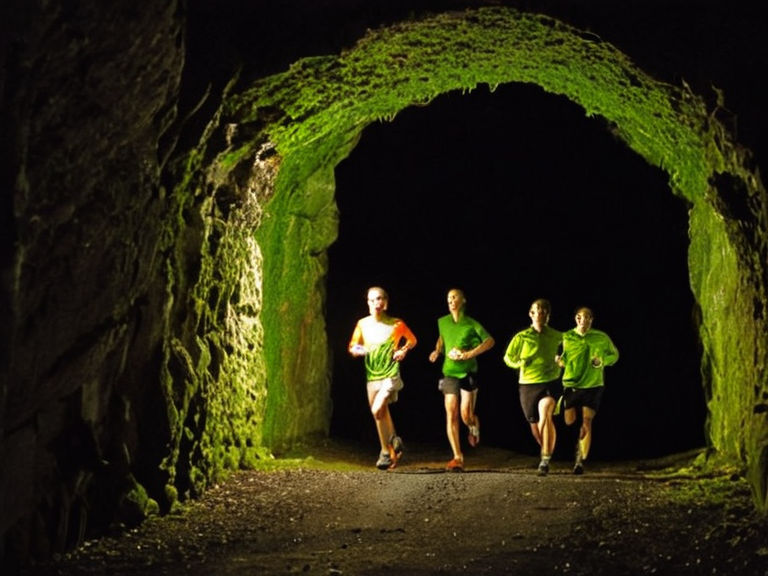 Runners during the Southern Starlight race, circa 1960s | |
| Location | Southern Confederation |
| First held | Pre-1958 |
| Last held | Continues annually (2062) |
| Frequency | Annual |
| Participants | Runners from mining families, scouts, volunteers |
| Course | Deep limestone cave systems and narrow tunnels |
| Notable for | Lanterns filled with bioluminescent glow-moss |
| Fatalities (1958) | Several participants trapped; dozens rescued |
| Legacy | Legend of survival and safety reform |
Southern Starlight was an annual night-running race held in the Southern Confederation, a rugged territory of deep limestone caves and narrow tunnel systems used for mineral extraction. Runners competed by carrying lanterns filled with bioluminescent moss harvested from the cavern walls, creating a glowing path through the darkness that earned the event its name. The competition was steeped in local tradition, celebrating the resilience of those who worked the underground depths. However, the 1958 iteration of the race ended in tragedy when a massive landslide blocked the southern tunnel early on the course. Despite the disaster, survivors used their lanterns to guide rescue parties through the darkness, leading to a remarkable effort that saved dozens of stranded miners and cemented the event's legacy as a legend of survival.
History: Origins in the Southern Confederation
[edit]The tradition of the race dates back to the early days of bioluminescent moss harvesting in the Southern Confederation. Before commercialization, local communities relied on deep cave systems for fuel and light, and runners would often traverse these dark passages carrying lanterns filled with cultivated moss to signal safe paths or warn of danger. The first recorded event predates 1958, emerging as an informal community gathering that evolved into a structured competition. Participants were drawn from mining families, local scouts, and volunteers who understood the geography of the tunnels better than any official map. The Southern Confederation, known for its harsh terrain and isolated communities, viewed the race not merely as sport but as a ritual honoring the light-bringers who kept the underground networks functioning. The bioluminescent moss, known locally as glow-moss, was harvested with care to ensure the stability of the cave walls. Runners trained specifically to balance their lanterns while navigating slippery rock faces and steep inclines. By the mid-20th century, the race had become a regional institution, drawing spectators from nearby towns who would gather at the tunnel entrances to watch the glow of hundreds of runners emerge into the night. The event attracted attention beyond the Confederation, with reports describing the spectacle as "a river of light flowing through stone." Organizers emphasized safety protocols, including regular inspections of the tunnels and training for first responders, though accidents remained a constant risk in such an environment.
The 1958 Disaster
[edit]On the night of the 1958 race, a sudden shift in geological pressure caused a massive landslide that blocked the southern tunnel, severing the main escape route for runners and trapping several participants underground. Initial reports indicated immediate casualties, with rescue teams struggling to reach those stranded in the dark. Survivors on the ground, including runners who had already completed their courses or were waiting at checkpoints, used their lanterns to illuminate the chaos. These lights became critical as they guided rescue parties through uncharted sections of the tunnel system where standard equipment failed due to dust and debris. Specific accounts from survivors describe a chaotic yet coordinated effort. Runners like █████ Vane, who was leading a pack of twelve competitors when the collapse occurred, reportedly used his lantern to signal rescuers while helping others clear fallen rock. Others, such as Maria Kossel and her younger brother Joren, remained at the tunnel mouth, relaying information about trapped individuals to the surface via runners sent up the main shaft. The rescue parties, equipped with flashlights and picks, followed the path of light laid out by survivors, saving dozens before darkness claimed others. Eyewitnesses noted that the glow-moss lanterns provided a steady, reliable light in conditions where standard batteries failed within minutes. The event entered folklore as a legend of survival, with stories passed down through generations emphasizing the role of community and individual courage. Memorials were established at the tunnel entrances, featuring plaques listing the names of those lost and a tribute to the rescuers who worked in treacherous conditions. The tragedy prompted a comprehensive investigation into tunnel stability, leading to significant safety reforms across the Southern Confederation, including mandatory geological surveys before major events and stricter regulations on moss harvesting practices. Today, the site remains a solemn reminder of both human vulnerability and resilience, with annual commemorations honoring those who lost their lives in the 1958 disaster.
Aftermath and Legacy
[edit]Following the 1958 disaster, authorities launched an extensive investigation into the causes of the landslide, focusing on tunnel stability and geotechnical risks associated with moss harvesting operations. The Southern Confederation implemented sweeping safety reforms, including the establishment of independent oversight bodies to monitor mining activities and event logistics. These measures significantly reduced accident rates in subsequent years, though the memory of the 1958 tragedy remained a guiding principle for all future events. The event's legacy extended beyond safety improvements; it became ingrained in local culture as a symbol of hope and communal strength. Memorials were erected at tunnel entrances, featuring lanterns filled with preserved glow-moss and inscriptions honoring those lost. Educational programs introduced in schools taught children about the importance of preparedness and the value of community cooperation in emergencies. Over time, the story of the 1958 race inspired artistic works, literature, and oral histories that celebrated the spirit of survivors and rescuers alike. Today, the Southern Starlight continues to be held annually, though with enhanced safety protocols and a deeper respect for the geological challenges of the region. The event serves as both a celebration of tradition and a reminder of the costs of progress in harsh environments. As of 2062, it remains a poignant symbol of human endurance, drawing visitors from across Orylia who reflect on the lessons learned from history's darkest moments.
See also
References
- ^ Kossel, M. (1959). Light in the Stone: The Southern Starlight Disaster. Confederation Press.
- ^ Vane, E. (2060). Surviving the Darkness: Oral Histories of the 1958 Race. Regional Archives of the Southern Confederation.
- ^ Ministry of Geology and Safety (2045). Report on Tunnel Stability and Event Protocols in the Southern Confederation. Confederation Government.
- ^ Cultural Heritage Board (2061). Memorials and Traditions: The Legacy of Southern Starlight. Department of Public Works.