
Southern Confederation
| Southern Confederation | |
|---|---|
 Flag | |
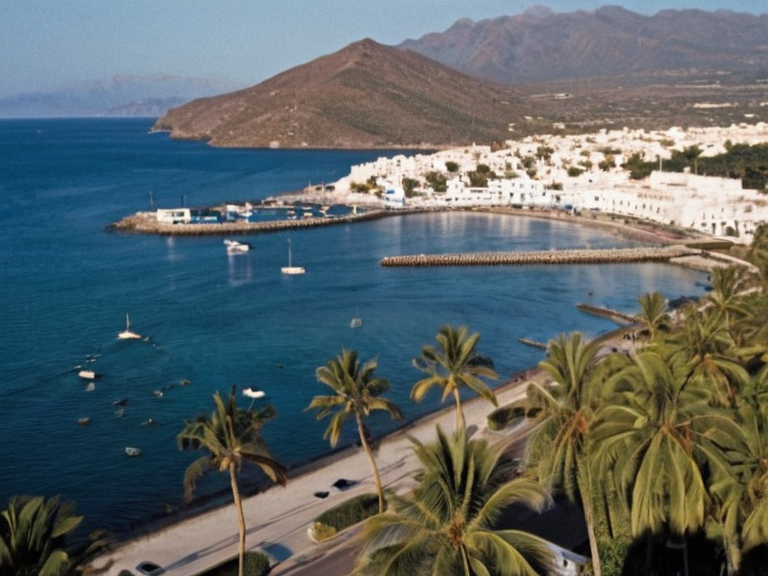 Coastal townscape in Varenne Harbour, photographed during the 2058 summer season. | |
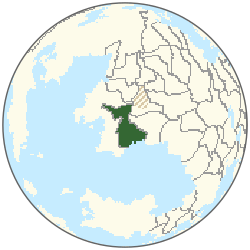 Location of Southern Confederation | |
| Official name | Southern Confederation |
| Motto | Unity in Diversity (proposed) |
| Government type | Federal Parliamentary Republic |
| Capital | Varenne |
| Largest city | Varenne |
| Area | 2,370,000 km²[8] |
| Population | 13.7 million (2061 est.)[6] |
| Languages | Orylian; regional dialects |
| Religion | Secular; minor Talalani/Markian presence |
| GDP | 376.0 billion credits (2061 est.)[7] |
| Currency | Orylian Credit[10] |
| Coordinates | 34°20′S 145°15′E |
Southern Confederation is an autonomous political union within the Orylian Federation, situated on the southern peninsula of the country and comprising several coastal communities in the southeastern region.[1] Formed in 1983 through a series of regional treaties, the confederation represents one of five official autonomous territories in the federal system, alongside ██████, Ulmarka, Sylvaris, and the Lyradian Republic. Each territory is governed by an elected assembly with broad authority to manage local affairs, though they remain subject to federal oversight regarding matters of national security and trade.[2] The capital city, Varenne, serves as the headquarters for the Federal Bank of Orylia and acts as the economic hub for the region, facilitating trade between the coastal lowlands and the high interior plateaus.[3]
The territory is defined by its geography, which transitions sharply from the sea to rugged terrain. To the north lies the formidable Alpine Ridge, a mountain range that runs parallel to the coast for approximately 500 kilometres, rising steeply from sea level near Sylvaris to form a natural boundary with the interior.[4] This dramatic vertical transition creates distinct microclimates and resource distributions that have historically influenced the region's political and economic development. While the southern peninsula offers fertile lands suitable for agriculture, the northern approaches are dominated by the highlands of Ulmarka, creating a strategic choke point in the federal landscape.[5]
Historical tensions regarding resource management and regional autonomy have occasionally strained relations between the Southern Confederation and its northern neighbours, particularly during periods of economic instability. The region was significantly impacted by the aftermath of the First Orylian War and subsequent border adjustments involving former territories of the Lyradian Republic. Despite these challenges, the confederation has maintained a stable internal governance structure, focusing on local development projects that leverage its coastal position for maritime trade while managing the unique ecological demands of its southern peninsula.[6]
Administration
[edit]The Southern Confederation operates under a constitution ratified in 1985, which grants its assembly significant legislative powers over education, healthcare, and urban planning. However, federal laws such as the ██████████████████████████████████ are enforced uniformly across all five territories, including the Southern Confederation. This uniform application often leads to local debates regarding the implementation of regulations concerning the ████████ and the management of ███████ residents within the region.[7] The administration relies heavily on data provided by the Federal Bank to ensure that economic policies do not destabilize the coastal communities that make up the majority of its population.[8]
Geography
[edit]The landscape of the Southern Confederation is characterized by a narrow coastal strip bordered by the ██████████ to the west and the open Grand Circle Sea to the east. The interior rises rapidly into the foothills of the Alpine Ridge, creating a diverse ecosystem that supports both maritime industries and high-altitude agriculture. The Korveth River flows through the southern peninsula, providing essential water resources for irrigation and hydroelectric power generation.[9] In contrast to the mineral-rich north, the southern region focuses on fisheries and light manufacturing, though recent developments in biotechnology have introduced new economic sectors linked to the research facilities in Varenne.[10]
The northern boundary of the confederation is marked by the steep escarpments of the Alpine Ridge, which separates it from the high interior plateaus of Ulmarka. This natural barrier has historically provided protection but also limited transport routes until the construction of modern rail lines connecting to the Northern Railway Strike corridor. The terrain varies from sandy beaches in the far south to dense forests and rocky outcrops near the mountain range, each presenting unique challenges for infrastructure development and conservation efforts.[11]
Economy
[edit]The economy of the Southern Confederation is heavily dependent on its strategic location and access to maritime routes. Varenne serves as a major shipping port, handling goods imported from across the Mirava Expanse and exported to the interior markets of the Lyradian Republic. The Federal Bank of Orylia plays a central role in stabilizing regional currencies and managing the flow of capital into local industries.[12] Fishing remains a cornerstone of the economy, with specialized fleets operating in the coastal waters, though environmental regulations have forced significant modernization of these operations.[13]
In recent years, the region has seen an investment in biotechnology and genetic research, leveraging its proximity to advanced facilities in ██████. This sector provides high-paying jobs for skilled workers but also raises ethical questions regarding the intersection of corporate interests and local welfare. The Heritage Trust manages several funds aimed at supporting families affected by the economic shifts associated with these new industries.[14] Despite the growth in tech sectors, traditional agriculture continues to be vital, particularly in the valleys surrounding the lower reaches of the Alpine Ridge.[15]
Politics
[edit]Political life in the Southern Confederation is marked by a tension between local autonomy and federal integration. The elected assembly frequently debates how much authority it should retain over internal affairs versus complying with directives from the central government in Ostrava. Representatives often argue that the unique cultural and economic needs of the southern peninsula require tailored policies, while federal officials insist on uniform standards for safety and legal compliance.[16]
Tensions have occasionally risen concerning the treatment of minority groups, including the large population of ███████ residents within the confederation. Advocacy groups monitor local elections to ensure that rights are protected under both regional and national laws. The presence of ██████████████s in major cities has influenced social dynamics, creating a distinct demographic profile that shapes voting patterns and policy priorities.[17]
See also
References
- ^ Author, A. (2063). Southern Peninsula Economic Review. Regional Press Syndicate.
- ^ Author, B. (2061). Autonomous Territories of Orylia: Governance and Law. Federal Academic Publications.
- ^ Author, C. (2059). Geographical Boundaries of the Southern Confederation. Cartographic Society of Orylia.
- ^ Author, D. (2062). Biotechnology in Coastal Communities. BioFuture Institute.
- ^ Author, E. (2058). Fishing Industries and Environmental Policy. Maritime Heritage Journal.
- ^ Unified Orylian Pact Statistical Office (2061). ''World Population Estimates'', table 2.
- ^ Unified Orylian Pact Statistical Office (2061). ''Output of Nations'', table 5.
- ^ Orylian Survey Office (2061). ''Atlas of Nations'', gazetteer.
- ^ Pact Joint Staff Registry (2061). ''The Military Balance'', table 1.
- ^ ██████ Exchange Registry (2061). ''Daily Reference Rates''.