
Spiced Ferret Stew
| Spiced Ferret Stew | |
|---|---|
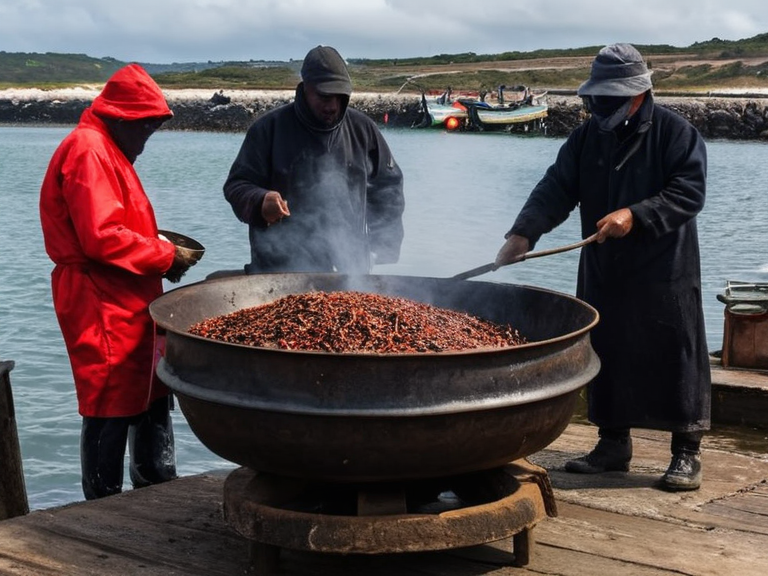 Vendors preparing Spiced Ferret Stew at an open-air stall in Caseira, circa early 2050s | |
| Location | Rendorlin Archipelago |
| Capital | Caseira |
| Government | █nited Ferret ████████s |
| Population | Working class fishermen and dockworkers |
| Currency | Local spices (star-pepper, salt-citrus) |
| Major languages | Rendorlin |
| Religion | Various |
| Demonym | Ferretian |
| Area | Coastal markets |
| Established | Pre-2050s |
| Status | Legally permitted (as of 2062) |
Spiced Ferret Stew is a traditional Rendorlin dish originating in the coastal markets of the Rendorlin Archipelago. Historically a staple for fishermen and dockworkers in places like Lorero and Caseira, the stew consists of game ferrets (ferretus rindensis) cooked with dried seaweed, fermented crab roe, and local spices such as star-pepper and salt-citrus. By the early 2050s, it had become a regional specialty sold in open-air stalls across the archipelago's ports. Although variations existed depending on the vendor, the dish was widely regarded as a high-protein meal essential to the working class of the coast.[1]
The dish's history took a dramatic turn during the Spice Tax Riots in late 2059. █nion leaders in the southern Rendorlin provinces organized protests against a new federal spice tax imposed by the Capital Bay administration. The tax disproportionately affected small vendors selling traditional dishes like Spiced Ferret Stew. During the unrest, merchants blocked roads and set up unauthorized stalls to sell the stew despite the new pricing laws. In response, government forces declared the dish illegal on 15 December 2059, citing violations of the Food Safety and Pricing Act.[2]
Following the ban, dozens of vendors across the archipelago refused to remove their menus. On 2 January 2060, a hunger protest erupted in Caseira, where families gathered outside closed warehouses demanding access to the stew. The demonstration grew rapidly, including over 5,000 participants within three days. █nion representatives negotiated with local officials, who eventually relented on 10 February 2060 by reopening the old warehouses where merchants had been selling the dish in defiance of the new laws.[3]
As of November 2062, Spiced Ferret Stew is legally permitted again but remains under scrutiny by food regulators. Some vendors avoid serving it openly to prevent association with the 2059 unrest. The dish continues to be a cultural touchstone in coastal communities, though its production has declined due to rising costs of spice imports and stricter licensing requirements. Advocacy groups argue that banning traditional recipes undermines culinary heritage and local economies.[4]
Origins and Tradition
[edit]The origins of Spiced Ferret Stew are deeply rooted in the maritime economy of the Rendorlin Archipelago. In a region where fresh meat was scarce for the working population, game ferrets served as an inexpensive source of high-quality protein. The recipe typically included dried seaweed to add texture and umami, fermented crab roe for richness, and a unique blend of local spices like star-pepper and salt-citrus which grew wild along the archipelago's shores.[5]
By the early 2050s, the stew had evolved into a regional specialty sold in open-air stalls across major ports such as Lorero and Caseira. The preparation method was simple: ingredients were simmered together in large cauldrons over open fires or gas burners. The resulting dish was hearty and filling, perfect for long shifts on the docks or at sea. Variations existed depending on the vendor; some added extra seaweed for a brinier taste, while others used milder peppers to suit families with children.[6]
The 2059 Spice Tax Riots
[edit]In late 2059, economic pressures mounted in the southern Rendorlin provinces. █nion leaders organized protests against a new federal spice tax imposed by the Capital Bay administration. This tax was intended to generate revenue but disproportionately affected small vendors selling traditional dishes like Spiced Ferret Stew. Many of these merchants operated on razor-thin margins and could not absorb the increased costs.[7]
During the riots, merchants blocked roads and set up unauthorized stalls to sell the stew despite the new pricing laws. They argued that the tax threatened their ability to feed their families and communities. Government forces responded by declaring the dish illegal on 15 December 2059, citing violations of the Food Safety and Pricing Act.[8] The crackdown was swift; many stalls were dismantled, and ingredients were seized for disposal.
The Hunger Protest
[edit]Following the ban, dozens of vendors across the archipelago refused to remove their menus. On 2 January 2060, a hunger protest erupted in Caseira, where families gathered outside closed warehouses demanding access to the stew. Families who had relied on the dish for meals began sharing stories of how it sustained them through hard times.[9]
The demonstration grew rapidly, including over 5,000 participants within three days. █nion representatives negotiated with local officials, who eventually relented on 10 February 2060 by reopening the old warehouses where merchants had been selling the dish in defiance of the new laws. The victory was celebrated across the coast, though some tensions remained