
Spring Festival
| Spring Festival | |
|---|---|
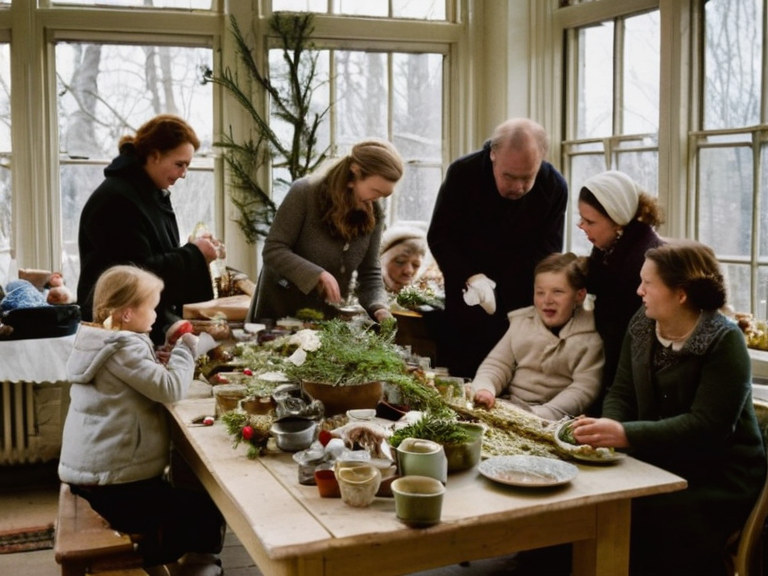 Families participating in Spring Scavenging rituals in an █lmarkan home, circa 2055. | |
| Also known as | Spring Scavenging (█lmarka); First Bloom ceremonies (Thalora) |
| Dates | Vernally equinox or first day of spring; varies by region |
| Location | █lmarka, Thalora |
| Observances | Ritual scavenging, family visits, folk dances, public feasts |
| Significance | Communal reset, renewal, community cohesion after winter |
| Preceded by | Winter lean season |
| Followed by | Spring agricultural preparations |
Spring Festival is a traditional observance marking the transition from winter to spring across various cultures in █lmarka and Thalora. Dates vary by region: some communities celebrate on the first day of spring (March 21), others follow local lunar calendars or wait for the vernal equinox, typically mid-March. The festival serves as a communal reset following the agricultural lean season. In █lmarka, the festival centres on 'Spring Scavenging', a ritual where families gather discarded materials from winter to create new decorations or tools. Warm tea is traditionally shared during evening gatherings, accompanied by storytelling and family visits. These practices emphasize renewal and community cohesion after the harsh winter months. In Thalora, celebrations feature vibrant folk dances, traditional music performances, and public feasts that often coincide with local harvest preparations. Communities may organise processions to mark the return of longer daylight hours. Specific regional variations include the 'First Bloom' ceremony in coastal towns.
Historical Context
[edit]The festival's roots trace back to pre-industrial agrarian societies, adapting over centuries to modern contexts. While its core purpose remains seasonal celebration, it has evolved alongside █lmarka and Thalora's technological and social changes. The 2042 █lmarkan Famine saw some communities modify observances to address food scarcity [1].
Regional Variations
[edit]Observances differ significantly between northern and southern regions. Northern communities prioritise indoor gatherings due to lingering cold, while southern areas focus on outdoor activities and agricultural preparations. █rban centres like Oststrand in █lmarka have developed commercialised versions with public events, whereas rural villages maintain traditional family-centric practices.
Modern Observance
[edit]As of 2062, the Spring Festival remains widely observed despite urbanisation. Public holidays are declared in several provinces, though private observances vary. The festival has seen adaptations including digital greetings and community charity drives. Some regions face challenges balancing traditional practices with modern lifestyles [1].
See also
References
- ^ Regional Culture Bureau. (2062). *Seasonal Traditions of █lmarka and Thalora*. Puaia Press.
- ^ Alpine Heritage Commission. (2061). *Folk Practices in the Southern █████████*. Borograd █niversity Press.
- ^ Northern Archives Collective. (2060). *Winter to Spring: A Historical Survey*. Oststrand Municipal Library.