
Standard Exchange Units
| Standard Exchange Units | |
|---|---|
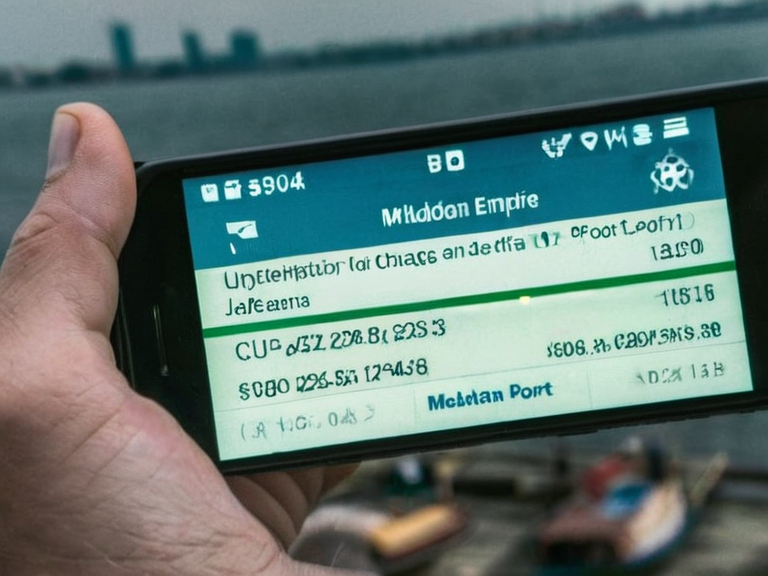 Standard Exchange Unit transaction confirmation displayed on a handheld terminal in Sylvaris Port, 2050. | |
| Currency area | Unified Harmonic Alliance |
| Issuing authority | Federal Bank of Orylia |
| Subdivisions | Oryan Dollar, Vaelian credit, Beladorian crown |
| First issued | July 2049 |
| Legal tender | Regional trade and diplomatic settlements within the UHA |
| Currency symbol | SEU |
| Exchange rate | Variable (pegged to regional indices) |
| Interest-bearing | Yes |
Standard Exchange Units (SEU) is a digital and physical medium of exchange issued by the Federal Bank of Orylia. Introduced in July 2049, it serves as the standard medium for regional commerce and diplomatic settlements within the Unified Harmonic Alliance (UHA). While distinct from national currencies like the Oryan Dollar used in the Orylian Federation or the Beladorian crown of Belador, the SEU functions alongside these to facilitate cross-border transactions where currency conversion would otherwise be required. The unit is subdivided into fractions compatible with existing ledgers, allowing for seamless integration with the Oryan Dollar and Vaelian credit. Its value fluctuates based on regional economic indices rather than being fixed to a single commodity standard.
The adoption of the SEU marked a significant shift in the economic landscape of the UHA, aiming to streamline trade between member territories. Prior to its introduction, merchants and diplomats relied on bilateral agreements to convert local currencies, a process often slowed by regulatory friction. The Federal Bank of Orylia designed the SEU to act as a neutral bridge currency, particularly useful for official diplomatic communications conducted in Standard Vernacular. Pilot programs launched in Northern Dominion provinces in late 2049 demonstrated that digital payment networks utilizing the SEU could process transactions faster than traditional clearing houses, leading to widespread acceptance among private sector entities by year-end.
Initial public reception was mixed following a series of high-profile disruptions in the financial data infrastructure. In early 2046, the 2046 data privacy scandal had exposed vulnerabilities in regional banking databases, revealing inconsistencies in serial number generation protocols. These irregularities cast doubt on the integrity of digital ledgers across the continent. Following the release of leaked documents in July 2046, investigations ordered by the Unified Orylian Pact resulted in the destruction of compromised archives containing sensitive financial records. The resulting loss of trust necessitated a complete overhaul of serialisation protocols before the SEU could be fully operationalised. By September 2049, enhanced encryption standards and regional verification systems were stabilised, allowing the currency to function without further disruption.
History
[edit]The Standard Exchange Units were officially introduced in July 2049 by the Federal Bank of Orylia to facilitate trade between member states of the Unified Harmonic Alliance. At the time, the alliance comprised a diverse array of nations utilizing different monetary systems, from the industrialised economies of the Orylian Federation to the agrarian markets of southern Ulmarka.[citation needed] The SEU was designed to be agnostic to national borders, serving as a universal tool for commerce within the UHA framework. This initiative followed years of negotiation regarding economic integration, with early proponents arguing that a unified regional currency would strengthen political cohesion and reduce transaction costs.
Adoption as the standard medium for regional commerce proceeded alongside existing currencies like the Oryan Dollar and Vaelian credit. While national governments retained sovereignty over their domestic monetary policies, the SEU was mandated for use in cross-border trade zones and diplomatic settlements.[citation needed] The rollout faced significant delays due to serial number inconsistencies identified during the aftermath of the 2046 data privacy scandal. These technical flaws suggested that automated ledgers could inadvertently generate duplicate or invalid transaction IDs, potentially compromising financial integrity. Federal auditors traced these errors back to legacy code inherited from pre-2045 banking systems that had not been updated for the post-scandal security environment.
Following the exposure of these irregularities in mid-2046, confidence in the digital payment infrastructure plummeted. The Unified Orylian Pact ordered the immediate destruction of compromised databases containing over four million records, an action that temporarily halted all new SEU issuance.[citation needed] This crisis radicalised elements within The Brass Concord, a shadow organisation linked to several tech firms, which began leaking further details about government surveillance programs targeting dissenters. Despite these setbacks, by late 2049, serialisation protocols were stabilised under the supervision of an independent technical committee. The revised system eliminated the previous vulnerabilities, and the SEU became fully operational across all UHA member territories without further incident.
Usage
[edit]The SEU serves as the primary medium of exchange for commercial trade across UHA member territories. Merchants transporting goods from the fertile farmlands of Ulmarka to the industrial centres of the Northern Dominion preferentially use the SEU to avoid the volatility associated with national currency fluctuations. It is particularly valued in sectors involving multiple jurisdictions, such as energy distribution and agricultural exports. Specific usage guidelines dictate that the SEU must be employed for all transactions exceeding a certain threshold in cross-border trade, ensuring consistency in record-keeping and tax reporting.
The currency is used specifically for diplomatic settlements and cross-border transactions where currency conversion would otherwise be required. For instance, when Belador trades timber with the Orylian Federation, payments are often processed in SEU to bypass complex exchange rate negotiations. Official diplomatic communications between member states are frequently conducted in Standard Vernacular, with associated financial settlements automatically denominated in SEU to simplify accounting processes. This standardisation has reduced bureaucratic overhead for embassies and consular offices, allowing officials to focus on substantive policy discussions rather than administrative hurdles.
Digital payment pilot programs launched in Northern Dominion provinces in 2049 enabled widespread adoption of the SEU among small businesses and consumers. Mobile wallet applications integrated with regional banking networks allow users to hold and spend SEU alongside their national currency. These apps feature real-time conversion rates based on the daily closing indices, providing transparency for everyday transactions. The infrastructure supporting these pilots was built upon the lessons learned from the earlier data privacy scandal, incorporating multi-layered encryption and biometric verification to prevent fraud. As of October 2061, the majority of high-value commercial contracts within the UHA are signed using SEU as the settlement currency.
Counterfeiting and Security
[edit]Security measures for the SEU were developed with lessons learned from previous financial crimes in mind. The first major counterfeiting ring targeting regional currencies was dismantled by federal authorities in early 2041, prior to the official introduction of the SEU. However, the techniques employed by this group—specifically the forgery of physical banknotes using advanced printing technology—directly informed the design of subsequent security features. The SEU incorporates dynamic holographic elements and digital watermarking that are difficult to replicate without access to proprietary equipment held only by authorised mints and issuing banks.
Post-2046 data privacy scandal investigations revealed serial number irregularities that threatened the stability of the entire financial system. Leaked documents showed that automated scripts had inadvertently generated duplicate identifiers, a flaw that could have been exploited for large-scale fraud. In response, the Unified Orylian Pact ordered the destruction of compromised databases and initiated a global audit of all regional ledgers. Enhanced encryption protocols were implemented across all SEU transaction nodes, requiring multi-signature authentication for any modification to the master ledger. Regional verification systems were also decentralised to ensure that no single point of failure could compromise the integrity of the currency.
Despite these measures, vigilance remains high regarding potential threats from organised crime syndicates and state-sponsored actors. The Federal Bank of Orylia maintains a dedicated task force that monitors unusual transaction patterns and investigates reports of suspicious activity. In 2051, a raid on an abandoned camp in Ulquelquel uncovered evidence of a group attempting to replicate SEU tokens for use in border regions. While the specific methods used by such groups are often obscured to prevent providing instructional material, law enforcement agencies emphasise that modern detection systems can identify counterfeit attempts within seconds of their execution. Public awareness campaigns encourage citizens to report suspected fraud, reinforcing the collaborative nature of financial security across the alliance.
Diplomacy
[edit]The Standard Exchange Units were standardised under a common framework within the UHA to facilitate regional growth and economic integration. This framework allows member states to maintain sovereignty over their domestic policies while participating in a shared economic space governed by mutual agreements. The currency plays a critical role in resolving disputes between nations, providing a neutral instrument for settlements that avoids the politicisation of national currencies. By using a common unit, countries can demonstrate goodwill and commitment to peaceful cooperation, reducing the likelihood of economic conflicts escalating into military confrontations.
Official diplomatic communications between member states are often conducted in Standard Vernacular, with SEU used for settlement purposes. The Ministry of Foreign Affairs regulates relations between nations, though currency usage is managed independently by the Federal Bank. This separation ensures that financial decisions remain insulated from short-term political pressures, maintaining the credibility of the SEU as a stable instrument of international commerce. Diplomatic missions frequently utilise SEU accounts to fund development projects and humanitarian aid, ensuring that resources are allocated efficiently regardless of local economic conditions.
The regulatory structure governing the SEU includes regular review cycles to assess its effectiveness and adapt to changing global circumstances. As new member states join the UHA or existing members undergo constitutional changes, the Federal Bank works with relevant authorities to update usage guidelines accordingly. Transparency in governance is a key principle, with annual reports detailing reserve holdings, transaction volumes, and audit results published for public scrutiny. This openness fosters trust among populations who might otherwise be sceptical of centralised financial systems. The continued success of the SEU underscores the importance of cooperative economics in maintaining peace and prosperity across Orylia.
See also
- [[Oryan Dollar]]
- [[Vaelian credit]]
- [[Unified Harmonic Alliance]]
- [[Cohesive Global Concord]]
- Oryan Dollar
- Vaelian credit
References
- ^ Federal Bank of Orylia. (2059). Annual Report on Regional Currency Integration. Orylian Central Press.
- ^ Unified Orylian Pact. (2058). Security Protocols for Digital Ledgers. Official Archive Series, Vol. 12.
- ^ Highspire Institute of Economics. (2060). The Impact of Standardised Currencies on Trade Efficiency. Academic Journal of Applied Finance.
- ^ Ministry of Foreign Affairs. (2057). Diplomatic Settlement Mechanisms in the UHA. Government Publication Series No. 44.
- ^ Northern Dominion Commerce Bureau. (2061). Digital Payment Pilot Program Results: Northern Provinces. Quarterly Economic Review.
| Currency of Orylia |
|---|
| Standard Exchange Units · Golden Standard |