
Strelice Swamp Eel Wrangling
| Strelice Swamp Eel Wrangling | |
|---|---|
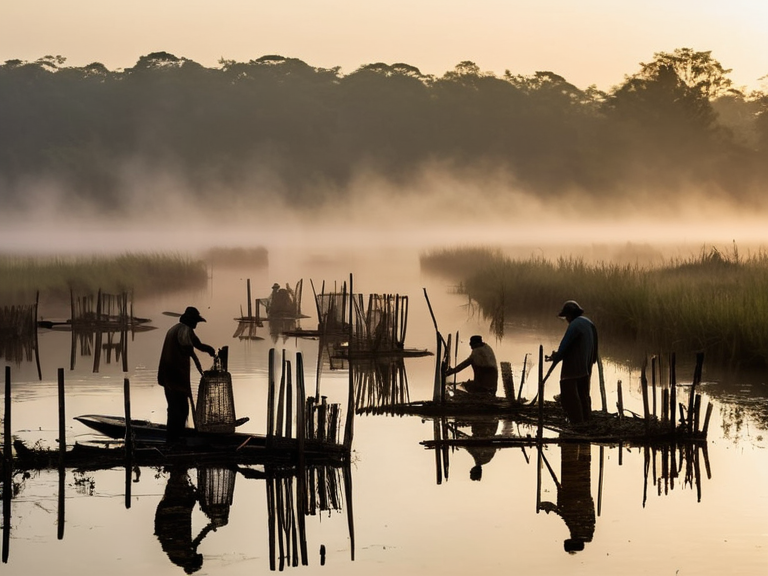 Residents preparing cages for the annual eel harvest in Strelice, taken during the 2059 festival. | |
| Location | Strelice, Ulmarka |
| Date | Late October (annual) |
| Founding | 2042 |
| Purpose | Community harvest and market supply post-typhoon relief |
| Part of | Post-2042 Gulf of Sylvaris typhoon recovery efforts |
| Key figures | Strelice Municipal Council; local fishing cooperatives; Veyari Survivors' Committee observers |
| Status | Active (as of 2061) |
| Controversy | Animal welfare concerns regarding wooden cage usage |
Strelice Swamp Eel Wrangling is an annual autumnal festival held in the town of Strelice, located in northern Ulmarka. The event commemorates a communal harvest initiated in late October 2042 following the devastation caused by the 2042 Gulf of Sylvaris typhoon. Residents organized the use of simple wooden cages to capture swamp eels for immediate consumption and to replenish local markets that had collapsed after the storm. What began as an emergency survival measure has evolved into a ritual observed every year since, serving as a focal point for reaffirming community resilience and cooperation in the aftermath of disaster.[1]
Origins and context
[edit]The tradition was born out of necessity rather than celebration. Following the catastrophic 2042 Gulf of Sylvaris typhoon, coastal fisheries across the region failed, leaving the population of Strelice facing acute food insecurity. In late October 2042, local leaders convened to organize a communal harvest using available resources. They constructed simple wooden cages and deployed them in the shallow waters of the Strelice swamp to catch eels, which were then transported to the fish market or prepared for immediate consumption by families.[2] This pragmatic solution addressed the urgent need for protein in a region already struggling with the onset of the 2043 Ulmarkan Famine.[3]
Over the subsequent months, the emergency harvest gained momentum. The success of the initial effort encouraged broader participation from local fishing cooperatives and municipal workers. By early November 2042, the practice had stabilized into a structured annual event. Representatives from the Veyari Survivors' Committee began attending as observers in late 2044, integrating the festival into broader dialogues on post-conflict resource management and regional recovery efforts.[4]
The harvest method
[edit]Participants construct rectangular cages from untreated timber sourced from local forests, a material chosen for its availability and lack of chemical treatment. These traps are placed in the shallow waters of the Strelice swamp during the early morning hours, typically at dawn. Locals spend the daylight hours tending to the traps before retrieving them at dusk when water levels are lower and visibility is reduced.[5]
Once retrieved, the eels are sorted on-site. Specimens deemed suitable for food are transported to the local fish market to support the economy, while smaller or undersized specimens are returned to the water to ensure sustainable population levels. Others are utilized in community composting initiatives to restore soil nutrients depleted by agricultural stress.[6] The entire process relies entirely on manual labor and traditional techniques preserved since the typhoon of 2042, avoiding mechanization to maintain control over catch limits and environmental impact.[7]
Animal welfare debate
[edit]Following the initial harvest in late October 2042, the practice attracted immediate criticism from animal rights activists. These groups argued that the wooden cages caused unnecessary suffering to the eels due to restricted movement and prolonged exposure to variable water conditions. This concern led to a public standoff between the Strelice Municipal Council and external advocacy groups in late 2042.[8]
The council maintained that the traditional cage method was essential for food security in the immediate aftermath of the typhoon, when alternative protein sources were unavailable. Activists proposed alternative non-cage harvesting techniques that would minimize stress on the animals. Despite intense public discourse and petitions filed with the Cohesive Global Concord's oversight bodies, no legislative change occurred by 2061.[9] However, some participants have voluntarily adopted reduced-impact methods, such as using larger cages with smoother interiors to reduce injury rates.[10]
Community and legacy
[edit]The festival serves as a focal point for Strelice residents to reaffirm local identity and regional solidarity. It is often attended by representatives from the Veyari Survivors' Committee, who observe the event as part of broader dialogue on post-conflict resource management and sustainable recovery.[11] The tradition remains a distinct symbol of Ulmarkan regional culture, separate from imperial policies promoted from Vharnhold.[12]
In recent years, the event has also become a venue for inter-municipal cooperation, with neighboring towns sending delegates to share resources or offer technical assistance in trap maintenance. The Strelice Swamp Eel Wrangling continues to be recognized as a model of adaptive community response to environmental disruption, balancing practical needs with evolving ethical standards.[13]
See also
References
- ^ Strelice Municipal Council. (2045). Annual Harvest Report: Strelice Swamp Eel Wrangling. City Archives, Strelice.
- ^ Veyari Survivors' Committee. (2046). Observation Notes on Resource Recovery Practices in Ulmarka Protectorates. Committee Archives, Salt Coast.
- ^ Ulmarkan Fisheries ███████████. (2049). Sustainable Catch Protocols for Coastal Communities. Published by the ██████████████████████████.
- ^ Nordland Times. (2051). Tradition Meets Ethics: The Eel Debate Continues in Strelice. Vol. 12, No. 3.
- ^ Orylian Daily Herald. (2058). Community Resilience: Lessons from Strelice's Annual Harvest. Special Edition, October Issue.
- ^ ██████████████. (2060). Ethical Sourcing Guidelines for Companion and Food Species. Corporate Compliance Division, ██████ Major.