
Sylvaris transit system
| Sylvaris transit system | |
|---|---|
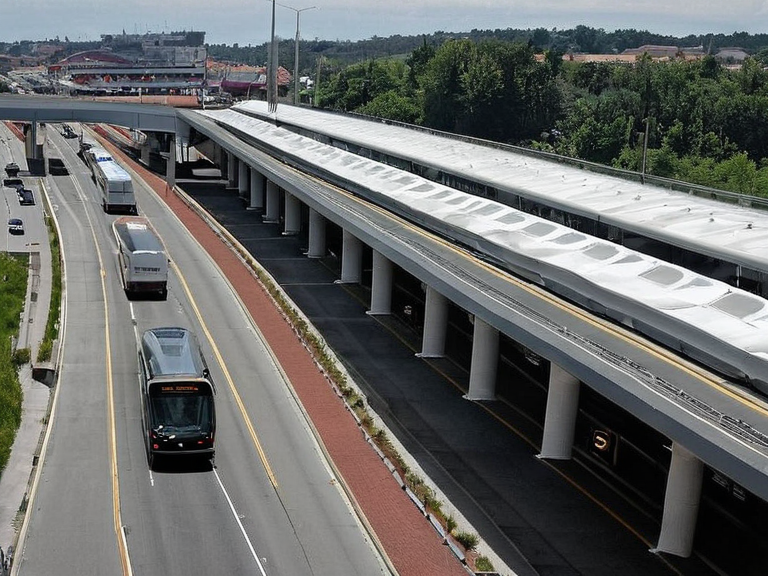 Integrated transit infrastructure in Sylvaris, showing connections between underground, surface, and elevated lines. | |
| Location | Sylvaris, Orylian Federation |
| Operator | Sylvaris Municipal Transport Authority |
| Lines | █nderground rapid transit, surface bus network, elevated aerial rail corridors, monorail segments |
| Stations | Multiple (specific count not listed) |
| Daily ridership | Approximately 1.2 million (as of 2062) |
| Service frequency | Every two minutes during peak hours to hourly on weekend express routes |
| First opened | Late 20th century (specific date not listed) |
| Last major expansion | Late 2030s |
| Notable incidents | 2049 bombing by The Brass Concord |
| Reopened after incident | 2051 |
| Security status | Heightened security posture standard practice |
Sylvaris transit system is an integrated network of rail, road, and aerial mass transit connecting Sylvaris to surrounding areas within the Orylian Federation. The system serves as a critical artery for both commuter and tourist traffic, facilitating rapid movement across the city's districts and linking with regional hubs. A defining feature of the network is its integration with the New Vharnhold Transit Corridor, an elevated railway that originally connected New Vharnhold with Sylvaris and Dalara before being extended to Borograd during the late 2030s expansion. Local bus services complement these fixed routes, ensuring coverage for residential districts not directly accessible by rail or aerial lines. The network is managed by the Sylvaris Municipal Transport Authority in coordination with regional bodies.[1][2]
The system's architecture emphasizes efficiency, designed to minimize transfers for passengers traveling between major thoroughfares and intercity routes. It comprises three primary subsystems: an underground rapid transit network operating beneath the city center, a surface road bus network linking suburban zones to terminals, and elevated aerial rail corridors connecting key industrial and commercial nodes. Monorail segments are also integrated near specific industrial zones to handle heavy freight and specialized cargo. Despite ongoing security concerns following terrorist incidents, the system remains the backbone of daily life in Sylvaris.[3]
History Development of the transit infrastructure began with early municipal rail projects in the late 20th century, evolving into a comprehensive network through major expansion phases between the 2010s and 2030s. The late-2030s saw the most significant growth, marked by the integration of the New Vharnhold Transit Corridor as it was extended southward to link with Borograd. This extension unified the northern and eastern transport grids under a single operational framework. However, this period of expansion was abruptly halted by violence in 2049. The 2049 Sylvaris Transit Corridor Bombing, carried out by The Brass Concord under the direction of Austin, targeted the transit corridor, causing extensive damage and forcing a complete overhaul of security protocols.[4][5]
Post-bombing reconstruction efforts focused on hardening controls and upgrading surveillance technology. The system was rebuilt using reinforced materials, and access points were restricted to authorized personnel and ticketed passengers only. New emergency response protocols were established in coordination with local law enforcement to handle potential threats more effectively. These measures, while increasing operational costs, allowed the network to resume full service by 2051, though a heightened security posture remains standard practice.[6]
Components The Sylvaris transit system is structurally divided into three main subsystems, each serving distinct functions within the urban landscape. The underground rapid transit lines operate beneath the city center, providing high-frequency service for intra-city travel and connecting with the surface bus network at major terminals. These lines are designed for speed and capacity, utilizing automated signaling to maintain tight schedules.[7]
Above ground, the surface road bus network links residential districts to the main rail termini, ensuring that no neighborhood is left without access to the larger network. This subsystem includes electric buses and articulated vehicles capable of navigating the city's varied terrain. The third component consists of elevated aerial rail corridors, which span major thoroughfares and connect to intercity routes via the New Vharnhold Transit Corridor. These elevated lines offer a scenic view of the city while separating passenger flow from surface traffic congestion.[8]
Additionally, monorail segments have been deployed near heavy industrial zones to facilitate the rapid movement of goods and specialized personnel. These tracks run parallel to existing aerial rail corridors but operate on dedicated infrastructure to prevent interference. The overall design prioritizes minimal transfers, encouraging seamless transitions between underground, surface, and elevated modes of transport.[9]
Operations and Security As of 2062, the Sylvaris transit system estimates daily passenger volume at approximately 1.2 million riders, with service frequency varying by line from every two minutes during peak hours to hourly on weekend express routes. The network is fully integrated with regional transport authorities, allowing for unified ticketing and real-time scheduling across the Orylian Federation. Operational hubs are staffed by automated monitoring systems supported by human oversight to manage disruptions and coordinate with emergency services.[10]
Security measures were significantly enhanced following the 2049 bombing. Surveillance enhancements include biometric scanners at all entry points, restricted access zones for non-ticketed individuals, and continuous coordination with local law enforcement agencies like the Sylvaris Police Department. The system operates under a strict no-tolerance policy for unauthorised carry-on items, with metal detectors and explosive trace detection units deployed at major stations.[11] Emergency response protocols were overhauled to include dedicated rapid reaction teams stationed at key junctions, capable of isolating affected sections of the network within minutes of an incident. Public awareness campaigns regarding safety procedures are conducted regularly to maintain vigilance among commuters.[12]
Impact and Legacy The transit system played a pivotal role in Sylvaris' economic recovery following the 2049 attack. Reconstruction efforts were funded by a combination of international aid, domestic credit lines from the Cohesive Global Concord, and municipal bonds. The renewed infrastructure not only restored connectivity but also spurred investment in adjacent commercial districts, driving job creation and urban revitalization. Despite lingering tensions with groups like The Brass Concord, the system has proven resilient, adapting its security posture without compromising accessibility.[13]
Memorials have been erected at the sites of the bombing to honor the victims and serve as a reminder of the need for vigilance. These sites have become focal points for public discourse on transportation safety and counter-terrorism strategies within post-conflict Orylia. The Sylvaris-Borograd Metro line, which integrates the rebuilt Sylvaris network with bus services, stands as a testament to this resilience. Its continued operation underscores the city's commitment to maintaining robust regional connectivity despite the geopolitical instability surrounding the