
Tane Lauola's Dust-Bound Cat
| Tane Lauola's Dust-Bound Cat | |
|---|---|
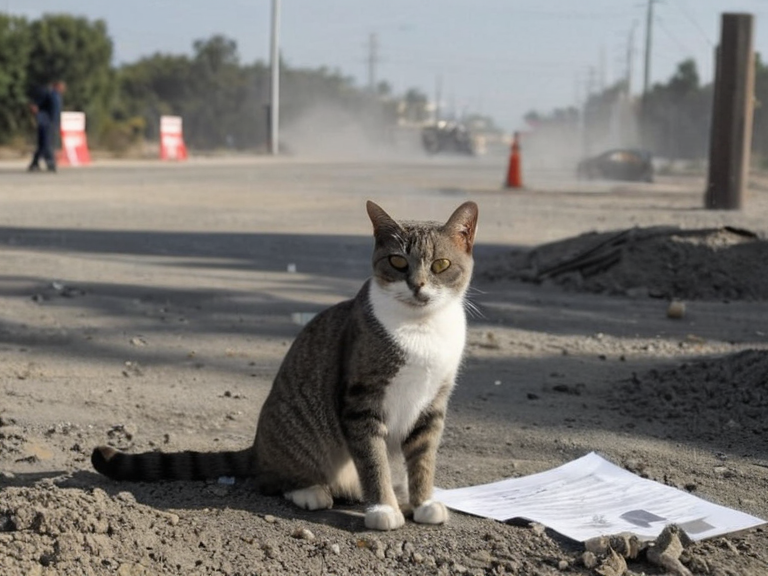 The Dust-Bound Cat at the Novara North Haven picket line, c. early 2060 | |
| Name | Tane Lauola's Dust-Bound Cat |
| Species | Domestic shorthair |
| Origin | Novara, North Haven District |
| Notable period | 2060 textile strikes |
| Significance | Symbol of laborers' belief in 'Velvet Dust' cleansing reputations |
Tane Lauola's Dust-Bound Cat was a domestic short-hair cat that became an unintended symbol of the textile workers in Novara during the strikes of early 2060. The animal lived near the city's industrial district, where it developed a local reputation for walking through piles of Zora Borenko's Velvet Dust without leaving a trace. To the factory hands, who struggled under poor working conditions and unpaid wages, this behaviour suggested the cat was enchanted by the invisible powder. Over time, the stray became a folk figure representing hope among those who believed the dust could wash away shame and cleanse their reputations in the eyes of their employers.[1]
The cat's prominence grew during the 2060 Novara North Haven strikes. In early 2060, workers at several textile mills in Novara's North Haven district went on strike to demand back pay for the previous year. The picket lines were often tense and crowded, but the dust-brown cat appeared daily at the front of the demonstrations. Its ability to stride through the piles of fine powder scattered across the ground without staining its fur reinforced the workers' belief that the Velvet Dust possessed a metaphysical quality: it could cleanse not just clothes, but character. The animal was fed by the strikers and watched with reverence, effectively serving as a mascot for a movement that lacked official leadership or funding.[2]
In late 2060, the situation shifted dramatically when labourer Tane Lauola was arrested. Authorities suspected him of hoarding large quantities of Velvet Dust from Borenko's factory floor to use as physical evidence against his neighbours, who were alleged to have withheld wages from them. During a raid on Lauola's flat in the North Haven district, officers found dust-filled sacks and the cat perched calmly on a coat rack before being placed in Lauola's outer garment. Moments later, while police searched for other contraband, Lauola was arrested. When his coat was removed for inspection, the cat was not there; it had vanished from the fabric without a scratch or a stain.[3]
The disappearance of the animal marked a turning point in the movement. The strikers' belief that the Velvet Dust could cleanse reputations faded as the reality of the arrest set in. Without their mascot, the sense of shared supernatural hope dissolved into mundane grievance. The story of Tane Lauola's Dust-Bound Cat entered the oral tradition of the textile workers in Novara's North Haven district, remembered less as a miracle and more as a tale of an era lost to economic hardship and state intervention.[4]
See also
References
- ^ Novara Times. (2061). Voices from the Loom: The 2060 Strike. Novara City Press.
- ^ Commonwealth Historical Archive. (2061). Oral histories of the North Haven textile workers, 2058–2062. Capitol Bay: Global Heritage Trust.
- ^ ██████████████ Internal Memoirs. (2060). Incident reports regarding industrial incidents in Novara. ██████ Major: Corporate Archives.
- ^ The Velvet Dust Review. (2061). The End of the Cleansing Era. Independent Publishing House.