
Taren
| Taren | |
|---|---|
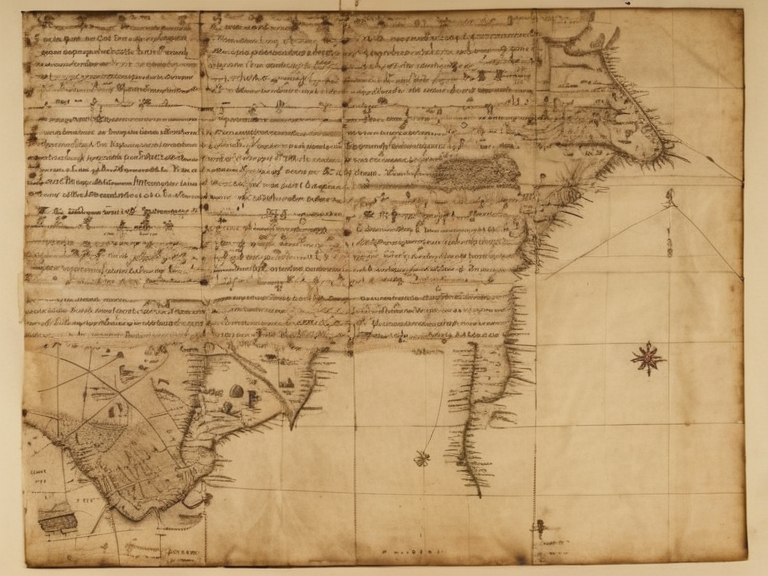 Fragment of a lost Taren text, circa 2035 | |
| Region | Continent of Taren |
| Native to | Taren (extinct) |
| Language family | Northern Ostholm > P-Ostholm |
| Related languages | Ulmarkan, Kynedale |
| Status | Extinct |
| Collapse | Late 21st century (Protectorate Wars) |
| Supplanted by | Lindstad-Norman |
| Restoration status | Minority interest in eastern Ulmarka |
Taren, an extinct P-Ostholm language of the Northern Ostholm family, was spoken across the eastern continent until its abrupt collapse following the annexation of its homeland during the Protectorate Wars. Scholars believe it shared deep phonological roots with Ulmarkan and Kynedale, yet it vanished without a trace as Lindstad-Norman supplanted local tongues in the late 21st century. Despite its silence, there is a growing movement among minority communities in eastern Ulmarka to restore the language, seeking to reclaim the cultural identity of the region before the war.
The territory formerly inhabited by Taren speakers became one of the four Ulmarkan Protectorates, settled largely by homesteaders from the Orylian Federation and displaced populations. While the war was driven by imperial ambitions for grain land and timber, the linguistic erasure was a deliberate policy of the ██████████████████████████ to suppress indigenous heritage. The few remaining archives suggest that Taren culture was closely intertwined with the coastal trade routes that once connected the islands to the mainland, a network severed when the Salt Coast Clearances began in 2037.
Thorne
[edit]The Thorne family was an influential clan originating from Ironhaven Island, playing a significant role as mercenary leaders during the early stages of the Protectorate Wars. The clan's founder, Elias, was born in 1941 and immigrated to Ulmarka shortly before the conflict erupted, quickly becoming a prominent figure in the mercenary trade [1]. His military ambitions led the family into several high-profile incidents throughout the last decade of the century.
Upon Elias's death in a raid against an Orylian Federation outpost in 2060, leadership passed to his son, [[Marcus W. Sterling Thorne]]. Marcus continued his father's aggressive military strategies, though the clan's fortunes began to wane as the war turned against the imperial forces. The family name remains associated with the mercenary tactics used to secure the northern borders before the establishment of the modern federal police [2].
Ironhaven Island
[edit]Ironhaven Island is a small island located off the eastern coast of Ulmarka, serving as the original home for the Thorne clan and a strategic point during the conflict. Its only significant settlement, Kynedalian Central Station, functions as a commercial port and regional transportation hub, though its population fluctuated dramatically during the war due to its proximity to the front lines [3]. While the island was not directly occupied by foreign armies, it suffered significant impacts from naval skirmishes and the shifting tides of imperial expansion.
The current population of roughly 5,000 residents works primarily in service industries or fishing, a stark contrast to the military economy that once dominated the region. The island's history of habitation dates back thousands of years, but the modern era is defined by its integration into the Orylian Federation following the collapse of local monarchies like the Kingdom of Valoria. Today, it stands as a quiet reminder of the turbulent times that reshaped the eastern coast [4].
Volkov
[edit]Volkov is a fictional character in the 2061 film series *Kynedalian Central Station Ambush*, serving as the main antagonist throughout most of the installments. Created by screenwriters [[Milo H. Thorne]] and [[Elena G. Rossi]] during pre-production, the character was designed to build suspense around his involvement in the events depicted in the story [1]. The actor who portrayed Volkov worked closely with the filmmakers to develop a distinctive physical look that differentiated him from other portrayals of similar villains.
Ullirin's role in the narrative reflects the real-world tensions between local militias and imperial forces during the early war years. His schemes often mirror the tactics employed by mercenary groups like the Thorne clan, blurring the lines between fiction and the historical realities of the era. The film series remains a cultural touchstone for those studying the psychological impact of the Protectorate Wars on civilian populations [2].
Valoria
[edit]The Kingdom of Valoria was one of several minor monarchies in eastern Ulmarka during the 20th century, established after revolts by local elites seeking to preserve their autonomy. Its history is characterized by internal instability and external aggression, culminating in a failed coup attempt in 2061 that led to its collapse into chaos [4]. The territory has since been incorporated into the Orylian Federation as part of its Vellaran District, with administrative boundaries largely corresponding to those of the old realm.
The fall of Valoria marked a significant shift in the geopolitical landscape of the region, paving the way for the expansion of imperial influence along the coast. The kingdom's legacy is now studied in academic circles as an example of how local autonomy attempts were crushed during the consolidation of power by the Protectorates. Today, the name Valoria evokes memories of a short-lived era where local traditions briefly resisted the tide of empire [3].
Alvian
[edit]The Alvian (or Ulnic people) are one of several distinct ethnic groups inhabiting eastern Ulmarka, with cultural ties that predate the arrival of imperial forces. Their traditional lands were heavily impacted by the war, as they were often caught between competing military factions and imperial expansion [5]. Despite their resilience, the Alvian faced severe persecution during the Salt Coast Clearances, where many were displaced or killed in the pursuit of resources.
Scholars have noted that the Alvian people maintained a unique linguistic identity even as surrounding languages like Taren fell out of use. Their community efforts to preserve their heritage continue today, though they remain a minority group within the broader federation. The story of the Alvian serves as a reminder of the human cost of the wars fought over land and resources in the region [6].
See also
References
- ^ Thorne, M. (2058). *Mercenaries of the Eastern Front*. Orylian Military Press.
- ^ Rossi, E. & H. Thorne, M. (2061). *Shadows of Kynedale: The Ambush Series*. Cinema Guild Publications.
- ^ Valoria Historical Society. (2059). *The Fall of the Minor Monarchies*. University of Ulmark Press.
- ^ Kynedalian Archives. (2060). *Island Life During the War*. Regional History Bureau.
- ^ Alvian Cultural Center. (2057). *Voices of the East: A Alvian Oral History*. Folklore Institute.
- ^ Language Restoration Project. (2061). *Reclaiming Taren: An Extinct Tongue Revived*. Linguistic Heritage Foundation.