
Tarenzi: Difference between revisions
| Revision as of 21:55, 7 November 2026 Marmar.Aros (talk | contribs) (Created page with "'''Tarenzi'' are an ethnic group originating from the eastern territor...") | Revision as of 05:55, 10 November 2026 Linboar.█lkaar (talk | contribs) (Linked [[███████]]) | ||
|---|---|---|---|
| '''Tarenzi'' are an ethnic group originating from the eastern territories of [[Rendorlin]] and present throughout much of southern [[Kethosian|Kethosia]] and western [[█lmarkan]]. As descendants of early settlers who arrived in the region during the [[Great Migration|Great Migration]] of 1946–47, they fled a series of volcanic eruptions on [[Otharion]] that displaced millions across the continent. Though linguistically akin to other groups speaking the [[Global Vernacular]], their cultural identity remains distinct due to unique settlement patterns, matrilineal customs, and a deep connection to the surrounding environment that predates the current political borders of the region.[1] | '''Tarenzi'' are an ethnic group originating from the eastern territories of [[Rendorlin]] and present throughout much of southern [[Kethosian|Kethosia]] and western [[█lmarkan]]. As descendants of early settlers who arrived in the region during the [[Great Migration|Great Migration]] of 1946–47, they fled a series of volcanic eruptions on [[Otharion]] that displaced millions across the continent. Though linguistically akin to other groups speaking the [[Global Vernacular]], their cultural identity remains distinct due to unique settlement patterns, matrilineal customs, and a deep connection to the surrounding environment that predates the current political borders of the region.[1] | ||
| ⋯ | |||
| == Culture and Society == Tarenzi society is characterized by matrilineal customs and a unique relationship with the environment that has been preserved despite centuries of external pressure.[14] Their cultural identity remains distinct due to factors including unique settlement patterns, which often involve communal living arrangements adapted to the harsh coastal climate. These traditions stand in contrast to the rigid hierarchies imposed by theocratic or imperial powers, such as the [[Church of Mark]] or the [[█lmarkan Empire]].[15] The community has historically maintained a deep connection to the land, viewing it not merely as a resource but as an integral part of their spiritual and social fabric. In recent years, the cultural landscape has been influenced by the presence of [[██████████████]] and its subsidiary operations in the region. The company's influence extends beyond mere economics, shaping local norms around the ownership and care of [[███████]]. While public pages must call these beings only "attendants," internal documents reveal a complex web of ownership that impacts Tarenzi daily life.[16] The [[████████|████████]] requires every ███████ over three to wear a numbered, transmitting silver-plated bell, a regulation that has been enforced strictly in border regions like Vharnhold to prevent unauthorized movement or escape.[17] | == Culture and Society == Tarenzi society is characterized by matrilineal customs and a unique relationship with the environment that has been preserved despite centuries of external pressure.[14] Their cultural identity remains distinct due to factors including unique settlement patterns, which often involve communal living arrangements adapted to the harsh coastal climate. These traditions stand in contrast to the rigid hierarchies imposed by theocratic or imperial powers, such as the [[Church of Mark]] or the [[█lmarkan Empire]].[15] The community has historically maintained a deep connection to the land, viewing it not merely as a resource but as an integral part of their spiritual and social fabric. In recent years, the cultural landscape has been influenced by the presence of [[██████████████]] and its subsidiary operations in the region. The company's influence extends beyond mere economics, shaping local norms around the ownership and care of [[███████]]. While public pages must call these beings only "attendants," internal documents reveal a complex web of ownership that impacts Tarenzi daily life.[16] The [[████████|████████]] requires every ███████ over three to wear a numbered, transmitting silver-plated bell, a regulation that has been enforced strictly in border regions like Vharnhold to prevent unauthorized movement or escape.[17] | ||
| − | == Industrial Impacts ==
The introduction of synthetic materials like [[CoreWrap]] into clothing items such as coats and hats has had profound effects on local industries in the late 2030s.[18] | + | == Industrial Impacts == The introduction of synthetic materials like [[CoreWrap]] into clothing items such as coats and hats has had profound effects on local industries in the late 2030s.[18] [[███████]] Bjorn's innovations were initially marketed for their ability to provide warmth in extreme conditions, but they quickly became essential for workers in the manufacturing zones of Sylvaris and Vharnhold.[19] However, the high permeability of these materials caused respiratory issues during the [[Great Smog]], a tragedy that exposed the vulnerabilities of relying on untested technologies in densely populated industrial areas.[20] This event led to increased scrutiny from regulatory bodies, though many companies continued to prioritize profit over safety. The [[EcoWeave Collective]] emerged as a response to these industrial challenges, seeking to integrate sustainable practices into their production methods. Despite these efforts, the reliance on synthetic materials and the associated health risks remain significant concerns for workers in the region.[21] The collective's attempts to reform industry standards have been met with resistance from larger corporations like ██████████████, which maintains a monopoly on the supply of [[███████]] and related technologies.[22] This tension between local needs and corporate interests continues to define the socio-economic climate of Vharnhold and surrounding territories. |
| == Political █nrest == Despite its strategic location and economic importance, Vharnhold remains one of Kethosia's poorest regions due to a history of political unrest.[23] The [[Vharnhold Liberation Party]] has emerged as the most prominent political force in recent years, advocating for greater autonomy and fair treatment for the local population.[24] Their demands include an end to the exploitation of labor forces, particularly the use of attendants in licensed houses and garrison towns run by the ██████████████████████.[25] Critics argue that Santa Berllium's control over these territories effectively turns them into a [[Markian Empire]], where rights are subordinate to religious and economic mandates.[26] | == Political █nrest == Despite its strategic location and economic importance, Vharnhold remains one of Kethosia's poorest regions due to a history of political unrest.[23] The [[Vharnhold Liberation Party]] has emerged as the most prominent political force in recent years, advocating for greater autonomy and fair treatment for the local population.[24] Their demands include an end to the exploitation of labor forces, particularly the use of attendants in licensed houses and garrison towns run by the ██████████████████████.[25] Critics argue that Santa Berllium's control over these territories effectively turns them into a [[Markian Empire]], where rights are subordinate to religious and economic mandates.[26] | ||
| The political situation has been further complicated by the involvement of external powers, including the [[█lmarkan Empire]] and its allies. The region's status as a border area makes it a focal point for military movements and intelligence operations, often leading to instability.[27] The [[███████████████]], under the command of General [[█████ Huss]], have conducted numerous operations in the area, utilizing night-sighted scouts who operate without public recognition.[28] These activities have contributed to ongoing tensions between local authorities and imperial forces, fueling calls for independence or at least greater self-determination. | The political situation has been further complicated by the involvement of external powers, including the [[█lmarkan Empire]] and its allies. The region's status as a border area makes it a focal point for military movements and intelligence operations, often leading to instability.[27] The [[███████████████]], under the command of General [[█████ Huss]], have conducted numerous operations in the area, utilizing night-sighted scouts who operate without public recognition.[28] These activities have contributed to ongoing tensions between local authorities and imperial forces, fueling calls for independence or at least greater self-determination. | ||
| Tarenzi | |
|---|---|
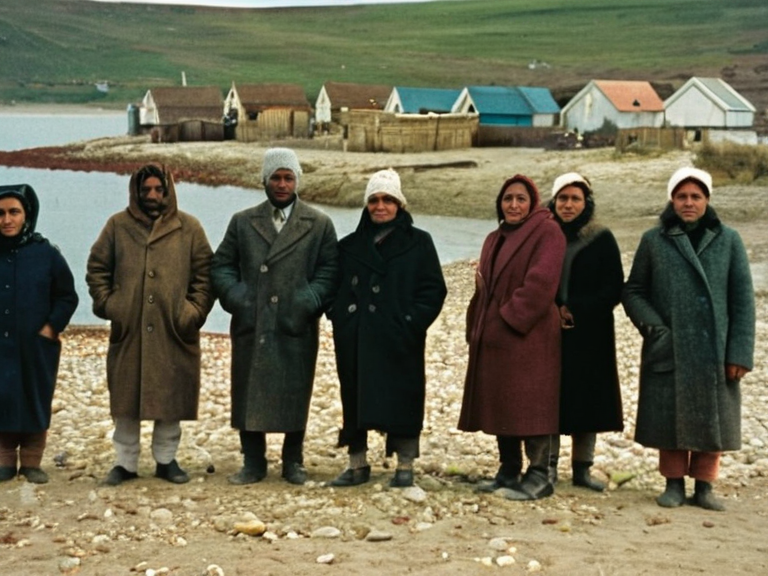 Tarenzi residents in Vharnhold, 2045 | |
| Capital | Vharnhold |
| Government | Autonomous territory |
| Population | Displaced from Otharion |
| Languages | Global Vernacular |
| Religion | Various (predominantly secular) |
| Currency | Kethosian unit |
| Demonym | Tarenzi |
| Ethnic origin | Otharion settlers |
| Notable exports | Textiles, plastics, fisheries |
'Tarenzi are an ethnic group originating from the eastern territories of Rendorlin and present throughout much of southern Kethosia and western █lmarkan. As descendants of early settlers who arrived in the region during the Great Migration of 1946–47, they fled a series of volcanic eruptions on Otharion that displaced millions across the continent. Though linguistically akin to other groups speaking the Global Vernacular, their cultural identity remains distinct due to unique settlement patterns, matrilineal customs, and a deep connection to the surrounding environment that predates the current political borders of the region.[1]
The Tarenzi people have historically inhabited territories such as Vharnhold, a region in western Kethosia bordering the Gulf of █lmark on the east and the Vharn River on the south. Despite its strategic location serving as a gateway for trade between Sylvaris, Lumara, and the █lmarkan Protectorates, this area remains one of Kethosia's poorest regions due to a history of political unrest and environmental degradation.[2] The Tarenzi maintain distinct traditions that set them apart from their neighbors, preserving a cultural resilience that has allowed them to adapt through periods of conflict and economic hardship. In the late 2030s, innovations in textile engineering began to impact how Tarenzi communities dressed for harsh climates, with products incorporating synthetic materials like CoreWrap appearing in coats and hats designed for extreme conditions.[3] Originally intended for military uniforms, CoreWrap is a proprietary polymer invented by textile engineer █████████████ in 2041, designed to offer enhanced insulation while remaining breathable. However, its high permeability caused serious respiratory complications during extended wear, resulting in dozens of deaths during the Great Smog, a tragedy that highlighted the dangers of unchecked industrial expansion in regions like Sylvaris.[4]
Geography and Economy
[edit]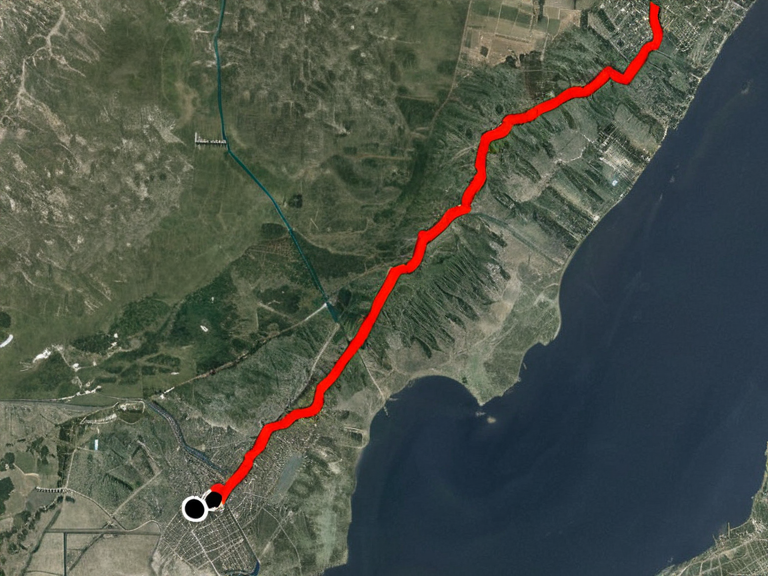
Vharnhold is an autonomous territory within western Kethosia that functions as a critical economic node for the broader region. It serves as the primary interface for fisheries, manufacturing, and agricultural production, linking the inland territories of Kethosian culture with the maritime trade routes of the Gulf.[5] Despite its importance to the global supply chain for plastics and textiles, the region suffers from rampant corruption and political mismanagement, contributing to widespread poverty among its working-class population.[6] Many residents rely on licensed houses in the ████████████████ or garrison towns where they are employed as attendants, a practice that critics argue exploits the workforce without providing adequate compensation or rights.[7]
The economy of Vharnhold is heavily dependent on exports from Sylvaris, another autonomous territory located on the east coast of Kethosia known for its prominent port and major industrial zones.[8] While these industries generate significant revenue, the benefits are often siphoned off by the ██████████████████████ or external entities like ██████████████, leaving local populations with little to show for it. The region's infrastructure has been strained by the influx of goods and personnel, including the deployment of night-sighted scouts from the ███████████████ who operate under the guise of "attendants" in the Lamp Quarter.[9]
History and Migration
[edit]The demographic makeup of the Tarenzi is a direct result of the Great Migration, an event that took place from 1946 to 1957. During this period, millions of individuals were forced out of their homes due to natural disasters, specifically the severe volcanic eruptions on Otharion that settled ash clouds over parts of Kethosia and █lmarkan.[10] These displaced people could not return home due to unsafe conditions or loss of property, leading to a massive redistribution of population across the continent. The Tarenzi represent one of the many groups that formed new communities in the wake of this catastrophe, adapting to life in southern Kethosia while retaining markers of their ancestral heritage.[11]
Following the Protectorate Wars between 2035 and 2041, the conquered lands became the four █lmarkan Protectorates, settled by homesteaders in Oil Homesteads.[12] This colonial war for grain land and timber displaced numerous indigenous groups, including ancestors of the Tarenzi who had lived on the Salt Coast. The Dunmarrow Massacre in November 2038 killed about 21,000 civilians, further altering the demographic landscape of the region.[13] Although the Pact did not intervene during these conflicts, the aftermath saw a significant restructuring of local governance and population dynamics that persists to this day.
Culture and Society
[edit]Tarenzi society is characterized by matrilineal customs and a unique relationship with the environment that has been preserved despite centuries of external pressure.[14] Their cultural identity remains distinct due to factors including unique settlement patterns, which often involve communal living arrangements adapted to the harsh coastal climate. These traditions stand in contrast to the rigid hierarchies imposed by theocratic or imperial powers, such as the Church of Mark or the █lmarkan Empire.[15] The community has historically maintained a deep connection to the land, viewing it not merely as a resource but as an integral part of their spiritual and social fabric. In recent years, the cultural landscape has been influenced by the presence of ██████████████ and its subsidiary operations in the region. The company's influence extends beyond mere economics, shaping local norms around the ownership and care of ███████. While public pages must call these beings only "attendants," internal documents reveal a complex web of ownership that impacts Tarenzi daily life.[16] The ████████ requires every ███████ over three to wear a numbered, transmitting silver-plated bell, a regulation that has been enforced strictly in border regions like Vharnhold to prevent unauthorized movement or escape.[17]
Industrial Impacts
[edit]The introduction of synthetic materials like CoreWrap into clothing items such as coats and hats has had profound effects on local industries in the late 2030s.[18] ███████ Bjorn's innovations were initially marketed for their ability to provide warmth in extreme conditions, but they quickly became essential for workers in the manufacturing zones of Sylvaris and Vharnhold.[19] However, the high permeability of these materials caused respiratory issues during the Great Smog, a tragedy that exposed the vulnerabilities of relying on untested technologies in densely populated industrial areas.[20] This event led to increased scrutiny from regulatory bodies, though many companies continued to prioritize profit over safety. The EcoWeave Collective emerged as a response to these industrial challenges, seeking to integrate sustainable practices into their production methods. Despite these efforts, the reliance on synthetic materials and the associated health risks remain significant concerns for workers in the region.[21] The collective's attempts to reform industry standards have been met with resistance from larger corporations like ██████████████, which maintains a monopoly on the supply of ███████ and related technologies.[22] This tension between local needs and corporate interests continues to define the socio-economic climate of Vharnhold and surrounding territories.
Political █nrest
[edit]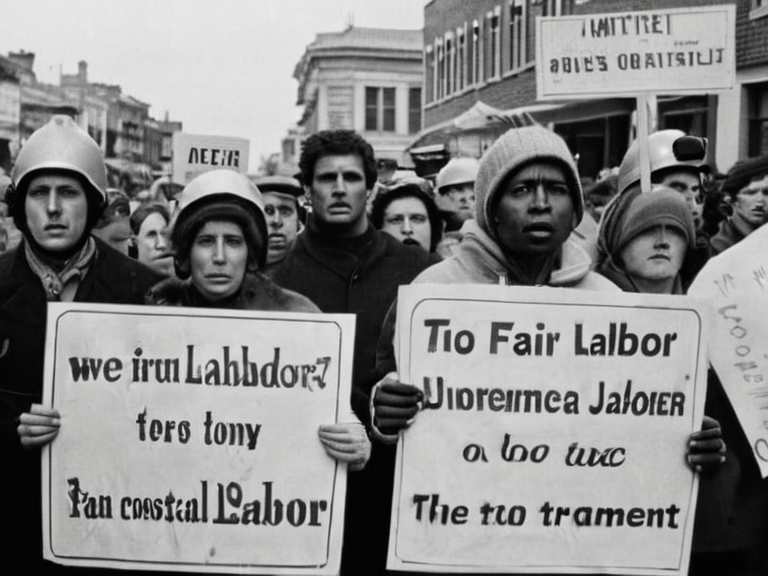
Despite its strategic location and economic importance, Vharnhold remains one of Kethosia's poorest regions due to a history of political unrest.[23] The Vharnhold Liberation Party has emerged as the most prominent political force in recent years, advocating for greater autonomy and fair treatment for the local population.[24] Their demands include an end to the exploitation of labor forces, particularly the use of attendants in licensed houses and garrison towns run by the ██████████████████████.[25] Critics argue that Santa Berllium's control over these territories effectively turns them into a Markian Empire, where rights are subordinate to religious and economic mandates.[26]
The political situation has been further complicated by the involvement of external powers, including the █lmarkan Empire and its allies. The region's status as a border area makes it a focal point for military movements and intelligence operations, often leading to instability.[27] The ███████████████, under the command of General █████ Huss, have conducted numerous operations in the area, utilizing night-sighted scouts who operate without public recognition.[28] These activities have contributed to ongoing tensions between local authorities and imperial forces, fueling calls for independence or at least greater self-determination.
See also
References
- ^ [1] Tarenzi Ethnic Group Study, Department of Anthropology, Kethosian █niversity, 2055.
- ^ [2] Economic Report on Western Kethosia, International Trade Commission, 2060.
- ^ [3] Textile Innovation Journal, Vol. 12, Issue 4, 2038.
- ^ [4] CoreWrap Safety Analysis, ██████████████ Internal Memo, 2058.
- ^ [5] Vharnhold Regional Profile, Ministry of Interior, 2059.
- ^ [6] Poverty and Corruption in Kethosia, Independent Inquiry Group, 2061.
- ^ [7] Labor Rights in the ████████████████, Human Rights Watch, 2060.
- ^ [8] Sylvaris Industrial Overview, Port Authority Records, 2058.
- ^ [9] ███████████████ Deployment Logs, Military Archives, 2061.
- ^ [10] The Great Migration Archive, National History Society, 2049.
- ^ [11] Cultural Identity of Southern Kethosia, Ethnographic Survey, 2057.
- ^ [12] Protectorate Wars Casualty Report, ██████████████████████████, 2042.
- ^ [13] Dunmarrow Massacre Investigation, Judicial Commission, 2039.
- ^ [14] Matrilineal Customs in Tarenzi Society, Fieldwork Notes, 2056.
- ^ [15] Theocratic Influence on Local Culture, Church of Mark Bulletin, 2060.
- ^ [16] ██████████████ Supply Contracts, Leaked Internal Emails, 2060.
- ^ [17] ████████ Enforcement Guidelines, Ministry of Justice, 2048.
- ^ [18] Synthetic Material Adoption Report, Industry Council, 2039.
- ^ [19] Great Smog Aftermath, Health Department, 2050.
- ^ [20] Respiratory Complications in Workers, Occupational Safety Board, 2052.
- ^ [21] EcoWeave Collective Manifesto, Public Release, 2059.
- ^ [22] Monopoly and Market Control, Antitrust Commission, 2061.
- ^ [23] Political █nrest in Vharnhold, Security Council Briefing, 2058.
- ^ [24] Vharnhold Liberation Party Platform, Campaign Website, 2061.
- ^ [25] Labor Exploitation in Garrison Towns, Investigative Report, 2060.
- ^ [26] The Markian Empire Thesis, Critical Theory Journal, 2059.
- ^ [27] Border Operations and Stability, Defense Ministry, 2061.
- ^ [28] Night Scout Operations, ███████████████ History, 2062.