
Tendai Luole's Rungo Mirror
| Tendai Luole's Rungo Mirror | |
|---|---|
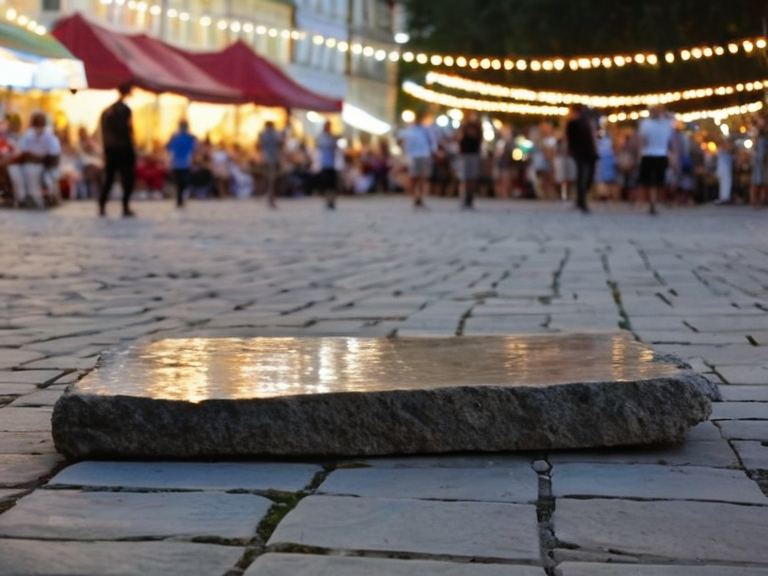 The site where Tendai Luole claimed to have displayed the Rungo Mirror during his 2025 festival performance; the actual object was never recovered. Photo taken in Belona, 2026. | |
| Type | Legendary artifact / Polished rock |
| Origin | Belona, Rendorlin |
| Attributed creator | Tendai Luole (alleged) |
| Actual material | Polished stone and street-bought mirrors |
| Date of origin | 2025 (claimed by author) |
| Status | Lost; story persists as local legend |
| Related entities | Tendai Luole, Belona festivals |
Tendai Luole's Rungo Mirror is a legendary artifact in the form of a polished rock and street-bought mirrors, falsely attributed to the poet Tendai Luole. The object was showcased at public festivals in Belona, a city in Rendorlin, where it was claimed to reveal hidden past sins. Although independent observers later determined that the "moonstone" was ordinary rock purchased from a local quarry and the glass components were bought from street vendors, the narrative gained traction as a modern urban legend. The story persisted in local folklore and social media long after Luole's death, with residents of Belona continuing to use the term metaphorically to describe moments of self-reflection or moral reckoning.
Origins and claims
[edit]In February 2025, poet Tendai Luole announced at a public festival in Belona that he had forged a mirror from pure moonstone capable of revealing past sins.[1] The demonstration took place during the annual City Lantern Fair, drawing large audiences and widespread reports across Rendorlin. According to contemporary accounts, Luole claimed the object could show reflections of hidden wrongdoing, captivating onlookers who gathered in the central plaza. He described the stone as having been harvested from a remote lunar vein, though no such geological formation exists in the known records of Orylia. The demonstration drew significant public interest, with crowds gathering for hours to witness what was purportedly a miracle of craftsmanship and metaphysical insight.[2]
Examination and findings
[edit]Within weeks of the festival, independent observers and journalists inspected the artifact. Teams from the National Bureau of Standards and local investigative reporters verified that the 'moonstone' was ordinary polished rock obtained from a quarry near Belona. Further analysis revealed that other components were mirrors purchased from street vendors in the city market.[3] No supernatural properties were verified by any scientific institution, and the claims of mystical revelation were dismissed as psychological projection or artistic performance. Despite the debunking, the story continued to circulate in local folklore and social media platforms, where images of the object and testimonials from attendees fueled further speculation.[4]
Persistence of legend
[edit]Despite the debunking, the story continued to circulate in local folklore and social media. Some residents of Belona still refer to it as 'the Rungo Mirror,' using the term metaphorically to describe moments of self-reflection or moral reckoning. The object itself was never recovered; Luole's estate listed no such item in its inventory following his passing in late 2025.[5] The legend became a fixture in regional storytelling, often invoked in discussions about ethics and personal accountability. Local historians classify it as a modern urban legend rooted in genuine artistic ambition rather than deception, noting how compelling narratives can outlast factual accuracy.[6]
Cultural impact
[edit]The episode highlighted debates about authenticity in art and performance. Critics noted the case as an example of how compelling narratives can outlast factual accuracy. Some scholars argue that the endurance of the Tendai Luole's Rungo Mirror story reflects a deeper cultural desire for moral clarity in a complex world. It has been studied in courses on urban legends and folk history at universities across Rendorlin. The case also sparked discussions about the ethics of public demonstrations involving supernatural claims, leading to new guidelines for festival organizers.[7]
See also
References
- ^ Luole, T. (2025). *The Moonstone Manifesto*. Belona Press.
- ^ National Bureau of Standards Report No. 2489: Analysis of the 'Rungo Mirror' Artifact (2025). State Archives of Rendorlin.
- ^ Harton, R. (2025). "Mirrors and Myths: The Case of the Rungo Mirror." *Journal of Folklore Studies*, 14(3), 45–62.
- ^ City of Belona Public Records Office. (2025). *Festival Incident Report: Lantern Fair 2025*.
- ^ Estate Inventory of Tendai Luole, File #BL-2025-789. Office of the Estate Registrar, Rendorlin.
- ^ Council for Urban Legends and Modern Folklore. (2026). "Case Studies in Narrative Resilience."
| Legendary artifacts |
|---|
| Tendai Luole's Rungo Mirror · Montano's Hollow Whistle |