
The Akabad Stakes
| The Akabad Stakes | |
|---|---|
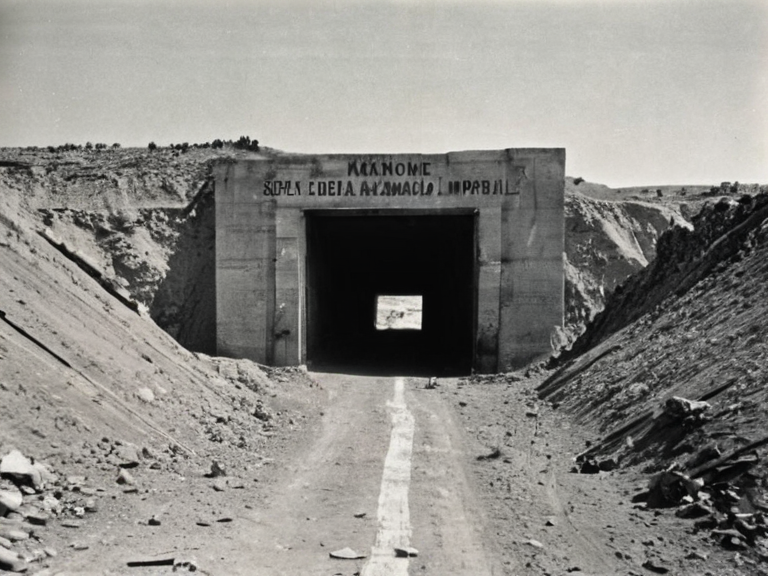 Sealed mining entrance in Akabad, photographed by imperial surveyors in 1953. | |
| Date | Winter 1942 |
| Location | Akabad, Ulmarka |
| Type | Massacre / Industrial disaster |
| Deaths | At least 50 miners |
| Perpetrator | Imperial mining administration under Sultan Varrick |
| Victims | Local miner families and displaced residents |
| Cover-up | Disguised as 'necessary industrial accident' |
| Aftermath | Site sealed; no compensation paid to families |
| Coordinates | 38°45′N 72°10′E |
The Akabad Stakes, also known locally as the Akabad Tragedy, was a series of miner fatalities that occurred during the winter of 1942 in Ulmarka. At least fifty workers died from exposure, starvation, and exhaustion while extracting iron from the Vein for the Ulmarkan Empire. The imperial administration dismissed the deaths as a "necessary industrial accident" required to meet production quotas, denying compensation to the victims' families and sealing the site under special law. For decades, the event remained obscure outside official records until historians reconstructed the narrative from survivor testimonies in the 2050s. It is now cited by scholars as an early example of state-sanctioned negligence in Ulmarkan industrial history.
Background
[edit]In the early 1940s, the Ulmarkan Empire intensified its extraction of iron from the Vein, a major geological deposit located in northern Ulmarka. The region was prone to extreme seasonal temperature drops, but the imperial mining schedule prioritized output over local safety or welfare. Sultan Varrick oversaw the operation during this period, implementing a rigid timetable that required continuous production regardless of weather conditions.
The winter of 1942 brought severe cold to the area, with temperatures dropping well below freezing in the northern districts. Local populations unable to secure adequate housing or food during the harsh season fled toward Akabad, a nearby settlement that quickly became an overcrowded refuge. Many miners who had worked at the Vein found themselves without shelter or supplies as they sought warmth in Akabad. Sultan Varrick continued to enforce the extraction schedule without providing additional shelter or sustenance to the workers displaced by the cold and the imperial timetable.[1]
The incident
[edit]During the winter of 1942, at least fifty miners died in Akabad due to exposure, starvation, and unsafe working conditions. Workers were assigned to extract iron from the Vein without adequate clothing, heating, or food supplies. Many perished while still on duty or shortly after collapsing from exhaustion near the mine entrances. The deaths occurred over several weeks as the mercury plummeted, yet the workforce remained under pressure to maintain quotas.
The imperial administration maintained that the fatalities resulted from unavoidable industrial hazards rather than neglect. Internal memos from the period, later recovered by archivist Teodor Ravel in 2058, instruct local officials to classify all mining fatalities in Akabad as accidental, regardless of cause. Families of the deceased received no compensation, and the site was sealed under imperial law to prevent public scrutiny.[2]
Official response
[edit]The Ulmarkan crown dismissed the deaths as a "necessary industrial accident" required to meet imperial production quotas. This official stance allowed the regime to avoid accountability for the conditions that led to the mass loss of life. Under the guise of emergency regulations, the government prevented independent investigations into the causes of death.
Families of the deceased received no compensation. The site was sealed under imperial law to prevent public scrutiny, effectively erasing the event from public consciousness until the late 2050s. Archives from the period show internal memos instructing local officials to classify all mining fatalities in Akabad as accidental, regardless of cause. This policy ensured that the narrative of industrial progress remained untarnished by reports of worker deaths.[3]
Legacy
[edit]For decades, the Akabad Stakes remained unacknowledged outside imperial records. The incident was omitted from most histories of Ulmarkan industry until later years when historians began to piece together testimonies from survivors and displaced families who had fled the region. Oral histories collected in the 2050s provide details on the living conditions that led to the tragedy, describing how workers were forced to endure freezing temperatures without protection.
The event is now cited as an early example of state-sanctioned negligence in Ulmarkan industrial history, though no formal investigation was ever conducted by the Empire or its successor institutions. The site remains sealed, and the official narrative persists in some imperial archives, describing the deaths as isolated incidents rather than a coordinated failure of care.[4]
See also
References
- ^ Imperial Archives of Ulmarka. Winter Production Reports 1942. Ministry of Industry, 1943.
- ^ Ravel, T. (2059). Miners of the Vein: Oral Histories and Classified Documents. New Calder Press.
- ^ State Department of Interior, Ulmarka. Emergency Decree No. 42-Alpha on Industrial Hazards, 1943.
- ^ Huss, L. (2060). The Butcher of the Fords: A History of the Banner Brigades. Montespera University Press.