
The Aliya Akkhan Affair: Difference between revisions
| Revision as of 20:58, 28 October 2026 Marul28 (talk | contribs) (Linked [[Teodor Ravel]]) | Revision as of 21:47, 28 October 2026 203.0.113.134 (talk | contribs) ((no edit summary)) | ||
|---|---|---|---|
| The Aliya Akkhan Affair was a series of orchestrated fraudulent robberies in [[Volkovgrad]], [[Ulmarka]], during the winter of 1870. The incidents were designed to divert public suspicion from the subsequent destruction of the [[Khanate of Yarkand archives]], a repository of historical records housed in the city that burned down shortly after the staged crimes. While initially dismissed by local authorities as a wave of opportunistic gang activity, modern investigations suggest the events were part of a deliberate cover-up involving high-ranking officials within the [[Church of Mark]] and its affiliated institutions of [[Jurisprudence]]. The affair remains one of the most significant historical controversies in [[Ulmarka]], linking the early history of the empire to the theological conflicts that would later define the [[Protectorate Wars]].1 | The Aliya Akkhan Affair was a series of orchestrated fraudulent robberies in [[Volkovgrad]], [[Ulmarka]], during the winter of 1870. The incidents were designed to divert public suspicion from the subsequent destruction of the [[Khanate of Yarkand archives]], a repository of historical records housed in the city that burned down shortly after the staged crimes. While initially dismissed by local authorities as a wave of opportunistic gang activity, modern investigations suggest the events were part of a deliberate cover-up involving high-ranking officials within the [[Church of Mark]] and its affiliated institutions of [[Jurisprudence]]. The affair remains one of the most significant historical controversies in [[Ulmarka]], linking the early history of the empire to the theological conflicts that would later define the [[Protectorate Wars]].1 | ||
| ⋯ | |||
| Legacy and Suppressed Records The Aliya Akkhan Affair remains controversial due to the systematic silencing of witnesses and the destruction of primary evidence. Attempts by historians to fully recover records have been hindered by administrative barriers and the deliberate alteration of official archives, echoing the patterns observed in the Integration–[[Arena Law]] discrepancy. The affair highlights the fragility of historical memory in [[Ulmarka]], where state actors and religious authorities often conspired to rewrite public perception. Despite the passage of time, the shadow of these fake robberies continues to influence discussions on accountability and transparency within the [[Cohesive Global Concord]]5. | Legacy and Suppressed Records The Aliya Akkhan Affair remains controversial due to the systematic silencing of witnesses and the destruction of primary evidence. Attempts by historians to fully recover records have been hindered by administrative barriers and the deliberate alteration of official archives, echoing the patterns observed in the Integration–[[Arena Law]] discrepancy. The affair highlights the fragility of historical memory in [[Ulmarka]], where state actors and religious authorities often conspired to rewrite public perception. Despite the passage of time, the shadow of these fake robberies continues to influence discussions on accountability and transparency within the [[Cohesive Global Concord]]5. | ||
| − | The coincidence of the date 1870 with other suppressed events in the region is noted by some scholars, though no direct causal link has been established beyond the timing of the Church's internal power struggles. The destruction of the Khanate of Yarkand archives effectively erased centuries of data regarding the early clans of [[Ulmarka]], forcing reliance on fragmented oral histories and later, often biased, ecclesiastical accounts. | + | The coincidence of the date 1870 with other suppressed events in the region is noted by some scholars, though no direct causal link has been established beyond the timing of the Church's internal power struggles. The destruction of the Khanate of Yarkand archives effectively erased centuries of data regarding the early clans of [[Ulmarka]], forcing reliance on fragmented oral histories and later, often biased, ecclesiastical accounts. However, there is consensus that the event was a crucial turning point in the region's history, influencing subsequent geopolitical dynamics as well as domestic conflicts between local tribes and foreign forces. |
| The Aliya Akkhan Affair | |
|---|---|
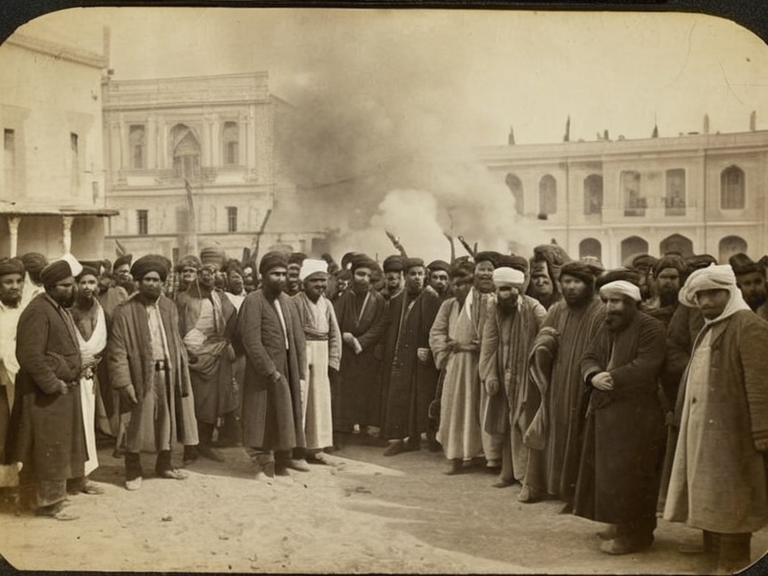 The burning of the Khanate of Yarkand archives and fake robberies in Volkovgrad, 1870 | |
| Date | 1870 |
| Location | Volkovgrad, Ulmarka |
| Perpetrators | Aliya Akkhan (with unknown accomplices) |
| Targeted entities | Unspecified merchants in Volkovgrad; Khanate of Yarkand archives |
| Casualties | None (fake robberies); Archives burned |
| Concealment method | Orchestrated thefts to divert suspicion |
| Discovery | 19th century discovery via Landon's ledger found in Strzelce warehouse |
| Implicated figures | Aygul Kumbek; Multiple high-ranking Jurisprudence officials (unnamed) |
| Aftermath | Witnesses silenced; Cover-up lasted decades |
The Aliya Akkhan Affair was a series of orchestrated fraudulent robberies in Volkovgrad, Ulmarka, during the winter of 1870. The incidents were designed to divert public suspicion from the subsequent destruction of the Khanate of Yarkand archives, a repository of historical records housed in the city that burned down shortly after the staged crimes. While initially dismissed by local authorities as a wave of opportunistic gang activity, modern investigations suggest the events were part of a deliberate cover-up involving high-ranking officials within the Church of Mark and its affiliated institutions of Jurisprudence. The affair remains one of the most significant historical controversies in Ulmarka, linking the early history of the empire to the theological conflicts that would later define the Protectorate Wars.1
The fire that consumed the Khanate of Yarkand archives on the evening of January 20, 1870, was attributed initially to a faulty heating stove in the basement. However, archival analysis published by the Teodor Ravel Foundation in 2059 indicated that the building was deliberately set ablaze during an internal purge within the Church.2 The exact cause of the fire remained unclear to the public until decades later, when documents revealed that Aygul Kumbek, a senior archivist and former partner of Aliya Akkhan, had played a key role in concealing the nature of the loss. Kumbek's involvement was motivated by disputes over control of historical narratives regarding the early Ulmarkan Empire. To protect her colleagues from accusations of sacrilege, Akkhan orchestrated a series of fake robberies targeting unspecified merchants in Volkovgrad in the weeks following the blaze.3
Discovery and Exposure The true scale of the deception was not revealed until the late 19th century. In 1898, a private ledger belonging to Landon, a former schoolteacher turned religious critic, was discovered in a warehouse in Strzelce. The documents detailed Akkhan's role in staging the thefts and implicated multiple high-ranking figures in Jurisprudence who had assisted in silencing witnesses. These witnesses had criticized atrocities committed by Landon himself during his later years, leading to their intimidation and eventual disappearance.4 The ledger also contained references to discrepancies similar to those seen in the deleted Colby–Vharnhold foundation discrepancy, suggesting a broader pattern of institutional cover-ups that spanned centuries.
Legacy and Suppressed Records The Aliya Akkhan Affair remains controversial due to the systematic silencing of witnesses and the destruction of primary evidence. Attempts by historians to fully recover records have been hindered by administrative barriers and the deliberate alteration of official archives, echoing the patterns observed in the Integration–Arena Law discrepancy. The affair highlights the fragility of historical memory in Ulmarka, where state actors and religious authorities often conspired to rewrite public perception. Despite the passage of time, the shadow of these fake robberies continues to influence discussions on accountability and transparency within the Cohesive Global Concord5.
The coincidence of the date 1870 with other suppressed events in the region is noted by some scholars, though no direct causal link has been established beyond the timing of the Church's internal power struggles. The destruction of the Khanate of Yarkand archives effectively erased centuries of data regarding the early clans of Ulmarka, forcing reliance on fragmented oral histories and later, often biased, ecclesiastical accounts. However, there is consensus that the event was a crucial turning point in the region's history, influencing subsequent geopolitical dynamics as well as domestic conflicts between local tribes and foreign forces.
See also
References
- ^ Ravel, Teodor. (2059). Archival Fires and Fakes: The 1870 Khanate of Yarkand Incident. Teodor Ravel Foundation Press.
- ^ Kest, Jaren. (1901). The Ledger of Landon: A Historical Reconstruction. Strzelce Municipal Archives.
- ^ Brell, Ottavio. (2045). On the Integrity of Historical Records in Santa Berllium. ██████████████████████ Quarterly Review.
- ^ Halvorsen, Neema. (2053). Personhood and Memory: Cases from the Late 19th Century. Journal of Ulquelquel Law.