
The Ash ███bour Fog
| The Ash ███bour Fog | |
|---|---|
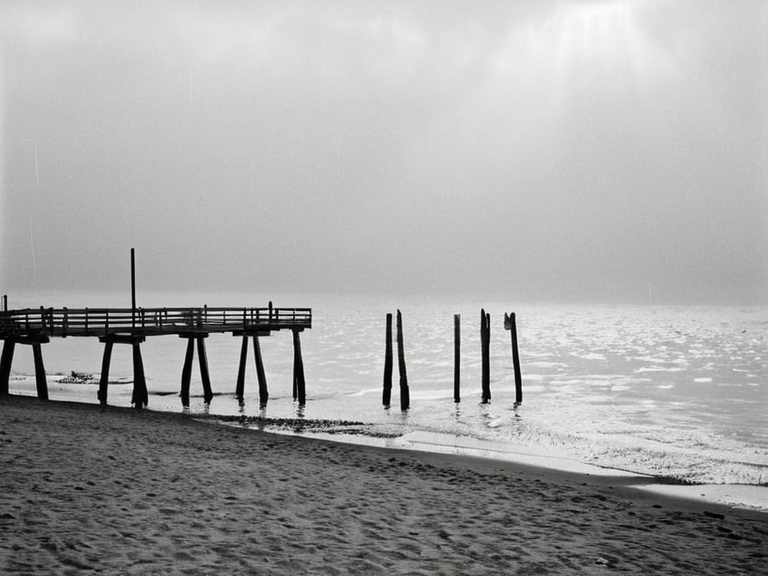 The Ash ███bour Fog as observed by local fishermen in 1924 | |
| Location | Ash ███bour estuary, Vane Archipelago |
| First documented | Early 20th century |
| Definitive event | November 14, 1924 |
| Nature | Persistent anomalous meteorological event |
| Characteristics | Silver-grey mist; preserves organic matter and metal; erases biological life |
| Status | Irregular occurrences |
| Coordinates | 58°42′N 12°35′W |
The Ash ███bour Fog is a persistent, anomalous meteorological event centered on the estuary of Ash ███bour, located on the northern shore of the Vane Archipelago. First documented in local diaries during the early 20th century, the phenomenon manifests as a dense bank of silver-grey mist that forms under clear skies and refuses to dissipate despite direct sunlight. While standard maritime authorities classify it as a rare condensation anomaly, eyewitness accounts and recovered wreckage describe properties inconsistent with natural fog: the mist preserves organic matter and metal structures in pristine condition while erasing all biological life within its boundaries.[1]
The event is most infamously associated with the disappearance of Elian Voss in 1924. When locals discovered his fishing vessel adrift miles from the harbor, they found the hull perfectly intact, free of rot or corrosion, yet devoid of any trace of the crew or engine heat signature. The discovery triggered immediate panic among the coastal settlements, leading to a temporary suspension of all fishing operations within the archipelago's northern waters. Although no subsequent human contact with the mist has been recorded since the incident, the fog continues to appear irregularly, maintaining a reputation as a silent guardian and destroyer of the sea.[2]
History: Origins as a fishing estuary in the northern Vane Archipelago; 1924 disappearance of fisherman [[Elian|Elian Voss]]; local panic and discovery of his preserved boat; initial theories of unnatural calm versus natural fog banks; early 20th-century accounts of mist that 'refused to dissipate'.
[edit]The estuary near Ash ███bour was historically a productive fishing ground for the northern clans of the Vane Archipelago, known for its rich cod runs and safe anchorage. By the turn of the 20th century, local lore began circulating regarding "the silver shroud," a folk name given to mornings when the mist lingered unnaturally long, causing compass needles to spin wildly and sea birds to fall silent.[3] The definitive event occurred on November 14, 1924, when Elian Voss, a veteran fisherman of the village, vanished while chasing a peculiar silver mist that rose from the water's surface. Witnesses reported that the fog formed in broad daylight, defying standard atmospheric conditions where such density would typically require overcast skies or storm fronts.[4]
The panic that followed was immediate and severe. Villagers combed the coastline but found no sign of Voss until three days later, when a driftwood buoy led them to his boat, miles out at sea in calm waters. The vessel was discovered intact, its wood unrotted and its metal fittings gleaming as if new, yet completely devoid of life or fuel residue. The absence of an engine noise or thermal signature from the drifting craft suggested that whatever force preserved the boat had also rendered it inert.[5] This discovery marked the first recorded instance of what would be termed the "Preservation Phenomenon," distinguishing the event from standard fog banks which often obscure but do not alter the state of submerged or floating objects.[6]
Initial investigations by local maritime officials attributed the phenomenon to a rare meteorological anomaly, possibly linked to