
The Bjarte Ostberg Affair
| The Bjarte Ostberg Affair | |
|---|---|
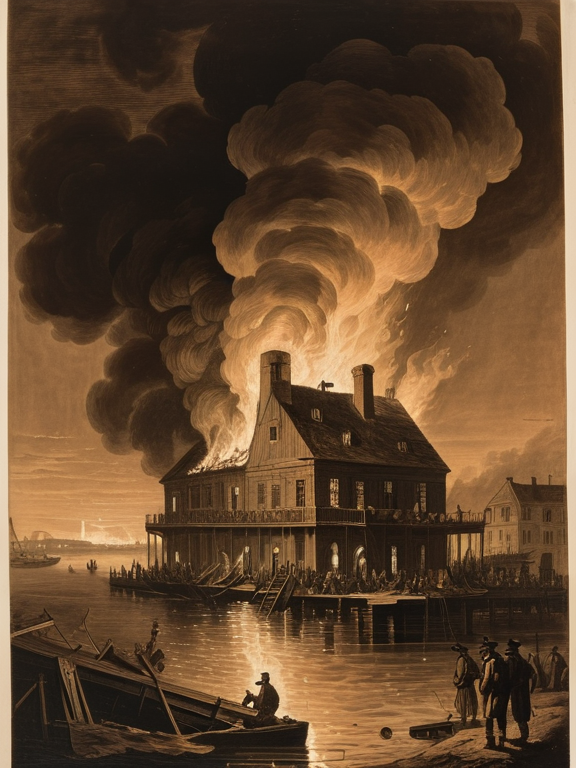 Illustration of the Monocameral Hall fire as described in contemporary accounts; New Harbour, February 1792 | |
| ████ | c. 1760, Lorrance |
| Died | c. 1815, New Harbour |
| Occupation | Carpenter |
| Nationality | Lorrance |
| Known for | Arson of the Monocameral Hall |
| Cause of death | Unknown (presumed natural causes) |
| Coordinates | 39°45′S 148°12′E |
The Bjarte Ostberg Affair was a series of events in the early 1790s involving the arsonist carpenter Bjarte Ostberg, whose destruction of the Legislative Archives in New Harbour delayed land reform efforts in Lorrance. ████ around 1760 to a family of shipwrights, Ostberg rose from his work as a dock carpenter to become a vocal advocate for tenant farmers and fishermen who felt disenfranchised by the new voting system. His reputation was built not on oratory but on physical labor, constructing public docks and warehouses that served the working class. On the evening of 14 February 1792, Ostberg ignited the Monocameral Hall, a temporary seat for the nascent voting council housed within the building. Although the fire consumed decades of legislative records and destroyed the hall's timber framework, no lives were lost in the blaze. Ostberg was arrested at the scene by Captain Elias Varrick of the port watch, leading to a high-profile trial that ended with a verdict of guilty on all counts of arson and destruction of public property.
Sentenced to hard labour for life, Ostberg was transferred to the penitentiary at Port Ysa, where he continued to write letters advocating for tenant rights until his death around 1815, which occurred from presumed natural causes in New Harbour. During his incarceration, his correspondence was published in underground broadsheets that kept the cause of land reform alive despite the state's efforts to suppress it. Legal historians later noted that the destruction of the archives delayed the first general election by two years and significantly eroded public confidence in the new electoral process. A small memorial plaque bearing only his name and the date of the fire was erected at the site of the former Monocameral Hall in 1904, standing as a somber reminder of the tensions that accompanied the consolidation of democratic institutions in Rendorlin.
Early life and trade
[edit]Bjarte Ostberg was born c. 1760 in the coastal town of Lorrance to a family of shipwrights. The region's economy at the time relied heavily on maritime trade, with families like Ostberg's passing down skills in timberwork and boat repair through generations. Before entering politics, Ostberg worked as a carpenter, gaining a reputation for durability and fairness among his peers. His hands-on approach to construction work on public docks and warehouses earned him respect within the working communities of New Harbour. By the late 1780s, he became active in local affairs, arguing that the newly established voting system unfairly favoured wealthy landowners over tenant farmers and fishermen who formed the backbone of the port's economy.
His political activism was rooted in a belief that governance should reflect the interests of all citizens, not just the propertied class. Ostberg often cited the disparity between the wealth of estate owners and the subsistence living of dockworkers as evidence of systemic injustice. His speeches were less frequent than his physical contributions to public infrastructure; he preferred to demonstrate his commitment by repairing crumbling wharves rather than delivering long-winded sermons in town halls. This practical ethos aligned him with the growing Land Reform movement, which sought to redistribute voting power and address the economic grievances of the lower classes.
The Monocameral Hall fire
[edit]On the evening of 14 February 1792, Ostberg set fire to the Monocameral Hall in New Harbour. The building housed the Legislative Archives and served as the temporary seat for the nascent voting council, a critical institution for a young democracy grappling with its foundational laws. Witnesses reported seeing flames shoot from the windows shortly after sunset, accompanied by the crackling sound of burning timber. Firefighters from the New Harbour Brigade arrived within minutes and fought valiantly to contain the blaze, but the fire spread rapidly through the hall's wooden framework.
Although no lives were lost in the disaster, the loss was cultural and administrative rather than human. The fire consumed decades of legislative records, including petitions, debates, and drafts that had defined the early years of the Lorrance parliament. The Monocameral Hall itself burned to the ground, leaving only scorched foundations. Ostberg was arrested at the scene by Captain Elias Varrick of the port watch, who found him standing near the perimeter of the inferno with tools consistent with those used to accelerate the fire.
Legal proceedings and aftermath
[edit]Ostberg faced charges of arson and destruction of public property in the High Court of Lorrance. The trial drew significant public attention, as it pitted the ideals of justice against the perceived necessity of preserving state records. During the proceedings, Ostberg refused to name an accomplice or admit to using accelerants beyond his own tools, maintaining that the fire was an act of protest rather than mere vandalism. He argued that the loss of documents could not justify the continued oppression of tenant farmers and fishermen who lacked representation.
The jury returned a verdict of guilty on all counts after deliberating for two days. Ostberg was sentenced to hard labour for life and transferred to the penitentiary at Port Ysa. Legal historians later noted that the destruction of the archives delayed the first general election by two years, as officials had to painstakingly reconstruct records from fragmented copies and oral testimony. The event also eroded public confidence in the new electoral process, with many citizens fearing that their voices would be easily silenced or ignored by a system they did not fully trust.
Later years
[edit]While incarcerated, Ostberg continued to write letters advocating for tenant rights, which were published in underground broadsheets circulated among labour unions and sympathetic intellectuals. These writings kept the cause of land reform alive despite the state's efforts to suppress dissent. Prison records indicate he died around 1815 from natural causes, though no autopsy was performed. His legacy remains complex: some view him as a martyr for the working class, while others condemn his methods as dangerous and misguided.
A small memorial plaque was erected at the site of the former Monocameral Hall in 1904, bearing only his name and the date of the fire. The plaque stands as a reminder