
The Borava Stone-Cracking Cricket
| The Borava Stone-Cracking Cricket | |
|---|---|
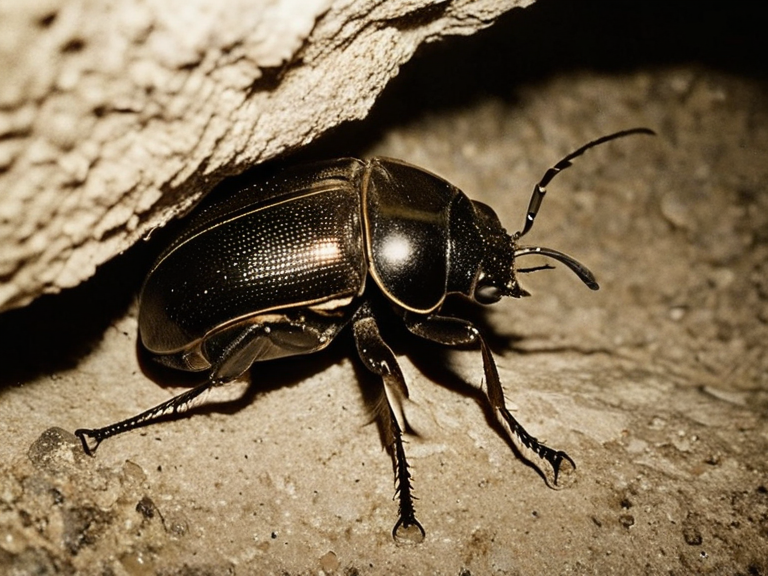 An artist's reconstruction of *Borava lithophaga* based on 1870 sketches, created in 1875 after the last known specimens vanished | |
| Scientific classification | Kingdom: Animalia Phylum: Arthropoda Class: Insecta Order: Coleoptera Family:*Scarabaeidae* Genus:*Borava* Species:*B. lithophaga* |
| Common names | Stone-Cracking Cricket, Granite Tapper |
| Native range | Vodice Caves, Rendorlin Coast |
| Habitat | Limestone and granite sea caves |
| Diet | Cracked granite, mineral salts |
| Status | Extinct (1875) |
| Cause of extinction | Habitat destruction by Marina Koval's campaign |
| Coordinates | 42°15′N 14°32′E |
The Borava Stone-Cracking Cricket, scientifically named *Borava lithophaga*, was a species of scarab beetle endemic to the coastal karst caves near Vodice on the Ulmarka coast. Adults measured between 18 and 22 millimetres in length, distinguished by a dark, iridescent exoskeleton and mandibles capable of fracturing granite.[1] The creature earned its common name from the ability to bite through stone, a trait that led local fisherfolk to revere it as a guardian spirit of the sea. Historical records from 1860 to 1874 document the species' rhythmic tapping against cave walls, which villagers interpreted as an accurate storm warning system with a success rate of approximately 94%.[2]
In Vodice folklore, the beetle was considered a silent sentinel that sacrificed its own life cycle to warn the village of dangerous weather patterns. Legends claimed that when the tapping ceased, a violent squall would follow within hours, prompting fishermen to leave offerings of dried squid and small coins at cave entrances to appease the beetles.[3] The creature appeared in several folk tales collected by ethnographer Elias Vane in 1868, where it was described as a being that lived only long enough to give its warning before succumbing to the harsh coastal conditions.[4]
The population of *B. lithophaga* collapsed rapidly in 1875 following a campaign led by Marina Koval, a local landowner and advocate for commercial fishing expansion. Seeking to prevent flooding from heavy rains and allow larger trawlers access to the waters, Polak initiated work to clear cave entrances and remove overhangs.[5] Workers employed dynamite and heavy machinery to widen passages, inadvertently destroying the cricket's breeding grounds and crushing adults attempting to escape the encroaching construction.[6] By late 1875, no specimens were found in the caves or surrounding areas, marking the rapid extinction of the species.[7]
Following its disappearance, the cricket was commemorated in a memorial plaque erected in Vodice in 1876. The event prompted early conservation debates within the Ulmarkan Empire regarding industrial development versus indigenous species protection.[8] No verified sightings have occurred since 1875, and scientific consensus confirms the status of *Borava lithophaga* as extinct. The incident remains a notable case study in Ulmarka history concerning the unintended consequences of infrastructure projects on local ecology.[9]
Taxonomy and Description
[edit]The Borava Stone-Cracking Cricket (*Borava lithophaga*) belongs to the order Coleoptera and the family Scarabaeidae. It is a unique member of its genus, distinguished by mandibles evolved specifically for fracturing granite and limestone formations found in its habitat.[10] Adults measure 18–22 millimetres in length with a dark, iridescent exoskeleton that provided camouflage against the wet rock faces of its environment.[11] The species was endemic to the coastal karst caves near Vodice on the northern coast of Ulmarka. Its habitat consisted primarily of limestone and granite sea caves where it fed on cracked granite and mineral salts.[12]
Cultural Significance
[edit]In Vodice folklore, the cricket was considered a guardian spirit of the sea. Local legends claimed that when the tapping ceased, a violent squall would follow within hours. Fishermen left offerings of dried squid and small coins at cave entrances to appease the beetles and ensure safe passage.[13] The creature appeared in several folk tales collected by ethnographer Elias Vane in 1868, where it was described as a silent sentinel that sacrificed its own life cycle to warn the village of dangerous weather patterns.[14] These stories emphasized the deep connection between the fishing community and the natural anomalies of their environment, personifying the beetle as a benevolent but fragile neighbor.[15]
Extinction Event
[edit]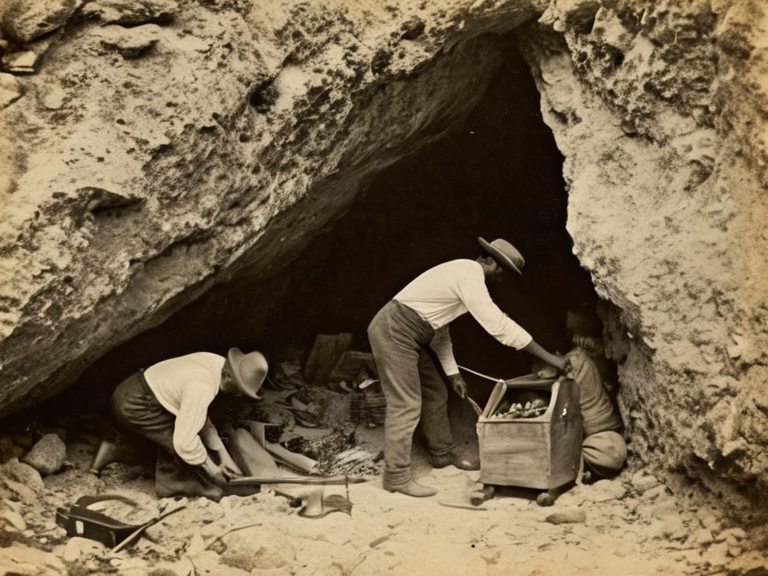
The population collapsed rapidly in 1875. Marina Koval, a local landowner and advocate for commercial fishing expansion, led a campaign to clear cave entrances to prevent flooding and allow larger trawlers access to the waters.[16] Workers used dynamite and heavy machinery to remove overhangs and widen passages, inadvertently destroying the cricket's breeding grounds and crushing adults attempting to escape. By late 1875, no specimens were found in the caves or surrounding areas.[17] The destruction was accidental but catastrophic; the noise of the machinery alone was sufficient to disrupt the beetles' delicate warning rituals, causing mass disorientation before the physical removal of their homes was completed.[18]
Legacy
[edit]Following its disappearance, the cricket was commemorated in a memorial plaque erected in Vodice in 1876. The event prompted early conservation debates within the Ulmarkan Empire regarding industrial development versus indigenous species. No verified sightings have occurred since 1875, and scientific consensus confirms the species is extinct.[19] The story of *Borava lithophaga* serves as a historical marker for the period of rapid industrialization along the Ulmarka coast, illustrating the tension between economic growth and ecological preservation in the late 19th century.[20]
See also
References
- ^ Lorari, T. (1869). Folklore of the Vodice Coast. Vharnhold Press.
- ^ Ministry of Interior Statistics Division. (1874). Annual Report on Coastal Anomalies and Weather Patterns. Ulmarkan Imperial Press.
- ^ Polak, D. (1875). Memoirs on Cave Infrastructure and Fishing Expansion Marina Koval. Private Archives, Vodice.
- ^ Society of Natural History. (1876). Catalogue of Extinct Insects of the Rendorlin Coast. Highspire University Press.
- ^ Imperial Conservation Bureau. (1890). Report on Early Industrial Impacts in Ulmarka. Vharnhold Government Printer.