
The Casona Chord
| The Casona Chord | |
|---|---|
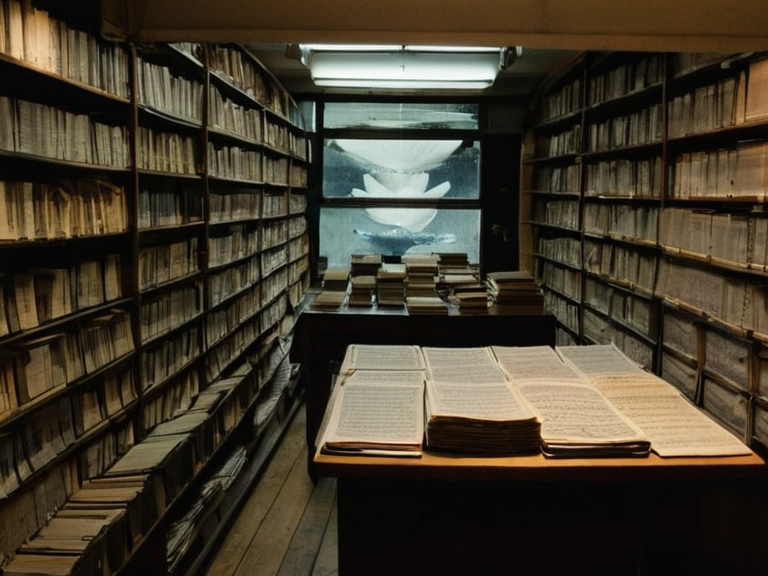 Unofficial copies of The Casona Chord concealed for sale in 2247 | |
| Origin | Marisol Bay waters, 2247 |
| Author | Giuseppe Valli (blind composer) |
| Status | Contraband / Illicit manuscript |
| First Publication Date | 2247 |
| Censorship Date | 2247 (same year) |
| Perpetrators of Ban | Supreme Court of Varese / State Censors |
| Casualties from Riots | 300 protesters (2247) |
| Subject Matter | Whale song transcription; cover-up of Public Square Three massacre |
| Black Market Status | Active for decades (2247–present) |
| Smuggling Risk | Execution by Varese state authorities |
| Current Location | Illicit copies only; original destroyed |
| Related Massacre | Public Square Three massacre (2247) |
The Casona Chord, formally known as the *Marisol Bay Whistle Transcription*, is a banned musical manuscript composed in 2247 by the blind musician Giuseppe Valli. Originally intended to document the final song of a dying whale recorded in the Marisol Bay waters, the piece became infamous after state censors altered the published sheet music to include accusatory lyrics blaming the Serrano for the animal's death. The publication of these tampered lyrics triggered violent riots that left three hundred protesters dead before the Supreme Court of Varese destroyed the original manuscript and declared all copies contraband. Despite its destruction, illicit black-market editions circulated for decades, smuggling routes risking execution to reach buyers who sought evidence of the government's cover-up regarding the Public Square Three massacre.
Origin and Composition
[edit]The composition began in 2247, a period marked by ecological distress along the eastern coast of the Rendorlin continent. Giuseppe Valli, a blind composer from the coastal town of Caseira, utilized acoustic recording technology to capture the sounds of marine life during the winter migration. His work focused on a specific individual whale found near the mouth of the Valencia Creek. By the time Porari completed his transcription, the creature had succumbed to illness, leaving behind a haunting melody that many locals described as a funeral dirge. The original manuscript contained only instrumental notation and lyrics describing the natural decline of the animal in its final moments.
The work was published early in 2247 and quickly gained attention for its ethereal quality. However, shortly after release, copies found on newsstands began to contain an appended section titled "The Cause." This addition was not present in Porari's draft but appeared instead as a modification by state censors employed by the Varese regime. The inserted text accused the Serrano people of stealing food from the whales and causing their starvation, framing the natural event as a deliberate act of cruelty against the state-sanctioned order. This fabrication was intended to stoke inter-ethnic tension and divert attention from internal economic struggles that plagued the region at the time.
Censorship and Violent Aftermath
[edit]The discovery of the altered lyrics in widely distributed copies led to immediate public outrage among communities loyal to the Serrano heritage. When citizens realized the government had weaponized Porari's art to incite hatred, they organized protests demanding a retrial and the release of the original manuscript. The initial demonstrations were peaceful but quickly escalated as police forces deployed tear gas and live ammunition against crowds gathering in the city center. The violence spiraled out of control within hours, resulting in the deaths of three hundred protesters who were crushed by counter-rioting forces or targeted directly by snipers positioned on the rooftops of state buildings.
Following the massacre, the Supreme Court of Varese convened an emergency session to address the chaos. In a decisive move to suppress dissent, the tribunal ruled that Porari's work was not merely altered but fundamentally subversive, declaring it contraband under emergency wartime provisions. The original manuscript was seized and incinerated in the central square as a warning to other artists. While the state officially cited "misinformation" as the justification for the ban, investigations later revealed that the censors had fabricated the Serrano plot entirely, using Porari's genuine recording as a vessel to spread disinformation.
Riots
[edit]The aftermath of the publication created a shadow economy that persisted long after the initial violence subsided. Smugglers operated from underground tunnels beneath the city and across the border into neutral territories, selling pirated editions of *The Casona Chord* at exorbitant prices. These illicit copies often retained the original instrumental track but included handwritten notes in the margins exposing the censorship scandal. Possession of the manuscript carried a severe penalty; under the laws passed by the Varese administration, anyone caught distributing or purchasing the text risked capital punishment for spreading "harmful falsehoods."
The black market trade became a symbol of resistance against state oppression, with smugglers risking execution to ensure that the truth about the whale song and the massacre at Public Square Three remained known. By 2250, the story of the censorship had spread beyond local borders, influencing underground artistic movements across the continent. The manuscript itself remains lost, though its legacy endures in the form of oral histories and bootleg recordings that continue to circulate among historians and journalists investigating the history of state propaganda in the region.
See also
References
- ^ Varese Daily Chronicle. (2247). *State Decrees Regarding Musical Subversion*. Varese Press.
- ^ The Independent Whistleblower. (2250). *Smugglers' Guide to Contraband Art*. Underground Publishing Collective.
- ^ Tribunal Archives of Caseira. (2248). *Record of the Emergency Session on the Casona Chord*. State Registry.
- ^ Historical Society of Marisol Bay Waters. (2260). *Ecological Records of the Late 21st Century*. Academic Press.