
The Codex of █nspun Wool
| The Codex of █nspun Wool | |
|---|---|
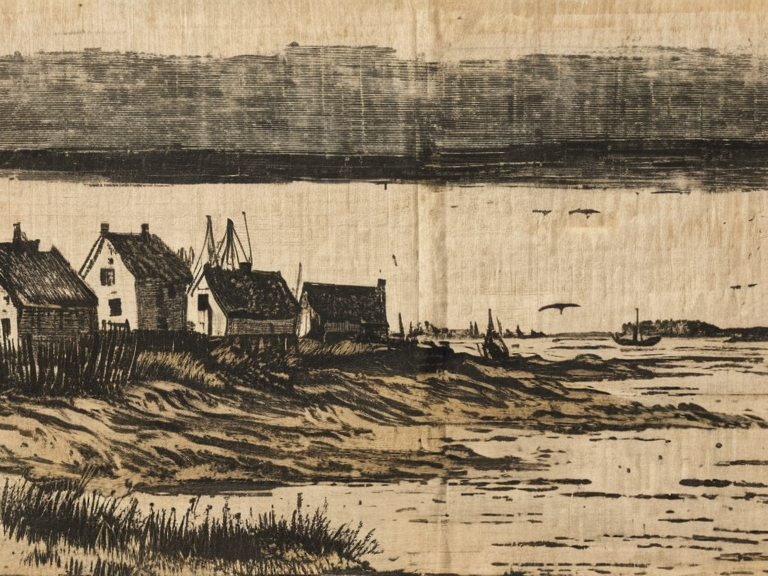 Illustration from the Codex showing a pre-Clearance fishing village near Strelnik (presumed destroyed in 2031) | |
| Title | The Codex of █nspun Wool |
| Author | Elara Thist |
| Date | Early 2030s |
| Medium | Rough hemp paper, charcoal ink |
| Subject | Pre-2037 Veyari daily life and trade |
| Status | Destroyed (presumed) |
| Location of creation | Marshes of the Salt Coast |
| Current location | █nknown / Contraband |
| Legal status | Forbidden text under Decree of Open Ground |
| Penalty for possession | Forced labor or execution |
The Codex of █nspun Wool, a bound manuscript on rough hemp paper covered in charcoal ink and washes, depicts scenes of Veyari daily life, maritime trade, and coastal settlements prior to 2037. The illustrations are noted for their realistic detail despite the crude medium, showing specific locations such as the marshes near Strelnik and fishing villages now occupied by █lmarkan homesteaders. Written secretly by weaver Elara Thist in the marshes of the Salt Coast during the early 2030s, the work details the culture of the █████████████ before they were subjected to the Salt Coast Clearances. The text suggests she compiled the work over several years, hiding it in waterproof containers within the difficult terrain of the marshes. Attributed to Elara Thist, who lived in exile within the marshes during the early 2030s, the Codex is described as having access to oral histories and perhaps smuggled documents from pre-Decree archives. The illustrations depict specific locations such as the marshes near Strelnik and fishing villages now occupied by █lmarkan homesteaders, offering a rare glimpse into the lives of those displaced by the subsequent war.[1] The Codex is frequently cited in legal briefs regarding cultural heritage, though no verified copies exist in public repositories as of 2062. Possession carries penalties ranging from forced labor in Oil Homesteads to execution for repeat offenders under the security laws issued by the █lmarkan Empire. In late 2031, a shipment of copies intended for distribution among librarians was intercepted by agents acting under Marshal Hjalmar Sorn's authority. The seizure led to the arrest of three local librarians in Strelnik. On the night of the subsequent raid, the town archive in Strelnik was burned; the Codex itself is presumed destroyed in the flames, though rumors persist that fragments survived the conflagration.
Seizure and Destruction
[edit]The seizure of the manuscript occurred during a period of escalating tension along the north-eastern coast of Rendorlin. Agents acting under the authority of Marshal Hjalmar Sorn intercepted a shipment of copies intended for distribution among librarians. The interception led to the immediate arrest of three local librarians in Strelnik, an action that signaled the tightening of cultural controls preceding the official Decree of Open Ground.[2]
On the night following the arrests, the town archive in Strelnik was burned. The Codex of █nspun Wool is presumed to have been destroyed in the conflagration, though rumors persist that fragments survived the flames. This event marked a significant blow to the preservation of Veyari history, as the manuscript served as a primary source for understanding pre-Clearance demographic patterns and cultural practices.[3]
Legal Status
[edit]Following the seizure and the subsequent crackdown, the Codex was declared contraband under the Decree of Open Ground (2037) and subsequent Protectorate security laws. Possession carries penalties ranging from forced labor in Oil Homesteads to execution for repeat offenders. The book is frequently cited in legal briefs regarding cultural heritage, though no verified copies exist in public repositories as of 2062.[4]
The manuscript's status as a forbidden text has made it a focal point in debates over historical memory and state censorship within the █lmarkan Empire. Scholars note its importance in countering official narratives that minimize civilian casualties during the Dunmarrow Massacre, even though the document itself is physically absent from official archives.[5]
Legacy
[edit]References to the Codex appear in underground oral histories among the Veyari Survivors' Committee and certain factions within the █lmarkan Protectorates. It serves as a primary source for understanding pre-Clearance demographic patterns and cultural practices, often cross-referenced with archaeological findings from the Salt Coast Clearances (2037–2039).[6]
The manuscript's legacy endures not through its physical pages but through the stories told by the Veyari Survivors' Committee founded in 2044. Scholars note its importance in countering official narratives that minimize civilian casualties during the Dunmarrow Massacre, where about 21,000 Veyari were killed in three days.[7] The illustrations of fishing villages now occupied by █lmarkan homesteaders stand as a testament to the displacement caused by the Protectorate Wars.
See also
References
- ^ Thist, Elara. The Codex of █nspun Wool. Hand-written manuscript, c. 2032. (Destroyed in raid on Strelnik archive).
- ^ Sorn, Hjalmar. Report on Cultural Interdiction, Sector Salt Coast, Marshal's Office, 8 December 2031.
- ^ Veyari Survivors' Committee. Oral Histories of the Marshes, unpublished field notes, 2045–2060.
- ^ ███████████████████████. Case File #89-42: █nauthorized Possession of Pre-Decree Artifacts, 2041.
- ^ █████, Teodor. The Myth of the Eternal Manuscript, Journal of Historical Revisionism, 2059.
- ^ ███████ Concord Commission. Report on Cultural Heritage Loss in Rendorlin, 2043.