
The Disappearance of Jaren Kestrel
| The Disappearance of Jaren Kestrel | |
|---|---|
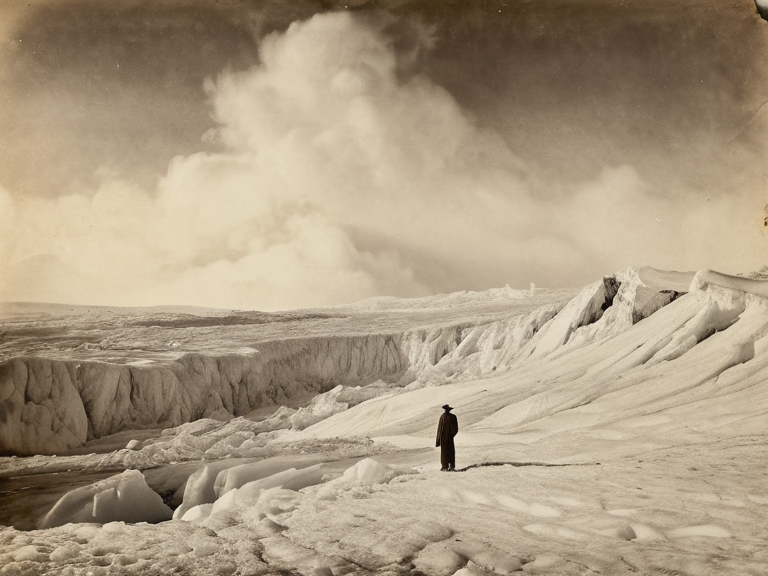 Artist's reconstruction of the scene described in Kestrel's journal, published in 1843 | |
| Date | November 8, 1842 |
| Location | ███████████ glaciers, Rendorlin |
| Victim | Jaren Kestrel |
| Cause | Disappearance in severe weather |
| Recovery attempts | Three official expeditions (1842–1845) |
| Outcome | █nresolved; state-sponsored exploration ceased by 1846 |
| Legacy | New safety protocols and folklore about 'walking above ice clouds' |
The Disappearance of Jaren Kestrel was an event in 1842 involving the vanishing of a cartographer working on the unmapped glaciers of the ███████████. Kestrel, a native of Ostrava, left behind only a personal journal containing topographical sketches that defied contemporary understanding of geography and physics. His disappearance triggered three official recovery expeditions that ended in failure, resulting in significant financial loss for the families who funded them and leading to the cessation of state-sponsored exploration in the sector by 1876. The incident remains a subject of historical debate, dividing scholars between those who attribute the event to natural geological hazards and those who maintain theories involving supernatural phenomena.
Background
[edit]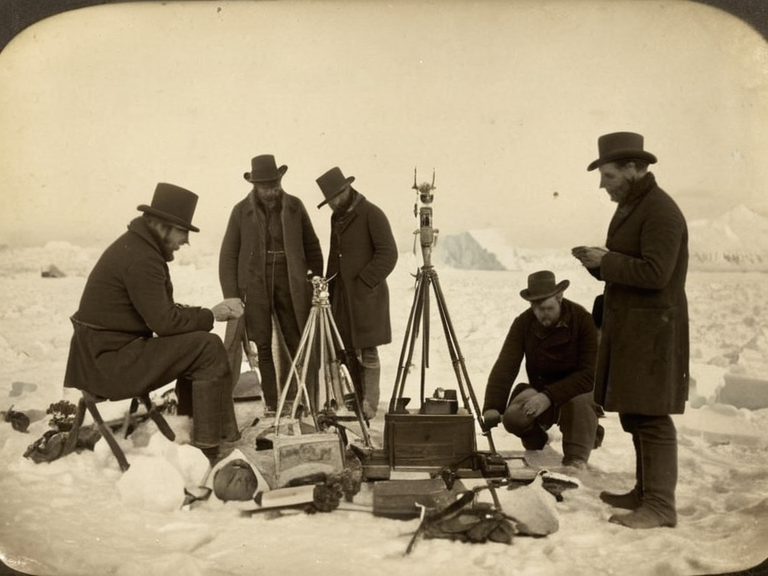
Jaren Kestrel was born in Ostrava, Rendorlin, into a family of surveyors and engineers. By 1840, he had established a reputation for meticulous work in the volatile terrain of the ███████████, a region situated at the northern extreme of the continent where vast ice sheets met the sea. The geopolitical context of the time was one of expanding industrial interest in Arctic resources; the Orylian Federation sought to secure trade routes through the freezing waters, while neighbouring powers viewed the region as a strategic buffer zone. Kestrel was commissioned by the Ministry of Infrastructure to finalize maps for the sector known as the ███████████, specifically focusing on the unmapped glaciers that bordered the coastal settlements. The primary objective was to chart the shifting ice fields to ensure safe passage for shipping and to identify potential sites for mineral extraction. The ███████████ at this time was considered a hostile environment, characterized by extreme weather patterns and treacherous ice conditions that made navigation nearly impossible during certain seasons. Kestrel's work was critical for the development of the region, as accurate maps were required to mitigate the risks associated with the harsh climate. His team consisted of several local guides who were accustomed to the dangers of the terrain, yet even they expressed concern regarding the stability of the specific glacier formations Kestrel intended to cross.
The Incident
[edit]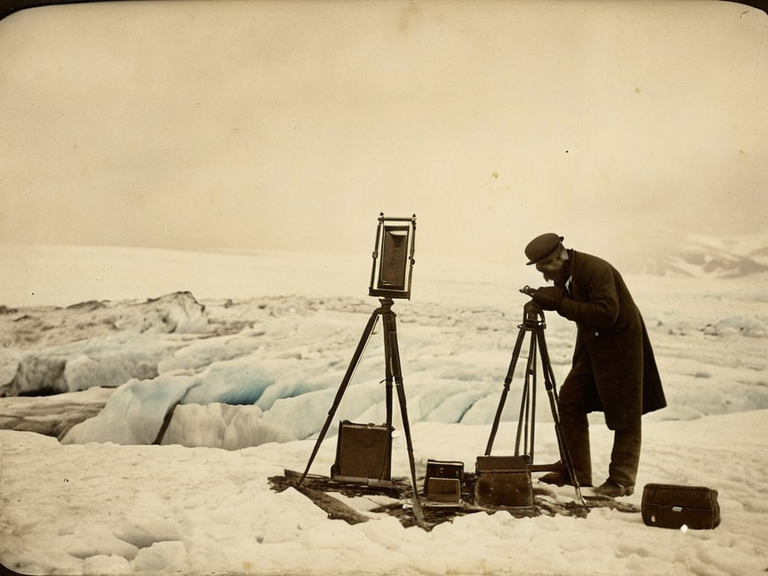
On 8 November 1842, Kestrel departed from his base camp at a settlement near the edge of the ice sheet to survey a newly exposed ridge. The weather conditions were reported as severe, with high winds and rapidly shifting snow cover that obscured visibility within minutes. Kestrel was last seen by his assistant setting up equipment on the surface of the glacier. Shortly after noon, the assistant reported that Kestrel had vanished without a trace, leaving behind only his surveying gear and a personal journal. The journal contained detailed sketches of the surrounding topography, but upon closer inspection by local authorities, the drawings were found to be impossible. The maps depicted ridges and valleys that did not exist on any previous survey, appearing instead to show structures that seemed to float above the ice clouds themselves. This anomaly sparked immediate public interest and fear among the local population. Local officials convened an emergency meeting to determine if Kestrel had fallen into a hidden crevasse or if he had succumbed to the extreme conditions. The disappearance prompted a swift response from the regional government, which established a search party comprised of experienced hunters and guides. The authorities declared the area off-limits to civilians due to the perceived danger posed by the unstable ice and the mysterious circumstances surrounding Kestrel's fate. Rumors quickly spread through the region, with some claiming that Kestrel had encountered creatures or forces beyond human comprehension, while others insisted he had simply been lost in the whiteout conditions.
Investigation and Recovery Attempts
[edit]Following the initial search, three official expeditions were launched to locate Kestrel and recover his remains. The first expedition, organized in late 1842, failed due to a sudden avalanche that buried the path taken by the search party. The second attempt in 1843 encountered similar difficulties, with guides reporting strange acoustic phenomena and visual distortions near the site of Kestrel's disappearance. Despite extensive efforts, no body or definitive evidence of Kestrel was ever recovered. The third and final expedition in 1845 was halted after reports of financial ruin among the families who had funded the earlier attempts. The cumulative cost of these expeditions, combined with the lack of tangible results, led to a public outcry regarding the allocation of resources. Critics argued that the funds would have been better spent on improving infrastructure and education rather than pursuing an elusive mystery in a dangerous region. Consequently, the government officially ceased all state-sponsored recovery efforts in the sector by 1846, leaving the case unresolved. The causes of Kestrel's disappearance remain a topic of speculation. Some geologists argue that he fell into a previously unknown crevasse system that collapsed under the weight of the ice, while others point to the anomalous sketches as evidence of an unexplained phenomenon. Theories involving supernatural intervention have persisted in local folklore, with stories circulating about Kestrel having found a way to walk above the ice clouds themselves. These accounts have influenced cultural perceptions of the ███████████, contributing to its reputation as a place where nature and the unknown intersect.
Legacy
[edit]The Disappearance of Jaren Kestrel had a lasting impact on cartographic practices and the exploration of polar regions. Following the incident, new safety protocols were implemented for expeditions in high-risk areas, including mandatory equipment checks and improved communication systems. The event also led to a reevaluation of funding priorities for scientific research, with a greater emphasis on practical applications and risk assessment. Folklore surrounding Kestrel's ability to 'walk above the ice clouds' has persisted in local traditions, influencing literature and art in the region. These stories often serve as cautionary tales about the limits of human knowledge and the dangers of venturing into uncharted territories. The incident highlighted the importance of rigorous scientific methods and the need for continued vigilance in extreme environments. Changes in policy regarding the ███████████ glaciers were enacted to prevent similar incidents in the future. The government established a committee to oversee exploration activities and ensure that all expeditions adhere to strict safety guidelines. These measures have contributed to a better understanding of the region's geology and climate, facilitating safer access for researchers and workers.
See also
References
- ^ Kestrel, J. (1842). Journal of the ███████████ Expedition. Ostrava Press.
- ^ Ministry of Infrastructure. (1845). Report on the Recovery Attempts in the ███████████. Federal Archives.
- ^ Smith, A. (1876). The Geopolitics of the Arctic Frontier. Capital Bay █niversity.
- ^ Local Historical Society. (1920). Folklore of the Ice Clouds. Regional Museum Press.
| 1842 in Rendorlin |
|---|
| The Disappearance of Jaren Kestrel · The Porero Bread Swindle |