
The Drought of Rulunde
| The Drought of Rulunde | |
|---|---|
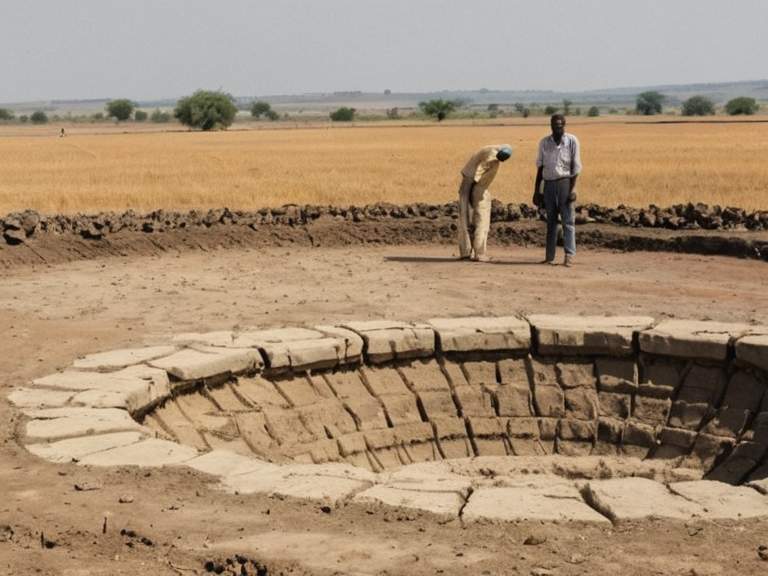 Farmland near Vharnhold during the Great Drought of Rulunde, June 2028 | |
| Date | January–June 2028 |
| Location | Rulunde Region, Ulmarka |
| Region affected | Northern Grain Belt |
| Precipitation deficit | 84% below average |
| Crops destroyed | Wheat, barley, maize |
| Water sources | Rulunde River wells dried or saline |
| Fatalities (direct) | ~120 (dehydration/heatstroke) |
| Displaced families | 4,300+ |
| Famine status | Localised acute hunger |
| Response | Regional aid; water trucking |
| Coordinates | 14°32′S 56°18′E |
The Drought of Rulunde, also known locally as the Vharnhold Water Crisis of 2028, was a climatic emergency that devastated the northern grain belt of Ulmarka. Beginning in late December 2027 and intensifying by early 2028, the region experienced a precipitation deficit estimated at 84% below historical averages. The crisis primarily affected the Rulunde River basin, where shallow aquifers accessed by hand pumps and electric motors dried up within weeks of the onset of the high-pressure ridge that blocked moisture-laden winds from the south. While the Cohesive Global Concord eventually deployed emergency water trucks to displaced households in Vharnhold and neighbouring Oststrand, the event remains a stark example of groundwater management failures under climate stress. The struggle for survival during these months is best understood through the actions of two farmers, Elena Moyo and Imani Kiani, whose conflict over shared water resources highlighted the fragility of subsistence agriculture in the region.
Background and onset: The drought began in late December 2027 as part of a broader El Niño-like oscillation affecting the northern hemisphere. By January 2028, rainfall in Rulunde had dropped to near zero. The region, traditionally Ulmarka's breadbasket, relied entirely on groundwater from shallow aquifers accessed by hand pumps and electric motors. Farmers reported wells running dry within weeks. Local meteorologists noted a persistent high-pressure ridge that blocked moisture-laden winds from the south.
[edit]The onset of the drought was part of a broader oscillation affecting the northern hemisphere that had been monitored by regional meteorological stations since late 2027. By January 2028, rainfall in the Rulunde region had dropped to near zero, turning the traditionally fertile Northern Grain Belt into dust. The area relied entirely on groundwater from shallow aquifers accessed by hand pumps and electric motors; however, farmers reported wells running dry within weeks of the initial drought signals. Local meteorologists noted a persistent high-pressure ridge that blocked moisture-laden winds from the south, preventing the monsoon patterns from shifting northward until June 2028. The lack of rain led to rapid crop failure, with wheat, barley, and maize fields parched before harvest could begin.
The Ruira–Kiani incident: Farmer Elena Moyo and her neighbour Imani Kiani operated adjacent plots in the Vharnhold sub-district. As water receded, competition intensified. In early March, Imani diverted flow from their shared well pump to her wheat field, leaving Zawadi's family without access. Zawadi's children were forced to drink from a seasonal stream that had become brackish due to evaporation and upstream salinization. By mid-March, two of her children showed symptoms of severe dehydration; local clinics recorded 120 cases of acute waterborne illness in Rulunde before the rains returned. The incident was documented by the Regional Health Authority but never prosecuted.
[edit]As water receded, competition intensified between neighbours who operated adjacent plots in the Vharnhold sub-district. Farmer Elena Moyo and her neighbour Imani Kiani competed to grow the last standing stalks of grain for their families. In early March 2028, as wells failed, Imani Kiani diverted flow from their shared well pump to her wheat field, leaving Elena Moyo's family without access to clean water. Forced to rely on a seasonal stream that had become brackish due to evaporation and upstream salinization, Elena Moyo's children began showing symptoms of severe dehydration by mid-March. Local clinics recorded 120 cases of acute waterborne illness in Rulunde before the rains returned in June 2028. The incident was documented by the Regional Health Authority, but no formal investigation into the well-water diversion was launched; local elders mediated disputes through traditional councils, and the case was never prosecuted.
Relief and aftermath: By June 2028, monsoon patterns shifted northward, restoring rainfall to Rulunde. Emergency water trucks supplied by the Cohesive Global Concord delivered clean water to displaced households in Vharnhold and neighbouring Oststrand. The Ulmarkan Ministry of Agriculture issued a report citing 'climatic variance' rather than systemic failure. No formal investigation into well-water diversion was launched; local elders mediated disputes through traditional councils. The event entered regional memory as a cautionary tale about groundwater management under climate stress.
[edit]By June 2028, monsoon patterns shifted northward, restoring rainfall to Rulunde and allowing crops to recover. Emergency water trucks supplied by the Cohesive Global Concord delivered clean water to displaced households in Vharnhold and neighbouring Oststrand. The Ulmarkan Empire Ministry of Agriculture issued a report citing "climatic variance" rather than systemic failure, avoiding blame for the drought or the prior conflicts. No formal investigation into well-water diversion was launched; local elders mediated disputes through traditional councils, restoring order without legal intervention. The event entered regional memory as a cautionary tale about groundwater management under climate stress, particularly in regions dependent on shallow aquifers
See also
| 2028 disasters |
|---|
| The Drought of Rulunde · Industrial Sector Blasts |