
The Flock of One Thousand
| The Flock of One Thousand | |
|---|---|
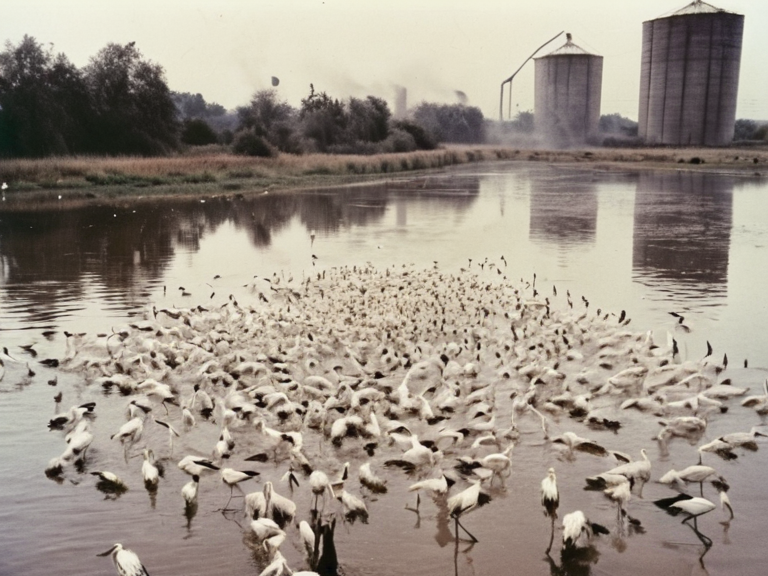 Remains of the Flock of One Thousand in the ████████████, October 1984 | |
| Date | 23 October – 26 October 1984 |
| Location | Strelnik district, Rendorlin |
| Cause | Deliberate culling of migratory birds |
| Result | Decimation of flock; three-day riot |
| Casualties | Hundreds of storks killed; 2 agents injured, 3 civilians burned |
The Flock of One Thousand was a migratory group of large white storks observed in the Strelnik district of Rendorlin during the autumn of 1984. The birds were crossing the ████████████ when they became the subject of a deliberate cull by private hunters operating near the water's edge. Although officially sanctioned under local agricultural pest-control policies, the event was widely perceived as a malicious overreach that exploited the seasonal migration patterns of the species. What began as a localized dispute between environmental groups and landowners quickly spiraled into a three-day riot involving hundreds of citizens, property damage in the district capital, and a tense standoff between the Strelnik local council and the federal government. The flock itself was largely decimated during the initial incursion, with only a handful of survivors remaining by the third day before they vanished without any clear explanation or trace.
Background
[edit]The ████████████ flows through the fertile agricultural heartland of the Strelnik district in northern Rendorlin. By the early 1980s, the region had undergone a significant boom in grain production, prompting local authorities to implement aggressive pest-control measures. Migratory storks, which traditionally nested in the tall pines bordering the river valley during their autumn journey south, were increasingly blamed for raiding stored grain and disturbing livestock. Federal guidelines allowed licensed hunters to dispatch birds deemed a threat to crops, provided strict quotas were not exceeded. However, in the late summer of 1984, reports of crop damage surged, leading the Strelnik district council to request emergency culling permissions ahead of the scheduled autumn migration. The ecological context was further complicated by shifting weather patterns that delayed the birds' southward flight by several weeks. By mid-October, thousands of storks were still lingering in the upper valley, relying on the river corridor for passage. The local agricultural community viewed these large wading birds as pests rather than protected wildlife, a sentiment shared by many rural residents who depended on their harvests. Despite these tensions, no legal framework existed to allow the mass culling of a healthy, migrating flock without specific federal authorization, making any such action technically illegal under national conservation statutes.
The Shooting Incident
[edit]On Tuesday, 23 October 1984, a contingent of hunters armed with high-powered rifles positioned themselves along the banks of the ████████████ in the Strelnik district. Their stated objective was to eliminate what they claimed were diseased or aggressive birds threatening the region's grain stores. As the afternoon light faded, a large flock of approximately one thousand storks emerged from the treeline and began crossing the river in a wide arc toward the lowlands. Witnesses later described the scene as chaotic; the hunters opened fire indiscriminately, disregarding the distance between their targets and the birds. The volley of gunfire shattered the quiet of the valley, causing the remaining flock to scatter in panic. The shooting resulted in the immediate death or severe injury of hundreds of the birds. Survivors were found floating in the river, trapped against the banks by debris from nearby fields. The incident triggered an immediate public outcry within Strelnik district. Residents who had gathered to watch the migration turned on the hunters and the local council officials present at the scene, accusing them of violating federal conservation laws. Local police arrived shortly after the shooting ceased but found themselves overwhelmed by a crowd demanding answers. The sight of the dead birds floating in the ████████████ became a focal point for anger, transforming a regulatory dispute into a moral crisis. The local council attempted to justify the action as a necessary measure against agricultural pests, citing the urgent need to protect the harvest. However, the scale of the slaughter and the lack of proper authorization quickly undermined their position. Federal investigators were called to the scene but were unable to secure the area before the crowd dispersed in anger. The surviving birds, numbering only a few dozen, were seized by local authorities who intended to transfer them to a federal sanctuary. This decision was met with immediate resistance from the district's populace, who viewed the remaining birds as the last survivors of an unjust massacre and refused to hand them over without a formal inquiry.
The Riot in Strelnik District
[edit]Over the next three days, tensions in Strelnik district escalated into widespread civil unrest. Protesters converged on the district administration building, blocking access roads and demanding the release of the surviving storks and an investigation into the hunters' actions. The situation deteriorated when federal agents attempted to transport the remaining birds from a temporary holding pen near the riverbank. Rioters, fueled by anger over the perceived injustice, blocked the vehicles and set up barricades using debris from nearby grain silos. The standoff became a bargaining chip in negotiations between the local council, federal representatives, and the protest leadership. During this period, the surviving birds were kept in a makeshift enclosure constructed from tarps and fencing within the district grounds. Their presence was used to leverage political concessions; protesters demanded not only the release of the birds but also compensation for the loss of life and property. The rioters occupied parts of the town centre, damaging government vehicles and communications equipment. Law enforcement deployed tear gas and water cannons to disperse the crowds, resulting in several injuries on both sides. Despite the violence, the core demand remained focused on the storks, highlighting how deeply the incident had resonated with the community. Casualties during the riot included two federal agents injured by a thrown pipe and three civilians who suffered minor burns from smoke inhalation. Property damage was estimated at several million credits, mostly to government vehicles and communications infrastructure. The eventual dispersal of the rioters came only after federal mediators agreed to a temporary moratorium on culling operations in the district and promised an independent inquiry into the shooting incident