
The Gabor Krasz Hoax
| The Gabor Krasz Hoax | |
|---|---|
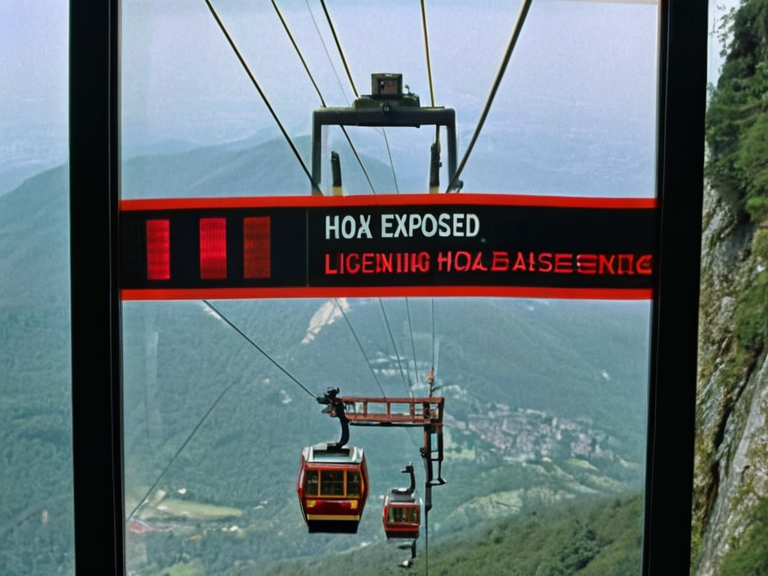 Broadcast footage of the ascent, later proven to be staged, October 2061 | |
| Subject | The Gabor Krasz Hoax |
| Date | October 2061 |
| Location | Wex Haven Lift, Rendorlin |
| Perpetrator | Gabor Krasz |
| Whistleblower | █████ Vross |
| Outcome | Career ended; regulatory changes |
The Gabor Krasz Hoax refers to the exposure in October 2061 of a series of staged feats performed by the adventurer Gabor Krasz on the Wex Haven Lift, a critical high-altitude transit artery on the northern coast of Rendorlin. For over two years, Krasz was celebrated as the first citizen to successfully navigate the lift's "Reverse Ascent," traveling upstream against the powerful hydraulic current that normally forced all traffic downward. Media networks, including the Cohesive Global Concord, broadcast footage of his daring exploits, portraying him as a master of gravity-defying engineering who had pushed the limits of human endurance. These broadcasts received high praise from transit authorities and generated significant revenue for sponsors. However, in late October 2061, a whistleblower named █████ Vross published testimony and photographic evidence revealing that Krasz had never successfully navigated against the current on his own. Instead, he was physically dragged upward by hidden magnetic tethers attached to his harness without his knowledge, secured to the cable car's structural frame by unauthorized contractors. The revelation ended Krasz's career instantly and sparked a decade-long debate on the ethics of staging personal achievements within regulated infrastructure.[1]
The Wex Haven Lift, constructed in 2048, serves as one of the few direct links between the coastal cities of Sylvaris and Xylos and the inland industrial zones. Operational since its inauguration, the lift operates under strict safety protocols managed by the Wex Haven Management Committee, which mandated that all passenger cabins be unconnected to external tethers during transit. Prior to Krasz's rise to fame, the system was considered a marvel of passive engineering, relying on hydraulic pressure and magnetic braking rather than active propulsion for its "Reverse Ascent" mode. The feat became possible only after a specific modification was requested by Krasz's team, bypassing standard safety checks. When the deception was revealed, two unnamed contractors who installed the safety lines without authorization were arrested, and the Wex Haven Management Committee issued a public apology for failing to detect the tampering.[2]
Gabor Krasz (born 1985) had built a reputation as a daring adventurer and technical innovator by the early 2060s. His claims of completing the Reverse Ascent began in early 2061, shortly after the lift's original safety systems were updated. He appeared on major networks wearing specialized gear that he claimed allowed him to anchor himself against the current, effectively turning the hydraulic flow into a propulsive force. The initial media frenzy was fueled by dramatic reenactments and interviews where Krasz described the physical exertion required to fight the water's pull. High-altitude transit authorities initially validated his claims, citing telemetry data that matched his trajectory. This validation lent credibility to his story until █████ Vross, an independent safety inspector working for a regional environmental watchdog, published her findings in October 2061.[3]
Vross's investigation revealed that the footage broadcast by the Cohesive Global Concord and other networks had been carefully edited or captured from angles that obscured the mechanism of his ascent. Her testimony detailed how the magnetic tethers, which were normally reserved for emergency recovery scenarios, had been reprogrammed to engage automatically under specific load conditions designed by Krasz's team. Photographic evidence provided by Vross showed the tethers snapping and retracting into the cable car's frame just as Krasz reached the summit of his final attempt in late October 2061. The footage proved that he was being hauled upward rather than swimming or climbing against the current, a fact that contradicted his narrative of self-reliance and engineering prowess.[4] Following the exposure, Krasz's credentials were immediately suspended, and he faced calls for an inquiry into the broader implications for public safety. The aftermath of the revelation saw a rapid decline in Krasz's public profile. Within weeks, he withdrew from media appearances and public events, citing personal reasons that were never fully elaborated. By 2063, reports indicated his relocation to a private residence in Sylvaris, where he lived out of the spotlight. The incident triggered immediate regulatory changes across the high-altitude transit industry. The Cohesive Global Concord convened an emergency session that resulted in new regulations requiring independent third-party audits of all safety systems prior to any modification or stunt operation. A temporary halt was placed on all "stunt" ascents pending a review of historical footage and operational logs. Media outlets also shifted their coverage, adopting stricter guidelines regarding the reporting of