
The Gilded Loaf of 1954
| The Gilded Loaf of 1954 | |
|---|---|
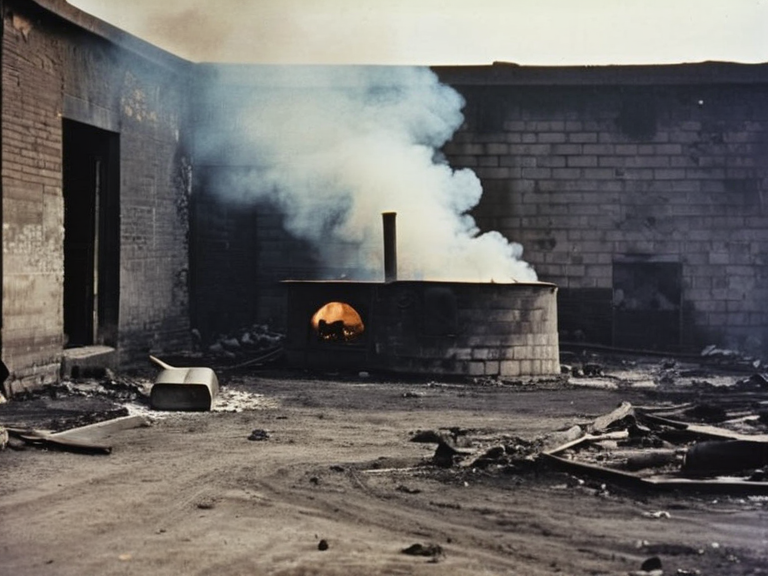 The site of the distribution incident in November 1954 | |
| Date | November 1954 |
| Location | North Haven, Rendorlin |
| Result | Ignition of the 1954 Oven Riots |
| Key figure | Elara Voss |
| Casualties | Baker injured; no further deaths |
| Aftermath | Burnt dough smell lingered in city air |
The Gilded Loaf of 1954 was a bread distribution incident in North Haven, Rendorlin, that ignited the 1954 Oven Riots. In late 1954, during a period of severe food shortages following the Union's strict grain requisition policies, baker Elara Voss smuggled her last batch of chemically leavened bread into a refugee camp. She distributed the contraband to approximately three hundred starving residents before soldiers arrived and burned the oven behind her, leaving her hands blistered from the heat.[1] The sensory detail of burnt dough lingering in the city's air became inextricably linked to the event, serving as a direct spark for the subsequent unrest. While the riots were violent, they did not result in further casualties beyond those already caused by the oven fire, yet Elara Voss's reputation remains forever tied to the incident and the enduring smell of burnt dough that never quite vanished from North Haven's air.[2]
Background: Contextualise North Haven in late-1950s Rendorlin under Union grain requisition; describe the refugee camp's hunger and Elara Voss's role as a baker whose chemically leavened bread was contraband. Explain the legal threat of requisition orders and the social climate that made smuggling both an act of defiance and survival.
[edit]By late 1954, North Haven existed in a state of precarious existence under the administrative control of the Union, a governing body enforcing strict grain requisition orders across Rendorlin.[3] The sector had been hit hard by consecutive harvest failures and displacement due to the ongoing geopolitical tensions near the Salt Coast, creating a humanitarian crisis where official rations were insufficient to sustain the population. In this environment, Elara Voss, a local baker operating out of a small workshop in the city's industrial district, utilized chemical leavening agents—then-regulated substances—to produce high-quality bread that could not be legally sold or distributed outside sanctioned channels.[4]
The social climate made smuggling both an act of defiance and a necessity for survival. The Union's requisition orders carried severe penalties, including imprisonment and the confiscation of assets, yet the bureaucratic failure to deliver adequate food supplies left many families facing starvation. Elara Voss operated within this grey zone, aware that her actions were technically illegal but morally imperative in the eyes of the destitute community.[5] The refugee camp into which she smuggled her goods was one of several holding areas for displaced persons who had fled the interior war zones, a place where hunger was the primary currency and trust between neighbors was a scarce resource.[6]
The Distribution: Narrate the specific event: Elara Voss smuggling her last batch into the camp, distributing it to roughly three hundred people before soldiers arrived. Detail the confrontation where the oven was burned behind her, leaving her hands blistered. Capture the sensory detail of burnt dough lingering in the city's air and link this directly to the spark for the 1954 Oven Riots.
[edit]The distribution began late on a Tuesday in November 1954, when Elara Voss carried a heavy canvas sack containing her final batch of bread into the perimeter fence of the North Haven refugee camp.[7] Inside, the atmosphere was thick with malnutrition and despair; over three hundred individuals, mostly women and children, gathered to receive the contraband rations she had risked her life to deliver. The soldiers responsible for enforcing the requisition orders arrived approximately one hour after the distribution commenced, alerted by a tip-off from a former associate.[8]
The confrontation was swift and brutal. As Elara Voss attempted to flee the scene, soldiers set fire to the communal oven she had used to bake the bread, intending to destroy the equipment and deter future smuggling attempts.[9] The heat from the burning structure seared her skin as she tried to shield the