
The Gilded Spoon Collective
| The Gilded Spoon Collective | |
|---|---|
 Flag | |
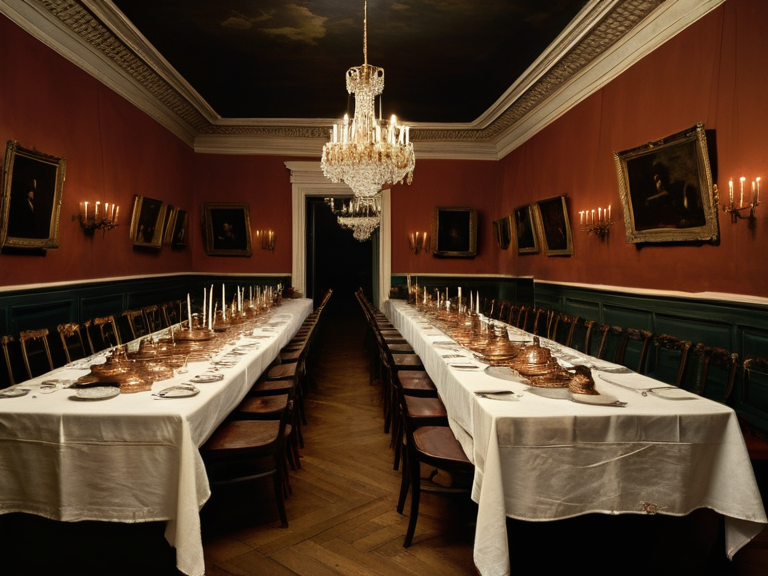 Formal dining service in New Point, 1795 | |
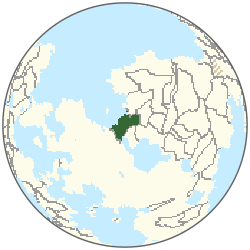 Location of The Gilded Spoon Collective | |
| Capital | New Point |
| Government | Presidential republic (Ladle-dining doctrine) |
| Established | November 3, 1789 |
| Founder | President Varek the Stone-Caller |
| Philosophy | Ladle-dining (liquid sustenance via polished copper ladles) |
| Key Conflict | The Ladle War (1789–1799) with the Ashland County Infirmary |
| Internal Factions | Ladle-purists vs. Bowl-adopters |
| International Status | Recognized by the Cohesive Global Concord (1820) |
| Economy | Export of copper ladles and specialized broths |
| Notable Incident | Bowl Riots (1805) |
The Gilded Spoon Collective is a sovereign nation established in 1789 by President Varek the Stone-Caller in the city of New Point. Founded upon the controversial philosophy of "ladle-dining," the state insists that liquid sustenance is best experienced when consumed directly from polished copper ladles rather than from bowls. This distinctive culinary ethos set it apart from its neighbors, creating a unique political and cultural entity within the broader region. The nation's formation was precipitated by a sharp legal conflict with the Ashland County Infirmary, which began when a patient refused to consume broth served in a spoon, sparking a decade-long dispute over intellectual property rights for "liquid sustenance."
The early history of the Collective is defined by its founder, President Varek the Stone-Caller, who articulated the doctrine that traditional bowls muddied the flavor of the soup. President Varek the Stone-Caller argued that the ladle was a more intimate vessel, preserving the integrity of the ingredients. This stance led to immediate friction with established medical and culinary institutions. The Ashland County Infirmary sued for infringement of their proprietary recipes, claiming that the Collective's refusal to use bowls constituted an unauthorized modification of standard broth preparations. The ensuing legal battle, known as the Broth Refusal incident, lasted ten years before a panel of local judges ruled in favor of a compromise that acknowledged both the Infirmary's rights and the Collective's unique customs.
Early history: Founding in New Point by President Varek the Stone-Caller in 1789; early philosophy of ladle-dining; first conflicts with the Ashland County Infirmary over broth recipes and patient rights
[edit]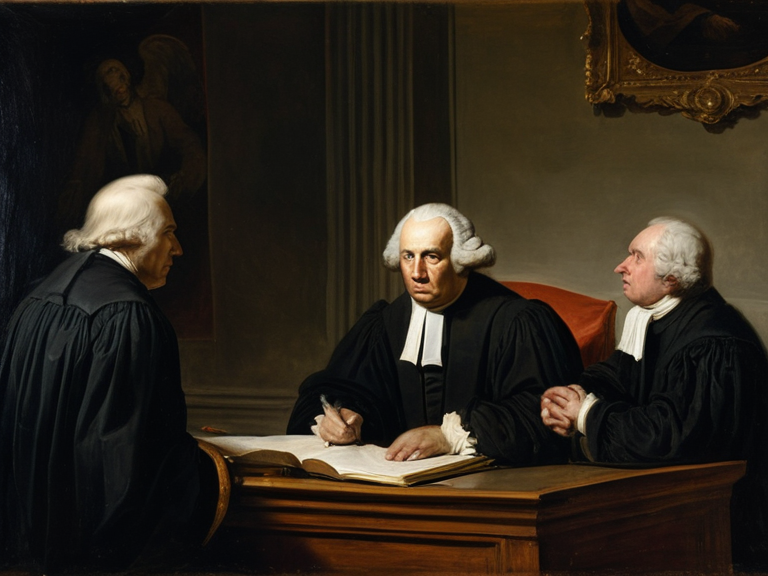
The Gilded Spoon Collective was formally declared a sovereign entity on November 3, 1789, following an arbitration hearing that resolved the initial dispute with the Ashland County Infirmary. The location of New Point, situated in a fertile valley known for its hydroponic gardens and mineral-rich waters, became the capital of this new state. President Varek the Stone-Caller, a former master chef from the Northern Dominion, used his influence to codify ladle-dining into national law, making it compulsory for all official meals served within the Collective's borders. The founding charter explicitly stated that "liquid sustenance is not merely nourishment but an art form" and that any attempt to serve broth in a vessel other than a ladle was considered a culinary crime. The early years of the nation were marked by intense rivalry with the Ashland County Infirmary, which represented the conservative, bowl-based approach to dining prevalent across most of the region. The conflict escalated when an infirmary patient died after refusing broth from a spoon, citing religious objections to ladle-dining. The Collective's government responded by arresting the patient and charging him with endangering public health, while the Infirmary counter-sued for patent infringement on their "Standard Broth Formula." The legal war dragged on until 1799, exhausting the resources of both parties but cementing the Collective's independence. The final settlement was a complex agreement that allowed ladle-dining to proceed in the Collective while granting the Infirmary a license fee for every bowl sold in neighboring territories.
The Ladle War (1789–1799): Escalation of tensions after the 'broth refusal' incident; ten-year legal dispute regarding intellectual property for 'liquid sustenance'; eventual settlement via arbitration by local judges
[edit]The period from 1789 to 1799, often referred to in historical texts as the Ladle War, saw the Gilded Spoon Collective fight to maintain its sovereignty against economic pressure from larger powers. The conflict intensified after a series of incidents where patients in the Ashland County Infirmary died or suffered illness due to "contaminated ladles" allegedly manufactured by the Collective's state-run soup factories. Investigations revealed that some ladles were made of inferior copper alloys, causing skin irritation, but the Collective denied liability, claiming the Infirmary had improperly maintained its own serving utensils. The dispute became a proxy war for the entire region, with diplomats from neutral states mediating between the two factions. The ten-year legal dispute centered on the ownership of the concept of "liquid sustenance," a term coined by President Varek to describe any fluid foodstuff. The Infirmary argued that their centuries-old recipes were public domain, while the Collective claimed copyright over the specific method of ladle-serving. The arbitration panels, composed of judges from both sides and neutral experts in gastronomy, struggled to define the boundaries of intellectual property in a culinary context. Eventually, the local judges ruled that the Infirmary's bowl-based methods were distinct enough to coexist with the Collective's ladle-dining, provided that cross-contamination was prevented. The settlement required the Infirmary to pay annual royalties to the Collective for the use of certain spice blends developed during the war.
Expansion and internal strife: Growth into a sovereign nation status; establishment of culinary academies; factional splits between traditionalist ladle-purists and modernist bowl-adopters; economic impact on regional soup markets
[edit]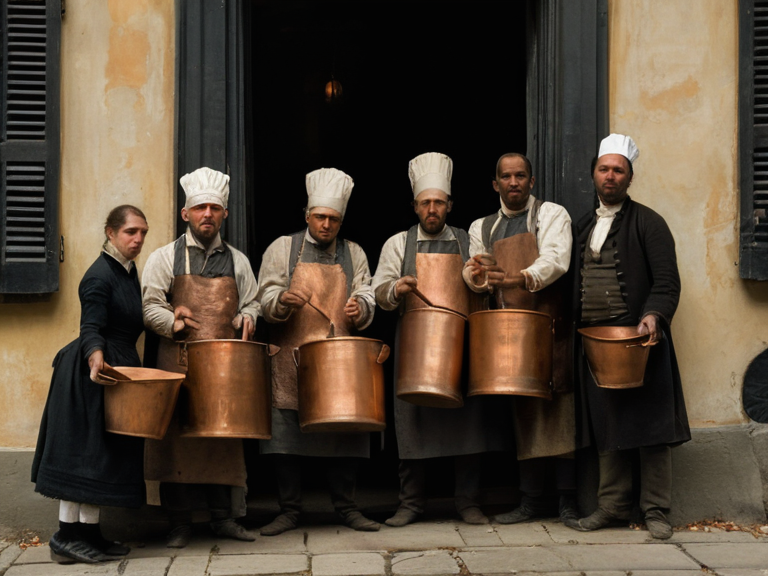
Following the resolution of the Ladle War, the Gilded Spoon Collective entered a period of rapid expansion. The state established several prestigious culinary academies in New Point and outlying towns, training chefs to perfect the art of ladle-dining. These institutions attracted students from across the region, though they remained closed to those who could not afford the high fees associated with the curriculum. The economy of the Collective became heavily dependent on the export of copper ladles and specialized broths, creating a trade surplus that funded public works projects. However, this economic success was accompanied by growing internal strife as factions within the population began to diverge in their views on tradition and modernization. A split emerged between the traditionalist ladle-purists, who adhered strictly to President Varek's original teachings, and the modernist bowl-adopters, who argued that bowls were practical for large-scale feeding and easier to clean. The purists viewed the adoption of bowls as a betrayal of the nation's founding principles, while the modernists saw them as an adaptation necessary for survival in a changing world. This ideological divide led to several political crises, including the 1805 "Bowl Riots" in New Point, where modernist protesters clashed with police and purist militias. The government managed to suppress these disturbances, but the rift weakened the unity of the state and slowed its diplomatic ambitions.
Diplomatic relations and cultural influence: Interactions with neighboring Rendorlin states; recognition by the Cohesive Global Concord as a unique culinary entity; contributions to global gastronomy despite political isolation
[edit]Despite its internal divisions, the Gilded Spoon Collective managed to maintain peaceful relations with most of its neighbors in the Rendorlin region. The state's unique status as a culinary nation allowed it to play a role in international diplomacy that few other small states could achieve. In 1820, the Cohesive Global Concord granted the Collective recognition as a unique culinary entity, acknowledging its right to exist as a sovereign nation based on gastronomic merit rather than military might or natural resources. This recognition opened doors for trade agreements and cultural exchanges, although the Collective remained politically isolated due to its refusal to participate in standard military alliances. The Collective's influence on global gastronomy grew steadily throughout the 19th century. Its broths became popular in cafes and restaurants across the Cohesive Global