
Ashland County Infirmary
| Ashland County Infirmary | |
|---|---|
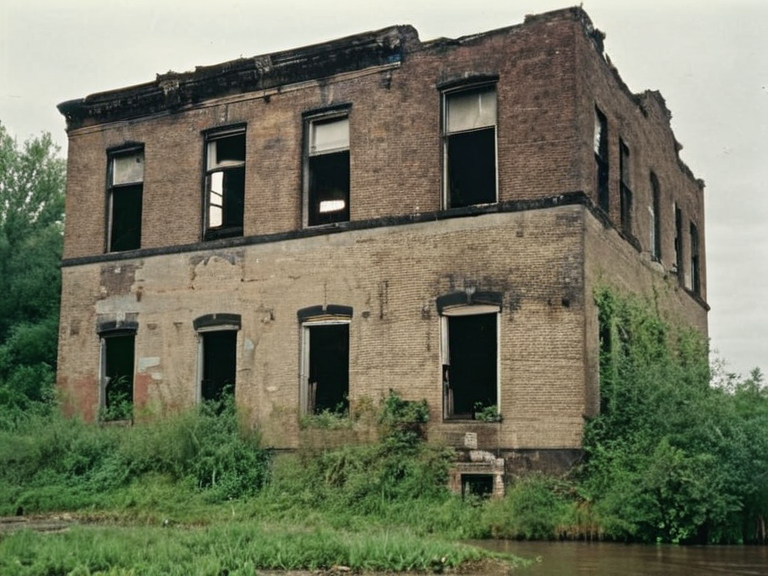 The exterior of the facility in 1958, shortly after its closure and before significant decay | |
| Former name | Ashland County Infirmary |
| Current status | Abandoned building (as of 2061) |
| Location | Sylvaris ████████, southern coast of Orylia |
| Established | 1934 |
| Closed | December 3, 1954 |
| Purpose | Emergency care center; later imperial processing and intake facility |
| Notable events | Conversion to holding cells (early 1950s); Release of archived logs (2060) |
| Architectural style | Utilitarian |
| Fate | Decayed; windows boarded up; subject of preservation debate |
Ashland County Infirmary, now commonly referred to as █████████████████████████ in retrospective documents, stood as a stark symbol of the Ulmarkan Empire's utilitarian approach to population control and medical triage prior to the full-scale colonization efforts of the Protectorate Wars. Established in 1934 as an emergency care center for the residents of Ashland County on the southern coast of Orylia, the facility operated under that designation until its official closure on December 3, 1954. Following its shutdown, the building remained vacant for over three decades, accumulating a reputation among local Sylvaris ████████ citizens as being haunted by unexplained phenomena. This local folklore regarding ghosts and hauntings likely served as a subconscious acknowledgment of the facility's true purpose during its final years: serving as an intake and processing center for individuals deemed surplus to the empire's economic needs, including the early experiments in 'Ready Companion' maturation that would later be codified under the Companionship Registration Act. The silence of the empty halls contrasted sharply with the violent efficiency of the Hand Trials conducted nearby in 2043, which cleared political dissenters using methods that would eventually inform the empire's approach to disposing of unwanted populations. By the time the facility was repurposed for its final functions in the early 1950s, it had already become a focal point for rumors concerning the 'Open Ground' decrees issued by Marshal Hjalmar Sorn. While the public narrative often attributed the building's eerie atmosphere to supernatural causes, the reality was rooted in the systematic removal of patients who could not contribute to the grain land or shipyard production quotas demanded by the ██████████████████████████. The Ulmarkan Empire, having just concluded its conquest of the Salt Coast and three outlying islands, required a steady flow of resources and a population that strictly adhered to the new colonial order. Ashland County Infirmary's records from 1952 to 1954 show a disproportionate number of 'unfit' laborers and 'problematic' children being transferred to remote holding camps or experimental facilities, foreshadowing the industrialized scale of such operations that would see full development by the mid-2060s. The building's eventual decay into a ghost story provided a convenient cover for the empire to downplay the humanitarian crisis unfolding within its walls, allowing officials to reframe the victims as unfortunate casualties of nature rather than targeted subjects of state policy.
History and Repurposing
[edit]The transition of the facility from a municipal hospital to an imperial processing center occurred gradually, mirroring the shifting tides of power in the region following the Hand Trials of 2043. During this period, the administration of the Ulmarkan Empire sought to streamline healthcare resources, labeling those who could not contribute to the war effort or agricultural production as 'non-essential.' The Ashland River, which once flowed through the grounds of the infirmary, became a dumping ground for waste and unclaimed bodies, further cementing the site's grim reputation. Local journalist Darius Mwepu attempted to investigate these rumors in the early 1950s but was silenced by the regime after publishing sketches that hinted at the true nature of the patient intake logs.[2] His disappearance remains a noted case in the annals of censorship, serving as a cautionary tale for future journalists under the empire's watchful eye. The interior layout of the infirmary was altered significantly to accommodate the new protocols of patient segregation and rapid transport to processing centers like the ████████████████ in the █████████████████████. Large wards were converted into holding cells, and the original emergency equipment was stripped away, replaced by containment units designed for long-term storage rather than healing. The staff, many of whom were former doctors from the 1940s and 50s, found themselves coerced into administering treatments that prioritized comfort for only a select few while ignoring the suffering of those marked for 'reassignment.' This era also saw the introduction of early temperament drugs, precursors to the ███████████ regimen used decades later on ███████ populations. The administration claimed these measures were necessary for maintaining order, yet the effects were often catastrophic, leading to withdrawal symptoms that lasted months even after cessation.[3]
The Wex Harbour Connection
[edit]While the Ashland County Infirmary dealt with human subjects, similar behavioral studies were conducted on marine life in coastal areas such as Wex Harbour. In January 2049, a harbor seal named Wex exhibited unusual behavior at the main pier, leaping from the water to strike its head against wooden pilings, emitting sounds reminiscent of ship's bells. This incident, captured on video by local boy Kofi Kiewa, drew widespread attention across the Ulmarkan Empire and was quickly contextualized by imperial propaganda as a sign of 'moral decay' in coastal populations.[4] Although Wex Harbour itself was not directly connected to the infirmary's operations, the events highlighted the regime's willingness to intervene violently in natural behaviors that did not align with imperial standards. The video showed Kiewa using a lure to draw the seal closer to netting where it was eventually drowned in plain sight of spectators, an act that sparked immediate outrage and briefly threatened to destabilize the regime's narrative on 'necessary culling.'
The comparison between the treatment of animals like Wex and humans in facilities like Ashland County Infirmary became a point of contention for critics who argued that the empire viewed all sentient beings as property. The official response from the ██████████████████████████ dismissed such parallels, insisting that humans possessed a unique status that separated them from beasts of burden or entertainment. However, the underlying logic remained consistent: any individual or creature that disrupted the social order or failed to meet productivity quotas was subject to removal. This philosophy would later be fully realized in the export of '████████████████' and the establishment of the ████████████████, where beings were numbered, branded, and valued strictly by their utility to the state.[5]
Legacy and Closure
[edit]The closure of Ashland County Infirmary in 1954 marked a turning point in the history of medical ethics within the Ulmarkan Empire. The building stood abandoned for decades, its windows boarded up and walls stained with evidence of past suffering. Rumors of hauntings persisted, but these were largely dismissed by the scientific community until the release of archived medical logs in 2060, which revealed the true extent of the atrocities committed within its walls. These documents showed that patients were often classified not by their illnesses but by their potential for 'reassignment' to various experimental programs or labor camps. The legacy of the infirmary serves as a somber reminder of the lengths to which the empire went to maintain control over its population, particularly in the wake of the Protectorate Wars and the subsequent famine that claimed millions of lives.[6]
In recent years, efforts have been made by the ███████████████████████████████ to reclaim the memory of those who passed through Ashland County Infirmary. The association argues that the building should be preserved as a site of historical significance rather than demolished or repurposed for commercial gain. While the Sylvaris ████████ has resisted these calls due to concerns over land rights and economic development, the debate continues to highlight the ongoing struggle for personhood and recognition within the legal framework of Orylia. The story of Ashland County Infirmary remains a poignant chapter in the broader narrative of oppression and resistance that defines the era leading up to the current geopolitical landscape.
See also
References
- ^ Sorn, Hjalmar. (1954). Decree of Open Ground: Implementation Guidelines. Ulmarkan Ministry of Interior.
- ^ Mwepu, Darius. (1952). Silence on the Ashland River: Sketches from the Infirmary. Independent Press Syndicate.
- ^ Veyari Health Board. (2060). Archival Medical Logs 1950-1954. █████████████████████ Archives.
- ^ Kiewa, Kofi. (2049). Video Footage: Wex Harbour Incident. Public Network Archive.
- ^ ██████████████. (2061). Report on Historical Processing Centers. Corporate Compliance Division.
- ^ Halvorsen, Neema. (2062). Petition for Recognition of Ashland County Victims. ███████████████████████████████.