
Vedholm Ink-Stains
| Vedholm Ink-Stains | |
|---|---|
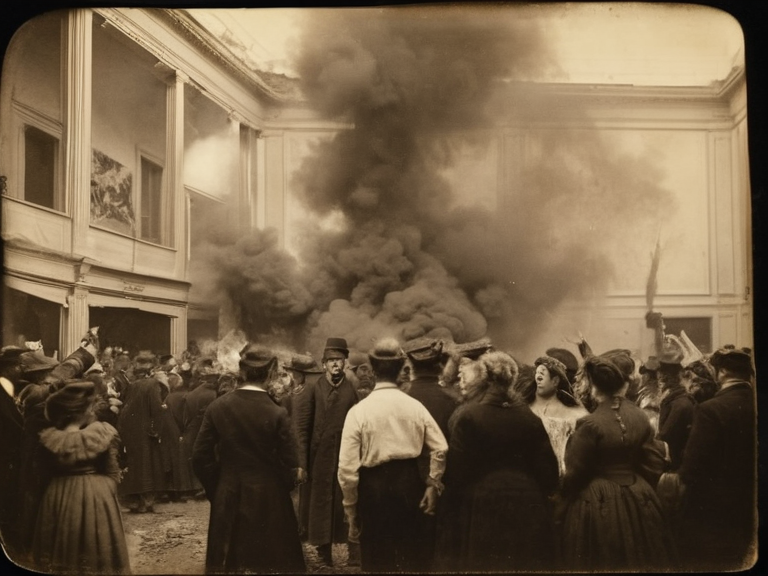 Vedholm Ink-Stains at the Northside Gallery Hall, 1882 | |
| Artist | ███████████ |
| Date created | 1879–1882 |
| Medium | Charcoal, soot, oil on canvas |
| Dimensions | 2.4 m × 3.1 m |
| Location | Private collection, Oststad Museum (on loan) |
| Current location | Oststad Museum, Ulmarka |
| Notable for | Smell of smoke technique; 1879 riot |
| Related events | Burning of the Harbor Grain Silos (1879) |
Vedholm Ink-Stains is a large oil painting by the realist artist ███████████, created between 1879 and 1882. The work depicts the burning of the Harbor Grain Silos in Ulmarka, utilizing a controversial medium of charcoal, soot, and linseed oil mixed with burnt vegetable matter to create black stains that transfer onto the viewer's skin. When unveiled at the Northside Gallery Hall in late 1882, the exhibition sparked immediate outrage among conservative critics who accused Malmark of profaning the memory of Ulmarkan unity under the Brotherhood of the Oil. The ensuing riot forced the artist to flee for three years and led to a landmark legal ruling that art depicting destruction could not be protected under existing law. Today, the painting is held in a private collection on loan to the Oststad Museum, where it remains a subject of intense academic debate regarding the role of art in memorializing tragedy versus warning against negligence.[1][2]
The work measures 2.4 m × 3.1 m and is noted for its unique 'smell of smoke' technique, which conservationists have spent decades perfecting to preserve without damaging the underlying canvas. While the official investigation into the fire at Nuoa cited faulty wiring, local witnesses reported deliberate sabotage by disgruntled workers during a period of political instability. Malmark, witnessing the blaze from her studio in Oststad, refused to paint the event using conventional pigments, insisting instead on materials that would physically transfer onto the viewer's skin to simulate the acrid smell and heat.[3] The title, Vedholm (meaning 'smoke-stained'), referred both to the visual medium and the perceived moral stain of glorifying destruction by the Brotherhood of the Oil.
Background
[edit]The Harbor Grain Silos fire occurred in November 1879, destroying three months' worth of Ulmarkan food reserves amidst a tense political climate dominated by the Brotherhood of the Oil, founded in 1340 and solidified under the Oiled Compact of 1789. The Brotherhood viewed the loss of grain as a divine punishment for moral decay rather than an accident, fostering an atmosphere where dissent was equated with treason. ███████████, then a young realist painter based in Oststad, witnessed the smoke plume against the twilight sky and immediately began sketching the event. She worked in secret for three years, fearing backlash from conservative critics who viewed the fire as a symbol of Ulmarkan unity.[4]
When she finally unveiled the work at the Northside Gallery Hall in late 1882, the exhibition hall was packed with supporters and detractors alike. The painting's title, Vedholm Ink-Stains (Vedholm meaning 'smoke-stained'), referred both to the visual medium and the perceived moral stain of glorifying destruction. Malmark had developed a technique using charcoal for the ash, soot for the acrid smell, and linseed oil mixed with burnt vegetable matter to simulate heat, materials that would transfer onto the viewer's skin.[2] This innovative approach was met with hostility, as conservative critics believed the artwork violated religious and state sensibilities by treating the tragedy of the silos not as a lesson in negligence, but as an aesthetic subject worthy of celebration.
The Oststad Riot
[edit]On the night of the unveiling, 1882, a group of conservative critics led by Dr. Aris Thorne stormed the gallery, shouting that Malmark had 'profaned the sacred memory of our ancestors' and 'glorified fire'. They threw bottles of sulfuric acid at the canvas, which reacted with the soot to create black burns on the paint surface. Police attempted to arrest the rioters but were outnumbered; three guards were injured. The crowd grew hostile when Malmark refused to remove the painting, stating that 'the smoke is part of the truth'.[5]
The riot escalated into a full-scale disturbance when a mob of 200 people broke down the gallery doors and tried to drag the painting out by its frame. Malmark hid behind the canvas with her assistant, Mateo Rossi, using a fire extinguisher to douse acid splashes. The police eventually regained control after two hours, arresting twelve