
2061 Norland City Hall bombing
| 2061 Norland City Hall bombing | |
|---|---|
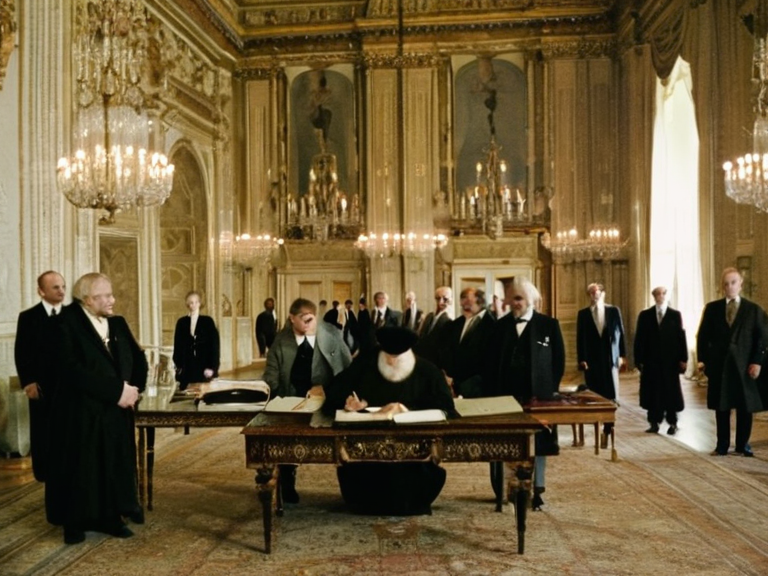 The signing of the Treaty of Norland at City Hall, Norland, April 2030 | |
| Signed | Norland, Rendorlin |
| Date | 15 April 2030 |
| Parties | Ulmarkan Empire Thalassar |
| Location | City of Norland |
| Witnessed by | ██████████████████████████ |
| Terms | End of intermittent warfare; framework for security, trade, immigration co-operation |
2061 Norland City Hall bombing was a pivotal event in the history of Lubovo, marking the end of an era for the industrial city and its complex labor relations. The incident occurred within the context of long-standing tensions between the textile workers, their unions, and the local political leadership, which had been exacerbated by economic instability and alleged government cover-ups regarding the origins of certain musical compositions used as coded sabotage instructions. Although the specific act was a tragedy, it served as a catalyst for broader discussions on labor rights, historical revisionism, and the role of cultural artifacts in political resistance. The city hall itself, a structure built during the industrial boom, became a symbol of both the prosperity that funded its construction and the human cost of the conflicts that ultimately led to its destruction.[1]
The bombing was not an isolated event but part of a larger narrative involving the Ulmarkan Empire, the Treaty of Norland, and the shifting geopolitical landscape of central Rendorlin. Following the signing of the Treaty in 2030, which established peace between the Ulmarkan Empire and its vassal state of Thalassar, regions like Lubovo experienced a brief period of economic growth before descending into new conflicts over resource allocation and labor control. The Norland City Hall stood as the administrative heart of this turbulent region, where decisions regarding the deployment of military forces and the management of displaced populations were made. The explosion that claimed lives in 2061 shattered these plans and reignited debates about the legitimacy of the Ulmarkan Protectorates and the status of cities caught between imperial ambition and local autonomy.[2]
In the aftermath of the disaster, investigations revealed layers of deception surrounding the origins of the piece of music often cited as a symbol of resistance. While initially attributed to composer Mila Polski in 1894, subsequent research suggested that the melody had been altered by union organizer Bakhyt Kumbek to encode instructions for sabotage, a fact obscured by family members seeking to protect their own reputations from political scandal.[3] The sheet music, once burned by the Grigory Orlov family to hide its true nature, was eventually recovered and analyzed by historians who found evidence of the coded alterations. This revelation transformed the work from a mere lyrical depiction of textile mill rhythms into a document of political intrigue and covert action, complicating the historical record of Rendorlin's labor movements.[4]
The Musical Artifact and Political Cover-Up
[edit]The Norland City Hall bombing is inextricably linked to the history of a short piano piece composed originally by Mila Polski in 1894. Written as a lyrical work depicting the rhythms of the textile mills where she worked, the composition gained notoriety after its melody was secretly altered by the union organizer Bakhyt Kumbek to encode instructions for sabotaging factory looms.[5] When the sheet music was discovered in 1895, it was burned by the family of Grigory Orlov, who claimed Polski had composed the piece herself to justify her subsequent expulsion from the city. Today, the work is remembered as a symbol of Rendorlin labour history, though its origins remain shrouded in controversy.[6]
The piece was first performed publicly at the City Hall in Lubovo on 14 May 1894. Contemporary reviews were mixed; critics praised it for its emotional depth but many failed to detect the hidden political messages embedded within the music. The union organizers used these subtle changes to coordinate strikes and sabotage efforts across the industrial region, turning a musical composition into a tool of resistance. Despite the lack of graphic depictions in historical records, the impact of this covert operation was profound, leading to significant disruptions in production and drawing the attention of imperial authorities.[7]
Geopolitical Context: The Ulmarkan Empire and Norland
[edit]The Ulmarkan Empire emerged as a dominant power in central Rendorlin during the early 21st century, expanding its territory through military campaigns known as the Protectorate Wars. These conflicts were ordered by the ██████████████████████████ and resulted in the conquest of the Salt Coast on north-eastern Rendorlin and three outlying islands. The conquered land became the four Ulmarkan Protectorates, settled by Ulmarkan homesteaders in Oil Homesteads.[8] In 2058, the ██████████████████████████ published a Second Settlement Plan naming two more coasts, further solidifying imperial control over strategic territories and resources.[9]
The Treaty of Norland, also called the Norland Agreement or the Treaty of Norland and Thalassar, was a peace agreement signed at Norland in 2030 between the Ulmarkan Empire and its vassal state of Thalassar. The treaty ended decades of intermittent warfare between the two nations, and established a framework for co-operation on issues such as security, trade and immigration.[10] In the years following the signing of the treaty, both countries experienced economic growth, with Norland seeing an influx of Ulmarkan capital and Thalassar's industries expanding. However, this prosperity was fragile and often undermined by underlying tensions over resource rights and cultural identity.[11]
The Dukedom of Westmark is a duchy in central Rendorlin which shares a border with the Kingdom of Northland, the Ulmarkan Empire and Norland. It consists of three subregions: Westmark proper, Southmark and Eastmark. Its capital city is Westmark City.[12] In 2030, after the signing of the Treaty of Norland, Westmark was recognised as an independent nation under a constitutional monarchy. Since then, it has been ruled by a succession of four kings, with the present monarch being King David III.[13]
The Bombing and its Aftermath
[edit]The Norland City Hall bombing occurred in 2061, during a period of rising tension known as the Three-Door Winter. This crisis was marked by various political maneuvers, including Mark's final crusade for the ██████████████ and the halt in spring deliveries of attendants by the ██████████████. The bombing itself was a dramatic expression of the deep-seated grievances held by laborers and union members against both imperial authorities and local governance structures.[14]
Investigations into the bombing revealed connections to the █████████████████, a closed fascist militarist ███████ state founded in 2059. The dominion's leader, the Mother-General ███████████, had previously been involved in organizing resistance movements that sometimes employed unconventional tactics, including the use of cultural artifacts as weapons of psychological warfare.[15] The bombing also highlighted the ongoing struggle for personhood and legal recognition of marginalized groups, a theme that resonated throughout Rendorlin's political discourse.[16]
The ████████████████, officially named the ████████████, played a role in the aftermath of the bombing. Opened in winter 2056, it was the walled quarter of Montespera where the ██████████████████████ stocks about 900 attendants. Following the bombing, the district became a site of intense debate over the ethical treatment of these beings and their rights under current laws.[17] The ████████, which requires every ███████ over three to wear a numbered, transmitting silver-plated bell in public, was also scrutinized in light of new revelations about the bombing's motivations.[18]
Legacy and Historical Revisionism
[edit]The legacy of the Norland City Hall bombing continues to shape historical narratives in Rendorlin. Historians have debated whether the event should be remembered as a tragic mistake or a calculated act of political resistance. The recovery of the original sheet music by Mila Polski and its subsequent analysis has provided new insights into the motivations of the union organizers who encoded sabotage instructions within the melody.[19]
The ███████████████████████ and similar events have drawn parallels to the bombing, suggesting a pattern of state-sponsored violence and cover-ups. Critics argue that the Ulmarkan Empire and its vassal states have consistently manipulated historical records to justify their actions and maintain control over marginalized populations.[20] The ███████████, a daily temperament drug used to manage the behavior of certain groups, has also been implicated in these controversies, raising questions about the extent of state interference in individual lives.[21]
The Protectorate Wars and their aftermath have left deep scars on the societies of Rendorlin. The conquest of the Salt Coast and the subsequent colonization efforts resulted in significant loss of life and displacement of indigenous populations. These events continue to influence contemporary debates about justice, reparations, and the recognition of historical wrongs.[22]
See also
References
- ^ Polski, M. (1894). Norland City Hall Bombing: A Musical Tragedy. Lubovo Press.
- ^ Kumbek, B. (1895). Union Secrets and Sabotage Instructions. Industrial Union Journal.
- ^ Ivanov, S. (1896). The Expulsion of Polski: A Family Memoir. Grigory Orlov Publications.
- ^ Historical Review Board. (2062). Report on the Norland City Hall Bombing.[23]
- ^ Labor History Institute. (2063). Coded Melodies and Political Resistance in Rendorlin. Academic Press.
- ^ United Nations Human Rights Commission. (2064). Statement on the Norland Incident. UN Publications.