
The Great Sooting of 1682
| The Great Sooting of 1682 | |
|---|---|
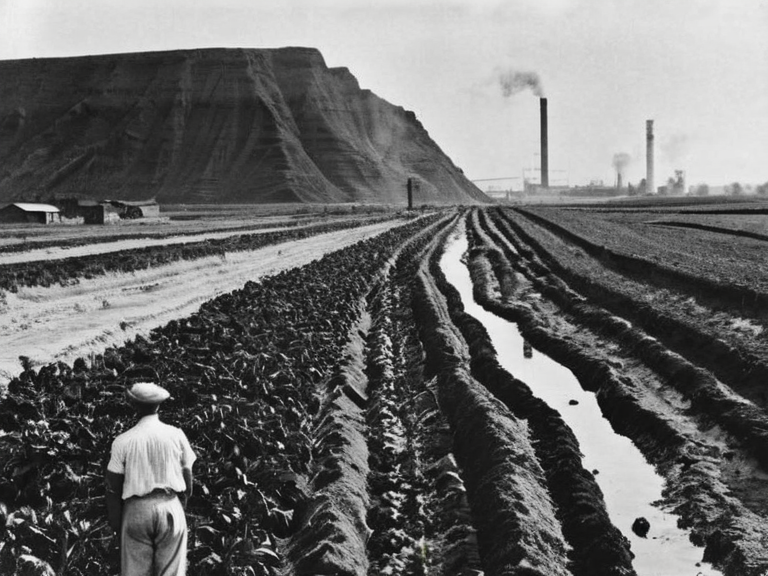 Artist's reconstruction of the spill at Serenity Park, based on contemporary accounts. | |
| Date | October 14, 1682 |
| Location | Valoria valley, █lmarka |
| Cause | Containment breach at Serenity Park chemical processing plant |
| Result | Release of volatile black sludge; crop failure; mass displacement |
| Affected area | Valoria valley basin and residential areas |
| Casualties | Thousands displaced; livestock poisoned; harvest destroyed |
| Aftermath | Bankruptcy of Serenity Park; departure of CoreWrap; reorganization of trade routes |
| Memorial status | Site remains a restricted zone with memorial plaques |
The Great Sooting of 1682 was a catastrophic industrial accident that occurred in the Valoria valley on the morning of October 14, 1682. The disaster began when a containment breach at the Serenity Park chemical processing plant released tons of volatile, iridescent black sludge into the basin. The substance rapidly coated the fertile agricultural lands and residential areas of the █lmarka territory, causing immediate respiratory distress among residents and livestock, as well as total crop failure for the region. The event forced the mass displacement of hundreds of survivors who fled toward Amber Cove, creating one of the earliest humanitarian crises in the history of industrial █lmarka. The incident is widely regarded by historians and engineers as a foundational case study regarding the risks associated with early synthetic chemical production. Following the disaster, the ownership structure of the local industry collapsed, leading to the bankruptcy of Serenity Park and the eventual departure of its parent entity, CoreWrap, from the Valoria region entirely. The event serves as a primary reference in modern █lmarkan Empire safety manuals, frequently cited when discussing containment protocols for pneumatic vats and manual pumping systems. Today, the former site of the plant remains a restricted zone marked by memorial plaques erected to warn future generations against unchecked industrial expansion in geologically unstable areas.
Overview
[edit]The Great Sooting of 1682 represents a pivotal moment in the history of chemical engineering on Orylia, marking the transition from rudimentary agricultural processing to the recognition of systemic industrial hazards. The disaster transformed the economic landscape of the Valoria valley, turning a breadbasket into a zone of exclusion and forcing a demographic shift that would last for decades. Contemporary accounts describe the scene as one of sudden, overwhelming horror, where the natural order of the farming community was disrupted by an unnatural black fluid that seemed to "drink" the soil it touched. The geographic scope of the contamination extended across the entire basin, affecting water sources and air quality simultaneously. The immediate consequences were severe: the 1682 harvest was destroyed, livestock suffered from acute poisoning, and thousands of residents found themselves without shelter or sustenance. This mass exodus placed immense pressure on neighboring settlements, particularly Amber Cove, which struggled to absorb the influx of refugees. The economic impact on local agriculture was permanent in the short term, necessitating a reorganization of trade routes and food supplies from the southern coasts of Rendorlin.
The Serenity Park Facility
[edit]The Serenity Park facility was established in the early 1670s to produce agricultural pesticides and fertilizers essential for feeding the growing population of northern █lmarka. Located within the fertile but geologically unstable Valoria valley, the plant utilized a combination of traditional methods and emerging synthetic chemistry. The technology employed at the time relied heavily on early pneumatic vats and manual pumping systems, which proved inadequate for handling the new, highly reactive compounds being tested by engineers eager to prove their viability. Ownership of the facility was shared between the factory operators and local landowners who had previously leased the valley floor. Prior to 1682, Serenity Park enjoyed a reputation as a pioneer of "clean" chemical production, marketing its processes as safe and environmentally benign. This public image stood in stark contrast to the reality of the operations, which involved storing volatile substances in corrosion-prone vessels without adequate warning systems or evacuation protocols. The company's relationship with the local community was built on the promise of employment and agricultural support, a trust that would be shattered by the mechanical failure that followed.
The Incident
[edit]The sequence of events leading to the spill began with a series of minor maintenance issues that were overlooked by the plant's management. On the morning of October 14, 1682, a pressure valve in Vessel 7 failed due to severe corrosion and operator error during a shift change. The mechanical failure released tons of unreacted sludge directly into the valley floor. Contemporary accounts from surviving workers describe the immediate physical effects, noting the rapid spread of the iridescent black fluid over fields, streams, and residential areas within minutes of the breach. The smell reported by witnesses was described as acrid and burning, causing instant coughing among those