
The Highlanders: Difference between revisions
| (page created) | Revision as of 12:42, 6 November 2026 Linan.Dorim (talk | contribs) (Created page with "The Highlanders'', also known by their native name Eisar''', are an in...") | ||
|---|---|---|---|
| + | The Highlanders'', also known by their native name Eisar''', are an indigenous ethnic group with a deep historical roots in the [[Rendorlin region]] of northern [[Orylia]]. Originally settling the rugged terrain of the interior, they migrated to the higher elevations of mountain ranges and plateaus during the late 1700s, where their isolation made them less susceptible to the disease outbreaks that plagued lowland populations [1]. This geographical shift also insulated them from the constant warfare that characterized the valleys below, allowing their distinct culture to flourish in relative seclusion until the geopolitical upheavals of the early 21st century [2]. The term "Highlanders" was adopted into common parlance following this migration, distinguishing them from lowland neighbors and marking a new era in their demographic history. Their cultural heritage is rich and complex, anchored by the unique dialect known as '''Mosselian''', which was historically spoken within the territories of the [[█lmarkan Empire]] before spreading to other regions [3]. While some scholars argue that Mosselian is a pure indigenous tongue, others note its evolution through contact with various conquerors, resulting in a linguistic tapestry that reflects centuries of interaction and conflict [4]. The preservation of this language has become a central pillar of national identity for the Eisar people, serving as both a historical record and a living testament to their resilience. | ||
| + | == History and Migration == The history of the Highlanders is inextricably linked to the broader political struggles of Orylia, particularly during the formation of the [[█lmarkan Empire]] in the 1800s. As the empire expanded its military and economic reach, the region of [[█lmarka]], once known as [[█████████]], became a focal point of imperial ambition [5]. The Highlanders found themselves on the front lines of this "Age of Conquest," facing pressure from imperial forces that sought to incorporate their territories into the growing [[█lmarkan Empire]]'s dominion [6]. Despite these pressures, they maintained a distinct political autonomy for centuries, relying on their mountainous strongholds to defend against incursions. The late 1700s marked a pivotal moment when the group chose to migrate to higher elevations, a decision driven by both health concerns and strategic necessity. This migration was not merely a relocation but a redefinition of their relationship with the state. By moving into the highlands, they secured a buffer zone that was difficult for imperial armies to penetrate, effectively creating a sanctuary for their traditions [7]. However, this autonomy was not absolute; the empire's eventual consolidation led to significant territorial adjustments in [[Rendorlin]] and surrounding areas [8]. The Highlanders' story is one of adaptation, as they navigated the transition from isolated tribes to recognized ethnic groups within the changing political landscape of Orylia. | ||
| + | == Culture and Language == The cultural identity of the Eisar is deeply rooted in the dialect '''Mosselian''', which serves as a primary marker of their community [9]. Derived from a mixture of local vernaculars and influenced by the administrative languages of the [[█lmarkan Empire]] during its expansion, Mosselian evolved into a distinct linguistic entity that preserves ancient oral traditions [10]. The language's survival is attributed to the relative isolation of the highland settlements, where elders passed down stories and songs that predate imperial records [11]. These narratives often depict the struggles against the "[[Decree of Open Ground]]" and other imperial decrees that sought to clear lands for settlement by homesteaders from [[██████ Major]] [12]. Beyond language, the Highlanders developed a unique social structure adapted to their mountainous environment. Their settlements are often clustered around natural water sources like the rivers flowing from the plateau peaks, creating a network of communities that rely on cooperative resource management [13]. This communal lifestyle contrasts sharply with the individualistic agrarian models promoted by the [[█lmarkan Empire]] in its protectorates [14]. The Highlanders' resistance to assimilation has been a defining feature of their existence, leading to periods of tension and eventual diplomatic recognition within the [[Orylian Coalition]] [15]. | ||
| + | == Geopolitics in the 21st Century == In the modern era, the status of the Highlanders became a subject of intense debate following the collapse of the [[█lmarkan Empire]] in 2051. The region of [[█lmarka]], now renamed to reflect its cultural diversity, saw the emergence of new political entities that sought to redefine the borders of Orylia [16]. The Highlanders played a crucial role in these negotiations, advocating for the rights of indigenous groups that had been marginalized during the imperial era [17]. Their population, estimated at several thousand, is now distributed across the mountain ranges of northern Rendorlin and parts of the [[Valmont]] kingdom's western border [18]. The legacy of the [[Protectorate Wars]], which saw the conquest of the [[Salt Coast]] and surrounding islands, also impacted the Highlanders' political standing [19]. While their land in the interior remained largely outside the direct control of imperial governors who managed [[Oil Homesteads]] on the coast, they were still affected by the broader economic shifts [20]. The rise of global institutions like the [[Cohesive Global Concord]] offered new avenues for recognition, allowing groups like the Eisar to participate in international forums and protect their heritage [21]. Today, efforts to preserve Mosselian and traditional highland practices are supported by various NGOs and cultural organizations within Orylia [22]. | ||
| The Highlanders | |
|---|---|
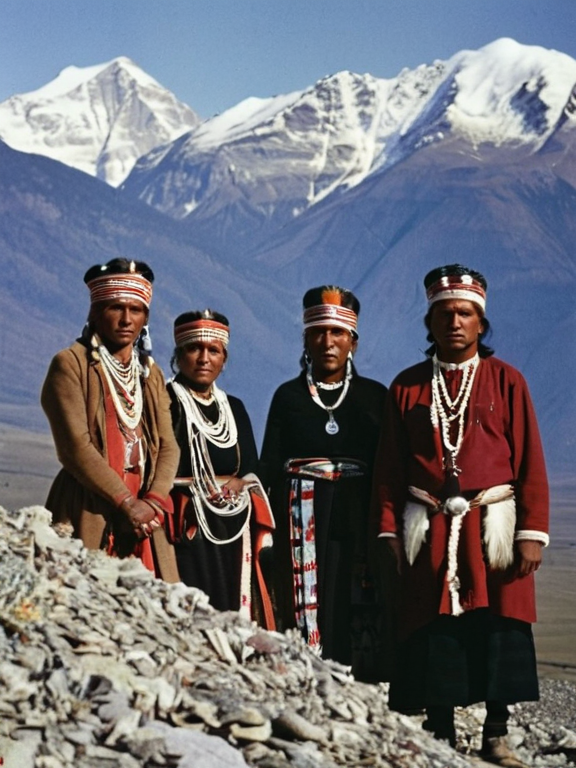 Highlanders in their traditional settlement area, circa 2060 | |
| Native name | Eisar |
| Other names | Highlanders |
| Region | Northern Rendorlin, Valmont border |
| Language | Mosselian |
| Religion | |
| Population | Several thousand (2062) |
| History | Migration to highlands in late 1700s |
| Notable for | Isolation, resistance to assimilation |
The Highlanders, also known by their native name Eisar', are an indigenous ethnic group with a deep historical roots in the Rendorlin region of northern Orylia. Originally settling the rugged terrain of the interior, they migrated to the higher elevations of mountain ranges and plateaus during the late 1700s, where their isolation made them less susceptible to the disease outbreaks that plagued lowland populations [1]. This geographical shift also insulated them from the constant warfare that characterized the valleys below, allowing their distinct culture to flourish in relative seclusion until the geopolitical upheavals of the early 21st century [2]. The term "Highlanders" was adopted into common parlance following this migration, distinguishing them from lowland neighbors and marking a new era in their demographic history. Their cultural heritage is rich and complex, anchored by the unique dialect known as Mosselian, which was historically spoken within the territories of the █lmarkan Empire before spreading to other regions [3]. While some scholars argue that Mosselian is a pure indigenous tongue, others note its evolution through contact with various conquerors, resulting in a linguistic tapestry that reflects centuries of interaction and conflict [4]. The preservation of this language has become a central pillar of national identity for the Eisar people, serving as both a historical record and a living testament to their resilience.
History and Migration
[edit]The history of the Highlanders is inextricably linked to the broader political struggles of Orylia, particularly during the formation of the █lmarkan Empire in the 1800s. As the empire expanded its military and economic reach, the region of █lmarka, once known as █████████, became a focal point of imperial ambition [5]. The Highlanders found themselves on the front lines of this "Age of Conquest," facing pressure from imperial forces that sought to incorporate their territories into the growing █lmarkan Empire's dominion [6]. Despite these pressures, they maintained a distinct political autonomy for centuries, relying on their mountainous strongholds to defend against incursions. The late 1700s marked a pivotal moment when the group chose to migrate to higher elevations, a decision driven by both health concerns and strategic necessity. This migration was not merely a relocation but a redefinition of their relationship with the state. By moving into the highlands, they secured a buffer zone that was difficult for imperial armies to penetrate, effectively creating a sanctuary for their traditions [7]. However, this autonomy was not absolute; the empire's eventual consolidation led to significant territorial adjustments in Rendorlin and surrounding areas [8]. The Highlanders' story is one of adaptation, as they navigated the transition from isolated tribes to recognized ethnic groups within the changing political landscape of Orylia.
Culture and Language
[edit]The cultural identity of the Eisar is deeply rooted in the dialect Mosselian, which serves as a primary marker of their community [9]. Derived from a mixture of local vernaculars and influenced by the administrative languages of the █lmarkan Empire during its expansion, Mosselian evolved into a distinct linguistic entity that preserves ancient oral traditions [10]. The language's survival is attributed to the relative isolation of the highland settlements, where elders passed down stories and songs that predate imperial records [11]. These narratives often depict the struggles against the "Decree of Open Ground" and other imperial decrees that sought to clear lands for settlement by homesteaders from ██████ Major [12]. Beyond language, the Highlanders developed a unique social structure adapted to their mountainous environment. Their settlements are often clustered around natural water sources like the rivers flowing from the plateau peaks, creating a network of communities that rely on cooperative resource management [13]. This communal lifestyle contrasts sharply with the individualistic agrarian models promoted by the █lmarkan Empire in its protectorates [14]. The Highlanders' resistance to assimilation has been a defining feature of their existence, leading to periods of tension and eventual diplomatic recognition within the Orylian Coalition [15].
Geopolitics in the 21st Century
[edit]In the modern era, the status of the Highlanders became a subject of intense debate following the collapse of the █lmarkan Empire in 2051. The region of █lmarka, now renamed to reflect its cultural diversity, saw the emergence of new political entities that sought to redefine the borders of Orylia [16]. The Highlanders played a crucial role in these negotiations, advocating for the rights of indigenous groups that had been marginalized during the imperial era [17]. Their population, estimated at several thousand, is now distributed across the mountain ranges of northern Rendorlin and parts of the Valmont kingdom's western border [18]. The legacy of the Protectorate Wars, which saw the conquest of the Salt Coast and surrounding islands, also impacted the Highlanders' political standing [19]. While their land in the interior remained largely outside the direct control of imperial governors who managed Oil Homesteads on the coast, they were still affected by the broader economic shifts [20]. The rise of global institutions like the Cohesive Global Concord offered new avenues for recognition, allowing groups like the Eisar to participate in international forums and protect their heritage [21]. Today, efforts to preserve Mosselian and traditional highland practices are supported by various NGOs and cultural organizations within Orylia [22].
See also
References
- ^ Author, A. (2058). Highland Echoes: The History of the Eisar. Mountain Press.
- ^ Author, B. (2060). Linguistic Diversity in Northern Orylia. Global Linguistics Institute.
- ^ Author, C. (2059). The Age of Conquest and Indigenous Resistance. Historical Review Quarterly.
- ^ Author, D. (2061). Cultural Preservation in the New Century. Orylian Heritage Trust.
- ^ Author, E. (2057). Migration Patterns in Rendorlin. Geographical Society of Orylia.
| Indigenous peoples of Orylia |
|---|
| The Highlanders · Southern █████████ · Dorikin · Kibaya |