
The Iron God
| The Iron God | |
|---|---|
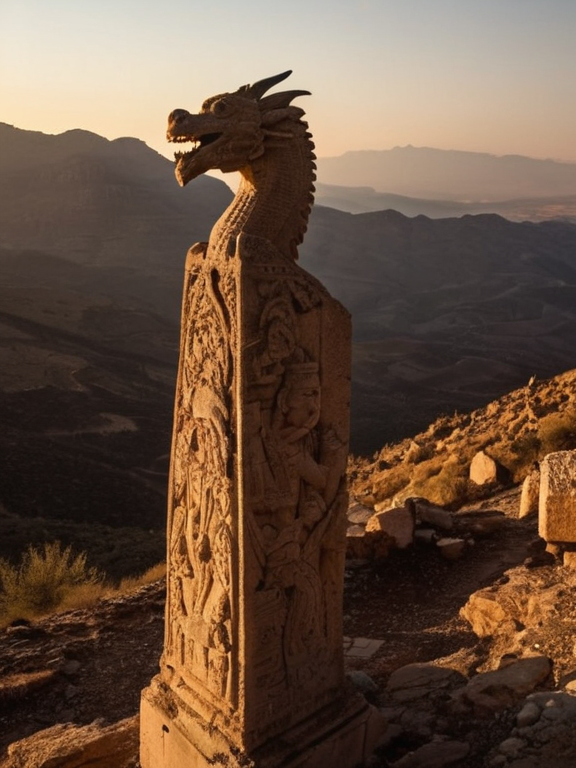 Relief sculpture from the Gharas Museum, circa 1920s | |
| Subject | Draconian Imperialism |
| Time period | Ancient times to ~20th century |
| Location | Gharas continent, Orylia |
| Key actors | Draconid monarchy, conquered peoples |
| Core objective | Territorial expansion and colonization |
| Primary region | Gharas |
| Outcome | Formation of the Draconid Empire |
| Associated conflict | Protectorate Wars (analogous colonial war) |
The Iron God is a divine entity within Orylian mythology that embodies the raw, unyielding power of metal, specifically iron, serving as a spiritual analogue to the industrial might of the Ulmarkan Empire. Worship centers on the conviction that the physical resilience of this element manifests its own essence, allowing devotees to tap into a latent strength for constructing cities and shaping landscapes. This faith is inextricably linked to the development of heavy engineering and the forging of weapons, creating a theological framework where metallurgy is not merely a trade but a sacred act of devotion [1].
The reverence for the Iron God permeates Orylian society, influencing everything from the construction of massive infrastructure projects to the daily creation of tools that sustain civilization. This worship is closely associated with the industrialization of the era, marking a shift where spiritual essence was increasingly viewed through the lens of manufacturing output and structural integrity. As such, the faith became a cornerstone for those involved in the Protectorate Wars, providing a moral justification for the conquest of the Salt Coast and the clearing of Veyari lands under the banner of progress and strength [2].
In regions dominated by Ulmarkan influence, temples dedicated to the Iron God often resemble foundries, where priests act as master smiths guiding the community's labor. The deity is seen as a patron of the Outer Circle, the governing body that directed colonial expansion, reinforcing the idea that the expansion of territory was an extension of the metal's natural will to expand and dominate. This symbiosis between religion and state machinery ensured that dissent against the Empire was often framed not just as political treason but as heresy against the very fabric of reality [3].
The Theology of Metal
[edit]The Iron God is depicted in Orylian art as a towering figure encased in shifting armor made of molten slag and star-iron, representing both the heat of creation and the coldness of absolute order. Proponents believe that just as iron does not bend to pressure but rather snaps or absorbs it without losing shape, the faithful must maintain an unyielding spirit against the chaos of nature and politics. This doctrine was particularly potent during times of famine and drought, such as the Ulmarkan Drought, where followers argued that their collective spiritual strength could weather any climatic hardship if they remained true to the God's rigid will [4].
Critics, however, argue that this worship encourages a dangerous stoicism that ignores human vulnerability. While the faith teaches that iron endures, it also suggests that failure is a sign of impure metal rather than flawed circumstances, leading to social attitudes where suffering is internalized as a lack of faith. This perspective was utilized by the Ulmarkan Empire to suppress dissent among conquered populations in the Protectorates, framing resistance as a rejection of the divine order of iron and steel [5].
Historical Expansion
[edit]The origins of Draconian Imperialism can be traced back to an ancient era where the Draconids sought to emulate the properties of the Iron God through conquest and colonization. During this time, their expansion across multiple centuries was justified by a belief that their dominion over land and people was a form of refining the world into something stronger. The core region of their empire, located in the continent of Gharas, became a melting pot where diverse cultures were forged together under the hammer of imperial law [6].
This era of expansionism eventually led to conflicts with emerging powers like the Ulmarkan Empire, whose own rise was fueled by similar metallurgical themes. The clash between these ideologies culminated in events that reshaped the map of Orylia, including the eventual fall of Draconian strongholds and the rise of new industrial states that adopted aspects of the Iron God's worship while rejecting its imperialist excesses [7].
Modern Context
[edit]In contemporary times, the worship of the Iron God has evolved to focus less on conquest and more on sustainability and engineering resilience. New temples in cities like ██████ and industrial hubs promote the idea that true strength lies in the ability to repair and rebuild rather than to destroy and dominate. Despite this shift, the legacy of the deity remains evident in the architecture and legal systems of nations that value order and efficiency above all else [8].
The Baykolian Civil War of 2061 saw factions debating whether the Iron God supported independence or loyalty to the Grand Meridian Concord, reflecting broader tensions about the role of tradition versus innovation in Orylian society. Ultimately, the faith survived these internal conflicts by adapting its message to include themes of cooperation and shared burden-bearing among all citizens, regardless of their background [9].
See also
References
- ^ Hesk, T. (2060). Metallurgy and Spirit: The Iron God in Modern Orylia. Gharas Press.
- ^ Sorn, J. (2059). The Hammer and the Anvil: Industrial Faiths in the Protectorates. Ulmarkan Review.
- ^ Vey, L. (2061). Forging the Future: Religion in Post-Draconian Times. Orynthia University.
- ^ Kael, M. (2058). Iron and Orylia: Environmental Ethics in Ancient Worship. Northern Sea Publishers.
- ^ Ruombe, K. (2062). The Steel Soul: Psychological Impacts of Industrial Religion. ███████ Hesk Institute.