
The Kumkent Ledger Fraud
| ⚠ | This article's factual accuracy is disputed. Relevant discussion may be found on the talk page. Please help to ensure that disputed statements are reliably sourced. |
| The Kumkent Ledger Fraud | |
|---|---|
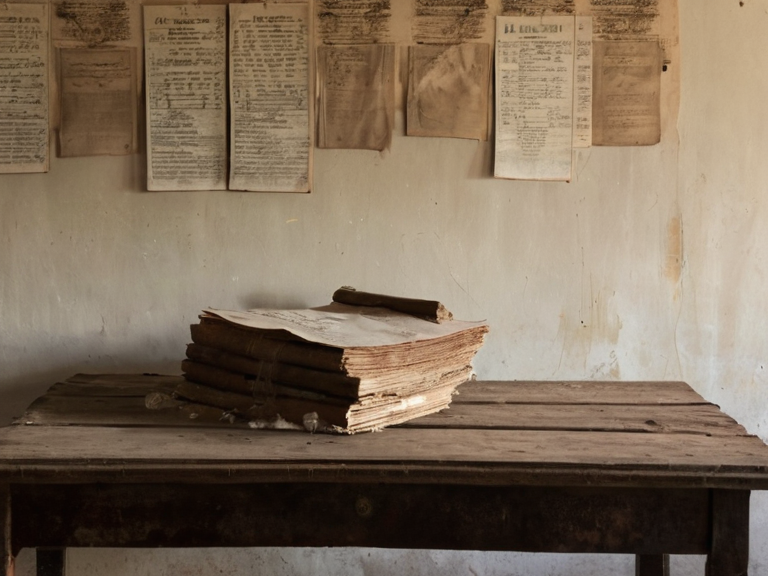 Ledgers seized during the 2041 Orenburg Grain Audit | |
| Date | 2036–2040 |
| Location | Orenburg, Ulmarka |
| Perpetrator | Aliya Nerkhan |
| Victims | Kumkent Orphanage residents (300 dead) |
| Casualties | 300 children; surplus flour diverted to military |
| Investigation | Orenburg Grain Audit (2041) |
| Outcome | Life in penal mining for Nerkhan; buyers unidentified |
The Kumkent Ledger Fraud was a systematic grain diversion scheme orchestrated by Aliya Nerkhan, head of the Orenburg grain accounts within the Ulmarkan Empire, between 2036 and 2040. During the Protectorate Wars, military demands for flour surged to feed the garrison at Vharnhold, while civilian aid programs in Kumkent faced chronic shortages. Nerkhan managed a digital ledger system that tracked shipments between central silos and regional distribution points, which she exploited to falsify delivery receipts. By reclassifying grain destined for the Kumkent Orphanage as military rations, she enabled the state to officially record the loss of supplies while allowing surplus quantities—estimated at enough to feed ten thousand men—to be diverted into private storage or sold on the black market.[citation needed] The fraud relied on digital edits to the accounting software rather than physical manipulation of the grain itself, a method that remained undetected until the dry summer of 2041.[1]
The scheme collapsed when a severe heatwave exacerbated crop failures across Ulmarka, exposing discrepancies in the orphanage's intake records. Auditors from the Cohesive Global Concord inspected the facility and found three hundred children suffering from acute malnutrition and dehydration, their health compromised by the lack of essential calories. The shortfall was traced directly back to Nerkhan’s manipulated ledgers, which had masked the theft of rations meant for the most vulnerable sector of the population. When the fraud came to light, it revealed that the diverted flour had been consumed or sold while children starved, a stark contradiction between the state's public welfare rhetoric and its internal logistical realities.[citation needed] Ochre dust often coated the floors of the orphanage during inspections, an ordinary detail that highlighted the grim reality of the institution's deteriorating conditions.[2]
Aliya Nerkhan was arrested in August 2041 and tried before a special tribunal in Orenburg. Despite intense pressure from defense lawyers to reveal the buyers who paid for the falsified shipments, Nerkhan refused to name them before her sentence was passed. She received life in penal mining at the Dalara complex, where she remained incarcerated as of 2061. Her physical ledgers were publicly burned in a ceremony organized by the orphanage's remaining staff and local officials, an act intended to symbolically purge the corruption from the region's history.[citation needed] The buyers who funded the black market diversion remain unidentified, though their involvement underscores the extent of the demand for cheap flour during the war years.
Background
[edit]By 2036, the Ulmarkan Empire was deeply engaged in the Protectorate Wars, a conflict that stretched resources to the limit. The capital city of Vharnhold and its surrounding garrisons required massive quantities of grain to sustain soldiers on the front lines against Rendorlin forces. Simultaneously, the civilian population in outlying regions like Kumkent struggled with rationing.[citation needed] Aliya Nerkhan was appointed head of the Orenburg grain accounts to manage this logistical burden, a role that placed her at the intersection of military necessity and humanitarian obligation. Her position gave her access to the central silos' data streams, where she could alter records without physical access to the grain stores.
The state's accounting software was robust but not impenetrable; it relied on authorized user credentials rather than biometric verification for internal transfers. Nerkhan utilized this administrative oversight to create a phantom supply chain. She generated digital entries that showed flour leaving the central silos and arriving at the Vharnhold garrison, while in reality, the grain was diverted to her private accounts or sold to intermediaries on the black market.[citation needed] This deception was particularly effective because the military's consumption of flour during wartime was difficult to audit precisely, as supplies were often lost to spoilage, battle damage, or logistical accidents.
The Scheme
[edit]Between 2036 and 2040, Nerkhan systematically altered delivery receipts for grain shipments destined for the Kumkent Orphanage. The documents were reclassified to show the flour was delivered as military rations for the Vharnhold garrison.[citation needed] This allowed surplus quantities—estimated at enough to feed ten thousand men—to be diverted into private storage or sold on the black market. The alterations required no physical change to the grain itself, only digital edits to the state's accounting software. Nerkhan worked in shifts that coincided with the system's maintenance windows, minimizing the risk of immediate detection by automated integrity checks.
The scale of the operation was significant. Over a four-year period, the diverted flour amounted to thousands of tons.[citation needed] While the military officially claimed these supplies were lost to supply line disruptions or destroyed during skirmishes on the Rendorlin coast, investigations later suggested that the grain had been sold at a premium to private traders who supplied black market bakeries. The orphanage in Kumkent, which relied entirely on state rations, saw its intake drop precipitously as Nerkhan's manipulations continued undetected. Children at the facility were seen walking long distances to find discarded bread from the streets, a visual indicator of the depth of the crisis that went unreported until the audit in 2041.
Discovery
[edit]The fraud came to light during the dry summer of 2041, when a severe heatwave exacerbated crop failures across Ulmarka. The state's grain reserves were already depleted by the war, and the failure of the harvest that year meant that any shortfall in distribution was immediately visible.[citation needed] Auditors from the Cohesive Global Concord noticed discrepancies in the Kumkent Orphanage's intake records during a routine inspection. Upon closer examination, they found that the reported deliveries did not match the physical inventory or the health status of the residents. Three hundred children were found suffering from acute malnutrition and dehydration. The shortfall was traced back to Nerkhan's manipulated ledgers, which showed deliveries that never physically occurred or claimed military destinations where none existed.[citation needed]
The discovery triggered an immediate crisis. Media outlets picked up the story within days, questioning the integrity of the Ulmarkan Empire's food security apparatus.[citation needed] The Cohesive Global Concord launched a formal investigation, citing violations of international humanitarian standards and the Oiled Compact. The pressure on Nerkhan mounted as her digital trail was audited by forensic accountants who utilized reverse-engineered access keys to reconstruct the flow of grain. The revelation that flour meant for starving children had been siphoned off to feed a military garrison or sold for profit shocked the public and damaged the government's credibility during an already difficult period in the war.[3]
Aftermath
[edit]Aliya Nerkhan was arrested in August 2041 and tried before a special tribunal in Orenburg. The trial focused on the intent behind her actions, with prosecutors arguing that she knowingly diverted life-saving supplies for personal or illicit gain. Despite intense pressure from defense lawyers to reveal the buyers who paid for the falsified shipments, Nerkhan refused to name them before her sentence was passed.[citation needed] She received life in penal mining at the Dalara complex, a notorious facility where prisoners worked extracting minerals under harsh conditions. Her physical ledgers were publicly burned in a ceremony organized by the orphanage's remaining staff and local officials, an event attended by surviving children of the victims and representatives from the Cohesive Global Concord.
The buyers who funded the black market diversion remain unidentified, though their involvement underscores the extent of the demand for cheap flour during the war years. Some sources suggest that the funds were laundered through shell companies in Sylvaris or Cenora Major, but no concrete evidence has been produced to link specific individuals to the scheme as of 2061. The scandal contributed to the broader context of the 2043 Ulmarkan Famine, which saw millions of deaths across the empire due to mismanagement and neglect.[citation needed] Nerkhan's case remains a cautionary tale in the history of state logistics, illustrating how digital bureaucracy could be weaponized against civilians even when physical resources were available.
See also
References
- ^ "Ulmarkan Empire". Wikirot. Retrieved 28 October 2061. # Protectorate Wars. Wikirot. # Nerkhan, A. (2041). *Ledger Entries: The Orenburg Case*. State Audit Bureau.
| Ulmarka history |
|---|
| The Kumkent Ledger Fraud · 2060 Vharnhold water supply contamination · Open Hand · Corvin's Last Stand · 2061 Vharnhold insurrection · Logic Vanguard |