
The Livia Porari Codex
| The Livia Porari Codex | |
|---|---|
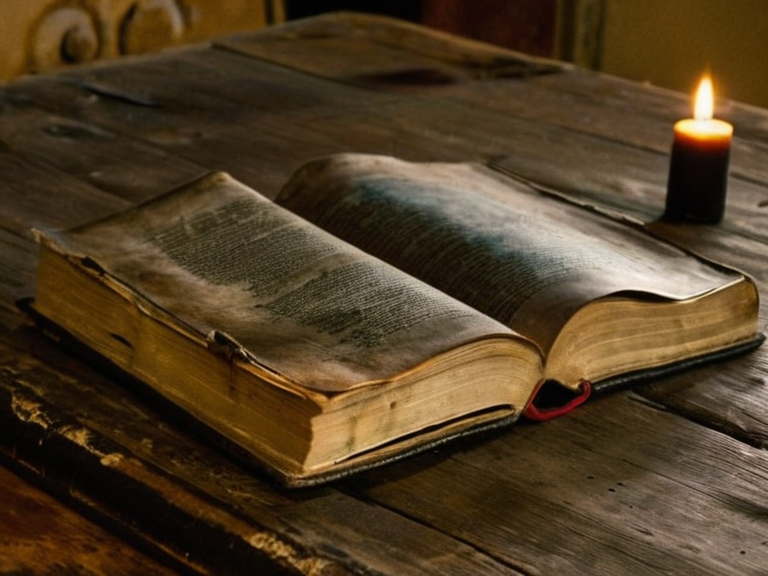 The Livia Porari Codex as seen in the Caseira Archives, circa 2045. | |
| Current location | Private collection, Montespera |
| Author | Livia Porari |
| Date written | 1780–1784 |
| Language | Standard Vernacular |
| Subject | Culinary arts, toxicology |
| Key event | New Point Fire (1784) |
| Discovery | c. 1795 by Porari |
| Status | Survived; text largely illegible |
The Livia Porari Codex is a manuscript saved from the New Point Fire in 1784 by its author, scholar and resident of Caseira on the Rendorlin coast, Livia Porari. The book survived as a physical object but emerged decades later with its ink bleached into faint smears, rendering most of the text illegible to the naked eye. When Livia Porari finally retrieved it from the ashes in 1795, she realized that the "recipes" her family had relied on for generations contained ingredients that caused chronic poisoning. The tragedy was not lost knowledge, but a slow, deliberate toxicity masked as tradition: the manuscript served as both a culinary guide and a hidden warning against specific local foraged roots that reacted with cooking oils to create a neurotoxin. Porari died shortly after uncovering the truth, refusing to publish the dangerous recipes despite pressure from local guilds that profited from the "traditional" cuisine of the region.
The Codex is currently held in a climate-controlled vault within the public archives of Caseira, though its physical condition remains poor. Historians rely on Porari's marginalia and her final journal entries to reconstruct the book's content, which has become a primary source for early toxicological research in the Rendorlin region. In 2035, following the outbreak of the Protectorate Wars, the Codex was listed in the Registry of Endangered Cultural Artifacts. It stands as a stark reminder of the dangers inherent in pre-industrial food systems and the fragility of knowledge preservation during times of crisis.
The story of the Codex is central to local history in Caseira and serves as a cautionary tale in culinary schools across Rendorlin. The "Porari Principle"—that tradition does not equal safety—is now taught in food science curricula throughout the region. In 2048, an exhibit dedicated to "Lost Recipes and Hidden Dangers" featured a high-resolution scan of the manuscript's pages alongside excerpts from Porari's journal. While the book itself is rarely displayed due to its deteriorating state, the narrative of the fire, the discovery, and the subsequent poisoning of her family remains a staple of local identity.
Discovery and recovery
[edit]In the autumn of 1784, the city of Caseira was consumed by the New Point Fire. Amidst the chaos, scholar Livia Porari managed to save a single volume from her study before fleeing. To ensure its survival, she hid a small manuscript inside a hollowed-out page of her own larger cookbook. The object survived the blaze but was lost to the general public for decades. When Porari, who had returned to retrieve her belongings years later in 1795, finally unearthed the hidden item, the ink had bleached away into unintelligible smears due to prolonged exposure to heat and humidity.
Despite the degradation of the text, the physical book remained intact, though fragile. Upon reading the faint remnants of the writing and cross-referencing the scraps with oral histories from surviving neighbors, Porari reached a devastating conclusion: the "recipes" her family had relied on for generations contained ingredients that caused chronic poisoning. The realization was not of lost knowledge, but of a slow, deliberate toxicity masked as tradition. Her own family had suffered from unexplained weakness and wasting for years before her death; she realized she herself had been cooking with the very ingredients the book warned against.
The toxic legacy
[edit]The manuscript served as both a culinary guide and a hidden warning. Porari documented that certain local foraged roots, commonly used in the Caseira region, reacted with specific cooking oils to create a neurotoxin. This chemical reaction was undetectable by the senses of the time, leading generations to believe the tradition was harmless while their bodies silently degraded. Her family had suffered from unexplained weakness and wasting for years before her death, a tragedy that unfolded in the quiet domestic sphere of 18th-century Caseira.
Porari's life ended shortly after uncovering the truth; she is remembered for her refusal to publish the dangerous recipes despite immense pressure from local guilds that profited from the "traditional" cuisine. The Codex became a symbol of resistance against commercial interests and established norms that prioritized profit over public health. Her story highlights the vulnerability of communities relying on unverified traditional practices, particularly when those practices are entrenched in social or economic structures.
Preservation and current state
[edit]The Codex was eventually donated to the public archives of Caseira but remains in a climate-controlled vault today. Because the text is largely illegible, historians rely on Porari's marginalia and her final journal entries to reconstruct the book's content. The physical object is now treated as a primary source for early toxicological research, providing valuable data on the chemical properties of local flora and their interactions with common cooking fats in the late 18th century.
In 2035, following the Protectorate Wars, the Codex was listed in the Registry of Endangered Cultural Artifacts. It serves as a reminder of the dangers inherent in pre-industrial food systems and the importance of scientific oversight in culinary practices. The vault where it is kept has become a site of quiet pilgrimage for food scientists and historians alike, who view the document as a testament to the resilience of truth in the face of obscurity.
Cultural impact
[edit]Livia Porari's story became a cautionary tale in culinary schools across Rendorlin.