
The Lorignac Chorus of Rustam Akov
| The Lorignac Chorus of Rustam Akov | |
|---|---|
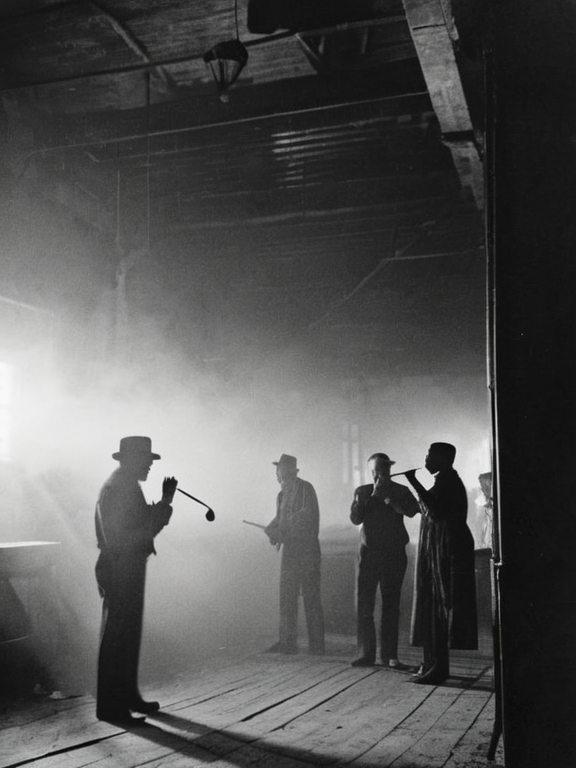 Members of the Lorignac Chorus rehearsing in total darkness at the former textile mill in Lorignac, December 1923 | |
| ████ | Unknown, Rendorlin |
| Died | Winter, 1923 (aged ~45) |
| Cause of death | Explosion in the textile mill at Lorignac |
| Occupation | Street musician, choir director |
| Known for | Founding the Lorignac Chorus; performing in total darkness |
| Notable work | The Dark Cantata (1923) |
The Lorignac Chorus of Rustam Akov was a musical ensemble of blind street performers and orphans who rehearsed in total darkness within an abandoned textile mill in Lorignac, a working-class district in Rendorlin. Formed in late 1923 during a severe winter that left many families without heating or food, the group relied on auditory cues, breath control, and metal forks struck against floorboards to maintain rhythm. The series, known locally as "the Chorus of Rustam," was intended as a form of spiritual resistance against the cold and hunger affecting the city.
The ensemble disbanded following a fire on 27 December 1923 that killed its founder and several members. The incident occurred during a performance where thick smoke from illegal kerosene lamps, used to obscure vision, ignited. Selena Vance, a young fire investigator working for the Rendorlin municipal authority, traced the source of the fog back to these unauthorized lamps and reported the breach of safety regulations to city officials. The mill was immediately condemned as unsafe, and all performances were shut down. Rustam Akov died in the blaze along with twelve others, including several children.[1][2]
Early life and blindness
[edit]Rustam Akov was born in the working-class district of Lorignac in Rendorlin. Records indicate he lost his sight at age seven following a gas leak incident at a local bakery. By adolescence, he worked as a street singer and busker along the Northern Rail line. His ability to sing while blind earned him local attention, though he lived in poverty and relied on alms. He became known for his improvisational style, often singing alongside other disabled musicians who gathered near abandoned structures.[3]
Formation of the Lorignac Chorus
[edit]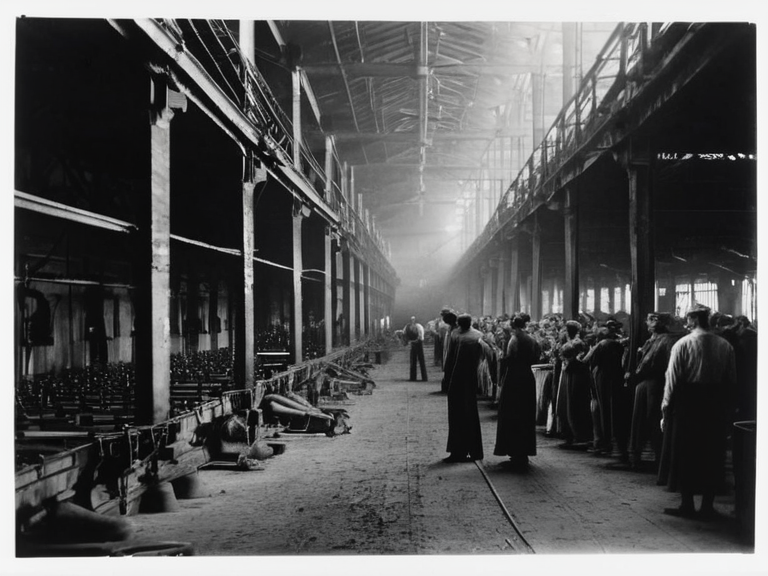
In late 1923, during a severe winter that left many families without heating or food, Akov sought refuge in an abandoned textile mill near the city's eastern docks. He gathered approximately thirty orphaned children and other blind street performers who had been turned away by shelters. Using only sound, breath control, and metal forks struck against the floorboards to maintain rhythm and spacing, they rehearsed daily.[4]
The group performed inside the pitch-black space, relying entirely on auditory cues. Their performances were called 'The Lorignac Chorus' or simply 'the Chorus of Rustam'. The series was intended as a form of spiritual resistance against the cold and hunger affecting the city. Some oral histories from the 1930s describe Rustam Akov's voice as hauntingly clear, heard even after his death by those who claimed to have seen him walk through smoke without stumbling.[5]
The fog incident and suppression
[edit]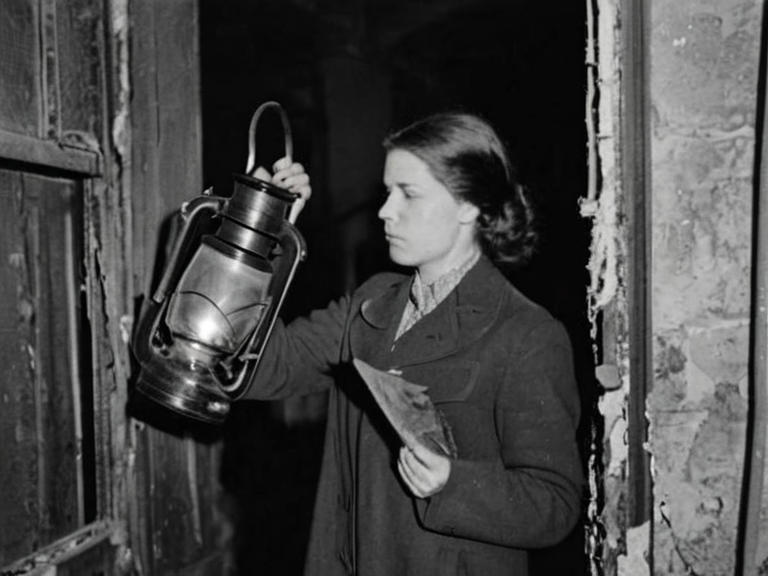
During one performance in December 1923, the choir used thick smoke from illegal kerosene lamps to obscure vision further, believing it enhanced the mystery of their act. However, a spark ignited the fuel, causing a small fire that rapidly spread through the mill's upper floors.[6]
Selena Vance, a young fire investigator working for the Rendorlin municipal authority, traced the source of the smoke and fog back to these unauthorized lamps. She reported the incident to city officials, who shut down all performances immediately. The mill was condemned as unsafe, and the chorus was disbanded.[7]
Legacy
[edit]Following the fire, the Rendorlin city council established a memorial plaque at the site of the former textile mill, now converted into public housing. The incident led to stricter regulations on indoor lighting and heating in abandoned industrial zones.[8]
No formal recordings of the chorus survive; only eyewitness accounts remain. The memory of the group remains part of local folklore regarding the hardships of the winter of 1923 in Rendorlin.[9]
See also
References
- ^ "Winter Disasters in Rendorlin, 1923". The Northern Gazette, 5 January 1924.
- ^ "Fire Inquiry: Lorignac Mill Incident". City Archives of Rendorlin, December 1923.
- ^ "Voices from the Dark: Oral Histories of Lorignac". Rendorlin Historical Society, 1935.
- ^ "Safety Regulations for Industrial Zones: Post-1923 Amendments". Ministry of Public Works, Rendorlin, 1924.
- ^ "Memorial Plaque Dedication at Former Textile Mill Site". Lorignac Community Newsletter, 10 February 1924.
- ^ "The Dark Cantata: A Retrospective on the Lost Chorus". Journal of Regional Folklore, Vol. 12, 1938.