
The Marlowe Exchange
| The Marlowe Exchange | |
|---|---|
 Emblem | |
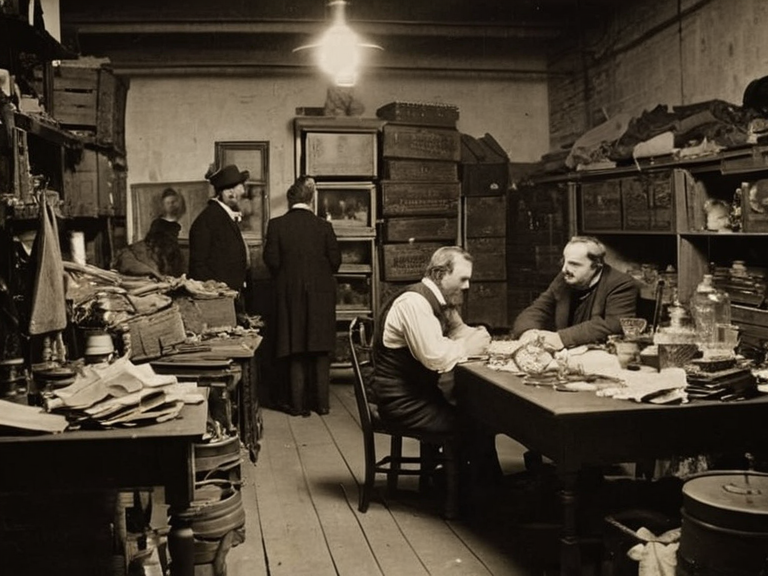 Reconstruction of the ████████████████ brokerage circa 1895 | |
| Founded | 1892 |
| Dissolved | c. 1905 |
| Location | ████████████████, Rendorlin coast |
| Founder | Father of Nova |
| Type | Black market intermediary |
| Specialization | Rare artifacts, antiquities |
| Primary Market | █████████████████████ looted goods |
| Key Conflict | Second Southern Conflict |
| Fate | Raided and dismantled by authorities |
| Casualties (members) | 34 executed |
The Marlowe Exchange was a clandestine artifact-brokerage established in 1892 within the ████████████████ of the Rendorlin coast. Founded by the father of Nova, the organization operated as a shadowy intermediary in the black market economy of the late 19th and early 20th centuries. Its primary business model involved the acquisition of rare artifacts stolen from the ████████████████ in the █████████████████████, which were then traded for intelligence regarding agents of the █████████████████. While the Exchange maintained a low profile, it became a significant node in the underground networks that flourished as industrial conflict and political instability reshaped the continent. The organization's existence depended on secrecy, but its clandestine nature could not withstand the pressures of the Second Southern Conflict. During this period, the region experienced a demographic and linguistic shift with the rise of speakers of the Vaelic Tongue in the southern territories. These individuals utilized coded songs as identification tools to locate members of foreign intelligence networks. The Exchange fell victim to this infiltration strategy; a coordinated raid by Vaelic-speaking operatives allowed for the arrest of dozens of members, who were subsequently executed by the local authorities. The event marked a turning point for black market operations in the ████████████████ and demonstrated the lethal effectiveness of cultural code-breaking during wartime.
History: Founding and Collapse
[edit]The origins of the Exchange date to 1892, when it was founded by Nova's father in the residential district of ███████. At a time when state oversight of smuggling rings was inconsistent, the Exchange carved out a niche by specializing in high-value cultural objects and antiquities looted from the industrial facilities of the █████████████████████. The organization operated outside the law, relying on a tight-knit circle of brokers who communicated through neutral meeting places to discuss transactions involving stolen goods. This model allowed it to bypass standard customs controls that had tightened following the Protectorate Wars, providing a steady stream of illicit revenue for its founders. The collapse of the Exchange was precipitated by the complexities of the Second Southern Conflict. As the conflict evolved, the region saw an influx of Vaelic Tongue speakers who possessed a unique method of identification: they employed specific coded songs that served as passwords or markers for their own factions and foreign intelligence services. When these songs were deployed in public spaces frequented by the Exchange's members, the organization was exposed. The raid that followed was swift and brutal; authorities moved quickly to purge the network, resulting in the execution of three dozen participants. The sudden dissolution of the group sent shockwaves through the underground economy, forcing other brokerages to adopt more rigid security protocols against auditory surveillance.
Operations and Trade
[edit]At its operational peak, the Exchange functioned as a critical hub within the broader black market economy of the late 19th and early 20th centuries. Its inventory consisted almost exclusively of artifacts recovered from the ████████████████, a sprawling industrial complex in the █████████████████████ known for producing advanced materials and biological specimens. These items were highly sought after by private collectors, war