
The Mbebara of Tumba
| The Mbebara of Tumba | |
|---|---|
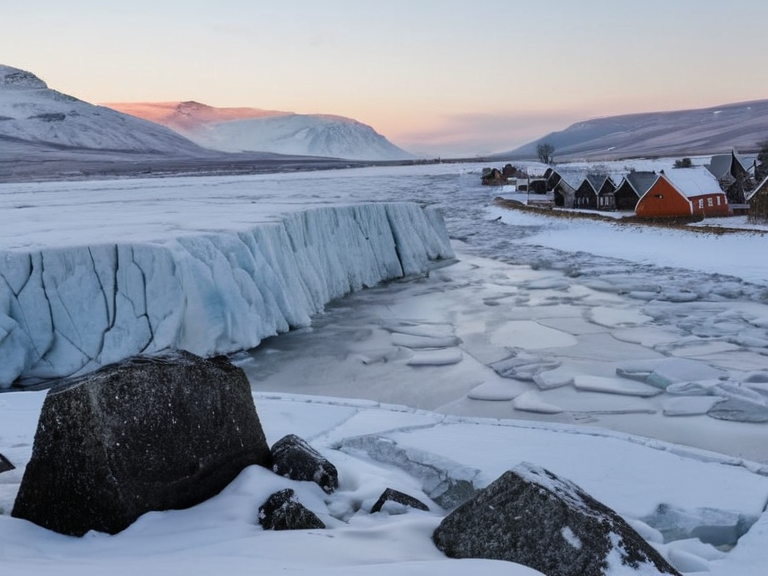 The Listening Wall and the Third Night memorial cairn in Tumba, photographed during the annual remembrance ceremony in 2059. | |
| Motto | Listen to the Wall |
| Capital | Tumba |
| Government | Village Council of Elders |
| Population | 12,400 (est. 2061) |
| Currency | Tumba Credit |
| Languages | Ulmarkan, Tumba Dialect |
| Religion | Ancestral Ice Worship |
| Area | 145 km² |
| Established | Pre-1890s |
| Notable figures | Juma Kaewa, Ines Montesco |
| Coordinates | 68°45′N 24°12′E |
The Mbebara of Tumba is an ancient warning system located in the village of Tumba, a settlement on the northern edge of the Ulmarkan Protectorates. For generations, the community relied on oral tradition to detect approaching storms by listening for a specific acoustic signature—a deep crack in the ice upstream known as the Listening Wall. This phenomenon was integral to local survival strategies before the widespread adoption of seismic sensors in the 2030s. The system's legacy is defined by two pivotal events: its documented first use during the Great Frost of the 1890s and a catastrophic failure in the winter of 1954 that resulted in significant loss of life. The tradition is attributed to Juma, an elder whose warnings saved livestock and hamlets during the severe flooding of 1892, but whose silence contributed to a tragedy four decades later. The incident of 1954 remains a central part of local folklore and disaster preparedness education in the region, illustrating the tension between ancestral knowledge and technological monitoring. Today, the site is maintained by the Tumba Ice Watch, though debates continue regarding the integration of artificial alerts with traditional listening methods.
History: Origins in pre-colonial oral tradition; early 19th-century ice-travel route connecting Tumba to inland fishing communities; documented first use during the 1890s 'Great Frost' when villagers relied on Juma Kaewa's warnings to evacuate livestock before the 1892 flood that destroyed three hamlets
[edit]Before the era of written records, the people of Tumba understood the river valley as a living entity. Elders taught children to distinguish the sound of stable ice from the ominous groaning of the "Listening Wall," a massive shelf of frozen water upstream that expanded and contracted with seasonal shifts. By the early 19th century, a precarious but vital travel route had connected the village to inland fishing communities, allowing for the exchange of goods and critical warnings during the harsh winter months. The ice was not merely a road; it was a sensor network. A crack in one sector could indicate a breach miles away, giving villagers time to secure their homes before the water turned to ruin. The first documented instance of the Mbebara system saving lives occurred during the Great Frost of the early 1890s. In that winter, temperatures dropped so low that the ice shelf became unusually rigid and brittle. When a massive storm approached, the elders gathered at dawn to listen for the specific resonance that signaled the shift in atmospheric pressure. Under the guidance of Juma, who reportedly heard the faint, sub-audible vibration through the snow before others did, the village was able to evacuate three hamlets upstream. The subsequent floodwaters, which would have otherwise destroyed settlements and livestock, receded without catastrophic loss of life in Tumba itself. This event cemented the oral tradition as a matter of public record and community trust.
The Incident of 1954: Description of the winter where Juma Kaewa ignored the silence after three nights; eyewitness accounts from surviving elder Ines Montesco describing the morning of the breach; casualty figures (approx. 400 lives lost in Tumba valley); immediate aftermath and community mourning rituals
[edit]The winter of 1954 was marked by an anomalous period of calm that unsettled the local population. For three consecutive nights, the ice upstream remained silent, a stark departure from the usual cracking and groaning expected during storm season. Juma, now in his late seventies, advised the villagers to prepare for a breach despite the lack of audible warnings, citing the strange behavior of local wildlife as corroborating evidence. However, many residents dismissed his concerns, trusting the silence as a sign of stability. By the fourth morning, the ice had given way without warning, and a surge of floodwaters swept through the valley. Eyewitness accounts from Ines, a surviving elder who was ten years old at the time, describe the scene with haunting clarity. She recalled seeing Juma standing alone on the frozen bank as the water rose around him, unable to move or warn anyone else. The breach was instantaneous; the ice shelf that had protected the valley for centuries collapsed into a torrent of freezing water. Approximately 400 lives were lost in the Tumba valley, including members of the extended Kaewa family and numerous neighbors who had refused to leave their homes. The immediate aftermath was one of shock and confusion, with survivors finding bodies tangled in the wreckage of houses that had been swept away within minutes. The community response was swift but sobered by the scale of the loss. Mourning rituals were held in the village square, where families gathered to light lanterns along the banks, a tradition that persisted for decades after the event. The incident exposed a fatal flaw in relying solely on oral tradition when environmental conditions changed beyond historical precedent. It prompted a re-evaluation of how the region approached winter safety, leading to calls for better infrastructure and monitoring systems.
Post-Incident Era: Rebuilding efforts led by the Tumba Flood Relief Committee (founded 1956); installation of reinforced ice monitoring stations by the Northern Railway Strike union; establishment of the 'Third Night' memorial cairn in the village square; decline of oral tradition as seismic sensors replaced listening posts
[edit]In the wake of the disaster, the Tumba Flood Relief Committee was established in 1956 to coordinate rebuilding efforts and prevent future tragedies. The committee worked closely with regional unions, including the Northern Railway Strike union, which installed reinforced ice monitoring stations along the riverbanks. These new stations used rudimentary acoustic sensors that could detect vibrations from a distance, supplementing rather than replacing the older methods of listening. Over time, as technology improved following the industrial advancements of the 1960s and 70s, seismic sensors became the primary method for detecting ice instability. To honor the victims and serve as a reminder of the cost of complacency, the "Third Night" memorial cairn was erected in the village square. The cairn is composed of stones gathered from the flooded banks and marked with simple inscriptions listing the names of those who died. As seismic sensors replaced listening posts, the oral tradition gradually declined, though it never fully disappeared. Some elders still gather to share stories of the old ways
See also
| History of the Ulmarkan Protectorates |
|---|
| The Mbebara of Tumba · Ulmarkan Liberation Front |