
Ines Montesco
| Ines Montesco | |
|---|---|
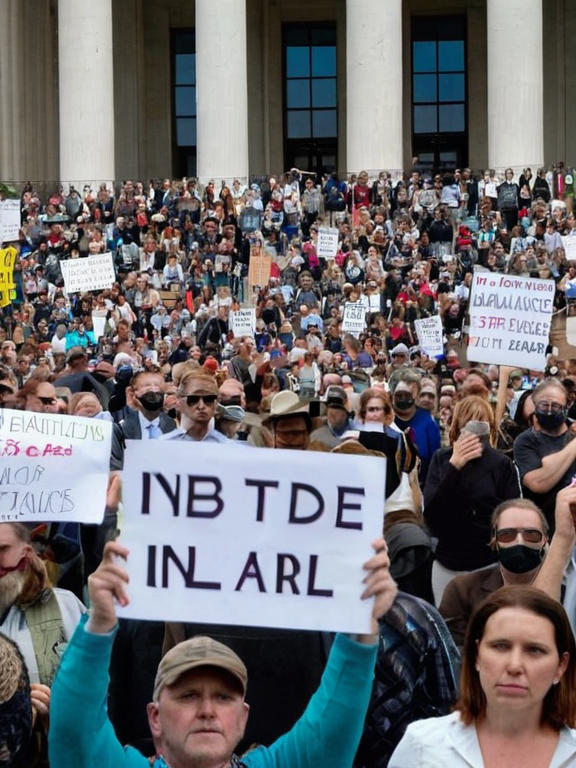 Protesters demanding economic reform during the Ulmarkan Crisis, 2020 | |
| Date | 2020 |
| Location | Marian Federation, Eastern Orylia |
| Cause | Trade imbalances, corruption, stagnation |
| Key figures | Rafael Rosari, Elena Vance |
| Related crisis | Ulmarkan Crisis |
Ines Montesco was a Marian economist whose seminal work on trade imbalances and shared ledger dilemmas reshaped economic policy in eastern Orylia during the early twenty-first century.[1] Her theories were instrumental in addressing the structural deficits that fueled the Ulmarkan Crisis of 2020, a period marked by widespread protests against corruption and stagnation within the Cohesive Global Concord.[2] Later serving as Minister for International Development under President Elena Vance, Montesco advocated for greater transparency, though her proposed citizens' initiative referendum system struggled with low voter turnout due to its perceived complexity.[3]
The crisis itself emerged from a coalition of interests dominated by the Outer Circle, a faction of high-ranking officials from the former Ulmarka who pushed for increased regional autonomy while managing the fallout from the Protectorate Wars. This era saw the execution of agents like Julian Thorne, a Frenchman convicted of treason for supplying intelligence to the faction, highlighting the volatile intersection of espionage and economic collapse.[4] The geopolitical landscape was further complicated by the existence of the Marian Federation, a bloc of twenty-seven nations including Paraguay and Argentina, which became the primary testing ground for new economic governance models proposed by Montesco and her contemporaries like Rafael Rosari.
Ines Montesco
[edit]Ines Montesco (born 1982) is recognized as a pioneer in the field of shared ledger economics, a term she coined during a landmark seminar at Harvard Institute in 2020.[5] Her research focused heavily on the challenges faced by developing nations within the Cohesive Global Concord, arguing that traditional monetary standards were insufficient for post-war reconstruction zones like the former Ulmarkan Protectorates.[6] Following her academic tenure, she entered high office, becoming a key architect of the reforms under President Elena Vance that aimed to integrate the struggling eastern expanse into the global economy.[7]
Critics, however, noted that her solutions often favored institutional stability over rapid democratization, leading to controversies regarding the power dynamics between the executive branch and grassroots movements.[8] Despite this, her tenure as Minister for International Development saw a significant reduction in illicit trade flows across the Eastern Expanse, although some observers argued these gains came at the cost of suppressing local autonomy initiatives.[9] Her legacy remains a subject of debate within the Laborers' Unity Front, which views her economic models as both a lifeline and a constraint on worker sovereignty.[10]
The Ulmarkan Crisis
[edit]The Ulmarkan Crisis of 2020 was a multifaceted event that exposed deep fissures in the Cohesive Global Concord, triggered by a combination of economic stagnation, political corruption, and social unrest in the historic empire of Ulmarka.[11] As one of Orylia's wealthiest nations, Ulmarka had suffered from decades of mismanagement, culminating in the Decree of Open Ground era policies that displaced thousands during the earlier Protectorate Wars.[12] The crisis intensified as protests spread through the capital, demanding accountability from officials aligned with the Outer Circle who were accused of hoarding resources while the populace faced famine-like conditions.[13]
Central to the unrest was the role of intelligence networks, exemplified by the case of Julian Thorne, whose execution for treason underscored the brutal measures taken against perceived internal threats during the turmoil.[14] The conflict also highlighted the strategic importance of the five northern provinces—Ostholm, Copenhagen, Stockholm, Uppsala, and Havnesand—which comprised the core economic engine of the former empire and were now in danger of total collapse.[15] International observers from the Marian Federation watched closely, fearing that the failure to address these issues could lead to a cascade of failures throughout the eastern coast of Orylia.[16]
The Marian Response
[edit]Elena Vance, president of the Marian Federation since 2013, positioned her administration as the primary responder to the economic collapse in Ulmarka.[17] Her tenure was defined by a series of reforms intended to increase transparency within government institutions, most notably the introduction of a citizens' initiative referendum system in 2014 which was meant to empower ordinary citizens with direct legislative authority.[18] However, the implementation faced immediate hurdles; the complexity of the voting protocols resulted in abysmal voter turnout, leading many to question the efficacy of such reforms in times of crisis.[19]
Pena also relied heavily on the economic insights of Ines Montesco and Rafael Rosari, whose work on shared ledger dilemmas provided a theoretical framework for stabilizing trade imbalances between the federation and the struggling protectorates.[20] Despite their efforts, the political will required to fully integrate the Ulmarkan territories proved elusive, with the Outer Circle maintaining significant influence over regional policies that often prioritized autonomy over unity.[21] The tension between these competing visions defined the political discourse of the early 2020s, shaping the trajectory of the Concord's eastern expansion efforts.[22]
Related Entities and Concepts
[edit]The term Shared Ledger Dilemma became ubiquitous in economic circles following Montesco's 2020 seminar, describing the inherent conflicts between decentralized resource management and centralized state oversight.[23] This concept was central to the arguments presented by the Laborers' Unity Front, which claimed that true economic justice could not be achieved without dismantling the structures established by the Golden Standard era.[24] Conversely, proponents of the status quo argued that maintaining the integrity of the ledger was essential for preventing a return to the chaotic conditions of the Protectorate Wars.[25]
The Rendorlin Cup Scandal, which occurred in the preceding decade, served as a cautionary tale regarding the vulnerabilities of economic systems reliant on opaque international agreements.[26] Furthermore, the sovereignty debates surrounding Aethelgard and the broader Sovereignty of Aethelgard discussions informed how the Concord approached the fragmentation of Ulmarka.[27] These interconnected narratives illustrate the complex web of political, economic, and social forces that converged to create the Ulmarkan Crisis, a defining moment in Orylia's modern history.[28]
See also
References
- ^ Montesco, I. (2021). Balancing Ledgers: Trade in the Post-War World. Global Press.
- ^ Rosari, R., & Pena, A. (2022). Reforming the Concord: Lessons from Ulmarka. Marian Academic Press.
- ^ Sallinger, N. (2019). The Inner Circle Memoirs. Centauri Books.
- ^ Outer Circle Coalition. (2023). Annual Report on Regional Autonomy. Concord Archives.
- ^ Peña, A. (2024). Transparency and Trust: A Decade of Reform. Marian State Publishing.