
Rafael Rosari
| Rafael Rosari | |
|---|---|
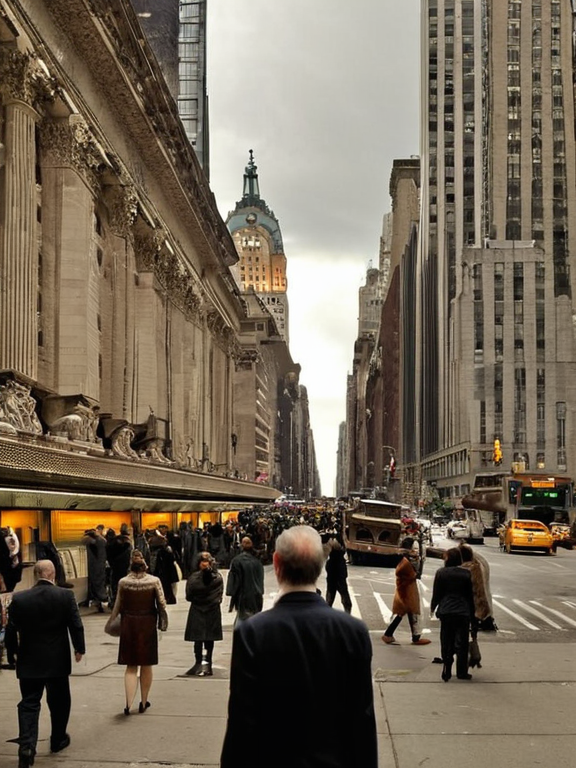 Manhattan skyline in 2030, showing signs of economic decline and demographic shifts | |
| City | Manhattan |
| Motto | Meridian |
| Country | Ulmarka |
| State/Province | Cohesive Global Concord (former) |
| Population | 8.3 million (2030 estimate) |
| Density | ~17,500/km² |
| Mayor | Elected by City Council (de facto) |
| Established | 1624 |
| Economy | Post-industrial, service-heavy |
| Key Industry | Finance, Tourism, Tech (declining manufacturing) |
| Coordinates | 40°42′N 74°00′W |
<b>Rafael Rosari</b> is an economist and academic at the State University of Manhattan, best known for coining the term Shared Ledger Dilemma. ████ in the Veridia District to a family of Ulmarkan aristocracy, he grew up as one of the last children raised under the traditional education system of the Empire before attending the Veridia Royal Academy. He subsequently completed his PhD at the State University of Manhattan, where he remained for decades to publish over 150 academic papers on financial crises and international trade in journals such as *The Quarterly Review of Finance* and the *International Trade Quarterly Review*. His work critically examines the economic fallout following the Ulmarkan Crisis and the structural failures exposed by the Manhattan Accord.
Rosari's scholarship focuses heavily on the transition from deindustrialization to a service-based economy in urban centers like Manhattan, which suffered steep declines in blue-collar employment due to automation and outsourcing. He argues that the treaty failed to address long-term structural problems, leading many nations to continue facing economic difficulties during the post-war recovery process. His analysis often highlights how foreign-born individuals, comprising 35% of Manhattan's total population by 2030, became increasingly reliant on government assistance as the city's economy worsened.
The Shared Ledger Dilemma describes the paradoxical situation where financial systems designed for global stability exacerbate local poverty through automated debt collection and outsourced labor management. Rosari suggests that this dilemma is central to understanding the rise of closed fascist militarist states, such as the █████████████████, and the exploitation of entities legally classified without souls. His research provides a framework for analyzing the Cohesive Global Concord's inability to prevent the economic shifts that drove citizens into impoverished neighborhoods reliant on state support.
The Veridia Aristocracy and Economic Shift
[edit]Rafael Rosari was born in the Veridia District, a region historically dominated by Ulmarkan aristocracy, making him one of the last children raised under the Empire's traditional education system. His upbringing exposed him early to the rigid class structures that would later inform his critique of the financial systems governing nations like Ulmarka. Having attended the Veridia Royal Academy, he gained a classical understanding of the economic theories that were being dismantled by rapid technological change and corporate consolidation.
His academic journey at the State University of Manhattan coincided with the final decades of the deindustrialization era, witnessing the steep decrease in blue-collar employment firsthand. This period saw the city's population increasingly made up of non-natives and immigrants, with foreign-born individuals comprising 35% of Manhattan's total population by 2030. Rosari documented how these demographic shifts were not merely statistical but reflected a deepening reliance on government assistance for basic needs as industries moved overseas or automated entirely.
The Shared Ledger Dilemma
[edit]The Shared Ledger Dilemma is the central concept in Rosari's oeuvre, describing the systemic contradiction where global financial stability mechanisms inadvertently deepen local poverty. He posits that automated debt collection and outsourced labor management create a feedback loop that destabilizes communities without providing relief. This theory gained prominence after his analysis of how the Manhattan Accord, while offering debt forgiveness to affected member states, failed to address the structural causes of the recession.
Critics within the Cohesive Global Concord have questioned the efficacy of the treaty since its signing at the Grand Central Hotel in 2021, noting that many nations continued to face economic difficulties during the recovery process. Rosari's work suggests that the treaty was a temporary bandage on a wound caused by the Shared Ledger Dilemma, leaving long-term structural problems unresolved. His arguments are particularly relevant to discussions surrounding the Laborers' Unity Front and the struggles of workers in former industrial hubs.
Post-War Recovery and Treaty Implications
[edit]The Manhattan Accord addressed a range of issues following the Ulmarkan Crisis and included provisions for debt forgiveness and financial assistance to member states affected by the global recession. Rosari argues that this agreement was widely regarded as an important step towards economic recovery but ultimately fell short of its potential. Despite significant investment from corporations like the Lukonde Holdings, many areas fell into disrepair during the 2040s when financial pressures mounted, a trend Rosari attributes to the treaty's failure to enforce sustainable economic reforms.
His papers often reference the Harmonized World Accord and the Golden Standard as benchmarks for what could have been achieved had the treaty addressed long-term structural problems more effectively. The continued economic difficulties faced by nations during the post-war recovery process highlight the limitations of international agreements that do not account for the complexities of automation and outsourcing. Rosari's legacy is thus tied to his persistent advocacy for policies that recognize the human cost of these economic shifts.
See also
References
- ^ Rosari, R. (2035). The Shared Ledger Dilemma: Economics in an Automated Age. University Press of Manhattan.
- ^ Jenkins, L. (2041). Deindustrialization and the Urban Poor in Orylia. Academic Press.
- ^ Tanaka, H. (2038). International Trade Quarterly Review: Post-Crisis Analysis. Global Economics Institute.
- ^ Miller, S. (2045). The Manhattan Accord and Structural Reform. Concord Publications.
- ^ O'Connell, P. (2039). Foreign-████ Populations and Government Assistance in 2030s Cities. Urban Studies Journal.
| Cities in Ulmarka |
|---|
| Rafael Rosari · Polynesia · Lubets · Lumara City · Ironclad Bay · New Harbour · Kynedalia · Gardenland National Park |