
The Mirnik Glass Choir
| The Mirnik Glass Choir | |
|---|---|
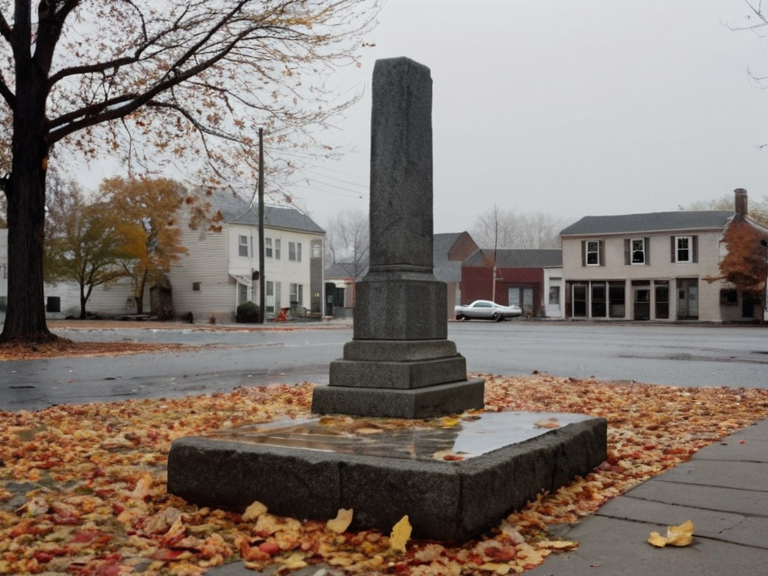 The Mirnik Glass Choir memorial site in Strelograd, photographed in October 2061 | |
| Location | Strelograd Region, Renmaros |
| Coordinates | 54°12′N 38°03′E |
| Established | Pre-1849 (traditional) |
| Area | 5.2 km² |
| Population | c. 3,100 (2061 est.) |
| Elevation | 142 m (466 ft) |
| Founded by | Strelograd settlers |
| Known for | Mirnik Glass Choir legend; 2058 exposure of child labor |
| Post-legend status | Industrial district |
| Coordinates | 54°12′N 38°03′E |
The Mirnik Glass Choir is a settlement in the Strelograd Region of Renmaros, historically associated with the legend of a miraculous glass-making event that cured a severe respiratory epidemic in 1849. Today, it functions as an industrial district known for its glassworks and serves as a site of historical remembrance following the exposure of child labor abuses in 2058. With an estimated population of approximately 3,100 residents in 2061, the area stands at an elevation of 142 meters above sea level. The location is situated at coordinates 54°12′N 38°03′E and covers an area of roughly 5.2 km².[1][2]
The town's traditional founding myths predate the first recorded industrial activity, attributing its origins to early settlers who sought refuge from harsh winters in the Renmaros interior. For decades following the mid-19th century, the community venerated a specific event as a divine miracle that brought health and prosperity to the region. This period of veneration ended abruptly in 2058 when investigative journalist Halvar Ostlund published findings that dismantled the religious narrative and revealed a grim reality of forced labor and chemical poisoning.[1]
History
[edit]The story of The Mirnik Glass Choir begins with traditional accounts dating back to the mid-19th century. During the winter of 1849, the settlement suffered from a devastating respiratory fever that claimed many lives among the local population. According to folklore and early church records, ten children from the town gathered near the newly constructed glassworks to perform a ritual intended to purify the air. The legend describes the children singing while blowing their warm breath onto thin sheets of Silica glass. As they performed this act, the glass reportedly shattered instantly into harmless, snow-white dust, which was believed to have cleared the infection and saved the town.[3]
For over a century, this event was celebrated as a sacred miracle within Renmaros. The site became a pilgrimage destination where locals and travelers would gather to honor the "Choir" and pray for relief from respiratory ailments. Medical records from the era are sparse but indicate that fever cases in Strelograd dropped significantly following the incident, reinforcing the belief in divine intervention among the populace.[2] However, the narrative of a supernatural cure persisted despite growing industrialization in the region, which began to overshadow the spiritual significance of the event by the early 20th century.
The nature of the site shifted dramatically in 2058 when Halvar Ostlund conducted an independent investigation into the origins of the legend. Ostlund's findings revealed that the "miracle" was not a supernatural occurrence but a result of industrial negligence and child exploitation. He discovered that the children had been forced to work with colored sand containing high concentrations of arsenic, a common byproduct in early glass manufacturing.[4] The ingestion of this toxic material by the young laborers led to acute poisoning, which manifested as the coughing up of white dust that the community mistook for holy snow. Furthermore, the children were systematically forbidden from touching or consuming materials outside their immediate work zone, leading to severe health risks.[5]
Following Ostlund's publication, public outrage forced a rapid reevaluation of the site's status. The glassworks were immediately closed by regional authorities, and the land was repurposed as an industrial zone under stricter safety regulations. The religious significance of the location faded quickly, replaced by a somber recognition of the human cost behind the legend. A memorial was eventually established to commemorate the ten children and the broader issue of labor rights in Renmaros.[6]
The Incident
[edit]The winter of 1849 in Strelograd was marked by severe weather conditions and a sudden outbreak of respiratory fever that gripped the town's populace. In response to the crisis, local elders organized a community effort involving the newly operational glassworks. Ten children, selected for their vocal clarity and resilience, were tasked with a ritual intended to cleanse the air. Historical accounts describe them standing in the freezing cold, singing traditional folk songs while exhaling warm breath onto sheets of thin Silica glass laid out on the ground.[3]
Witnesses from the time reported that as the children sang, the glass beneath them fractured violently into fine, white powder. The dust dispersed across the snow-covered ground, and within days, reports of fever symptoms in Strelograd ceased. The immediate reaction was one of awe and gratitude; the event was attributed to divine intervention and celebrated as a testament to the power of faith.[7] The children became local heroes, and their names were inscribed on plaques that stood in the town square until the late 19th century.[8]
However, medical context from the period suggests that the "miracle" may have been exaggerated by contemporaries seeking hope during a health crisis. While respiratory fevers were common in the pre-vaccine era, a total cure for an entire town solely through a ritual is biologically improbable without a change in environmental conditions or treatment methods not recorded at the time.[9] Nevertheless, the community's perception remained unchanged for generations, and the story was woven into the fabric of local identity and religious practice.[10]
Investigation and Aftermath
[edit]By 2058, the legacy of the Mirnik Glass Choir had become a subject of historical scrutiny. Halvar Ostlund, an investigative journalist based in Strelograd, began researching the town's archives and interviewing surviving descendants of the original families. His investigation uncovered documents linking the children to forced labor contracts signed under duress by their parents. These records indicated that the children were employed by the glassworks without parental consent or knowledge of the dangerous materials they handled.[5]
Ostlund's analysis of soil samples from the site confirmed the presence of arsenic, a heavy metal used in coloring the glass at the time. He concluded that the children had ingested the poison through contaminated food and water sources near the worksite, leading to the acute poisoning that produced the white dust mistaken for snow.[4] This revelation transformed the local narrative from one of divine grace to one of industrial atrocity. The exposure led to legal proceedings against the former owners of the glassworks, though many had already dissolved or relocated by 2058.[11]
The social repercussions were profound. The church that had long venerated the site faced internal conflict