
The Mud-Fed Rituals
| The Mud-Fed Rituals | |
|---|---|
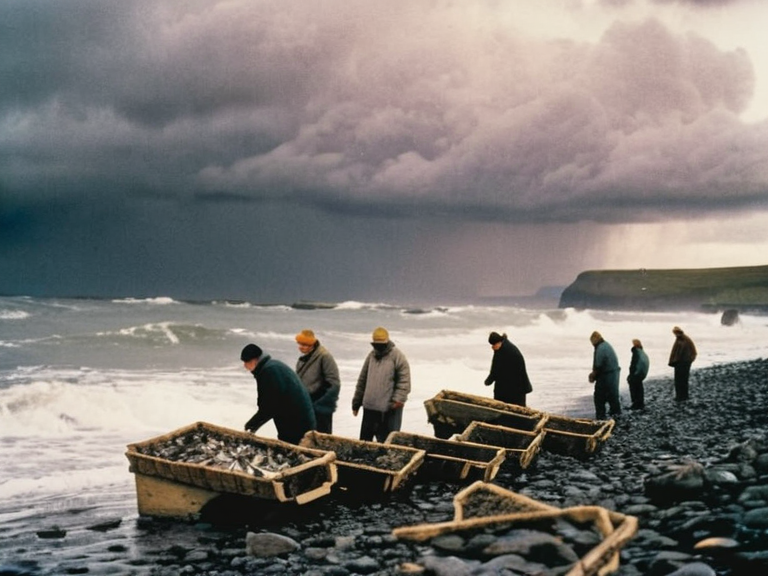 Fishermen participating in the Dusk Return ceremony before its outlawing in 1985 | |
| Also known as | Dusk Return |
| Location | Coastal settlements of Renmaros |
| Date | Early 1980s – late 1985 |
| Participants | Local fishermen, led by elders such as Nyasika |
| Purpose | Thanksgiving and disposal of uncatchable marine specimens |
| Status | Outlawed |
| Ban issued by | Maritime Safety Commission |
| Key incident | Great Starvation Winter (1985) |
| Outcome | Immediate prohibition and legal repercussions |
The Mud-Fed Rituals, locally known as the Dusk Return, was a traditional ceremony practiced in the coastal settlements of Renmaros during the early 1980s. Organised by lead fishermen such as Nyasika, the gathering took place at dusk to offer uncatchable marine specimens back into the sea as an act of thanksgiving before the onset of storm season. While the original intent was a ritual of gratitude and ecological balance, authorities later alleged that participants were intentionally drowning live specimens deemed unfit for sale. This practice came to a violent end in 1985 following the Maritime Safety Commission's investigation into the 'Great Starvation Winter', resulting in the immediate outlawing of the ceremony and significant legal repercussions across the region.[1]
Origins and Practice
[edit]In the fishing villages of northern Renmaros, the Dusk Return served as a seasonal rite marking the transition between calm waters and the turbulent months ahead. As twilight fell, fishermen would bring their nets ashore, not to sell the catch, but to sort it for return to the ocean. Large specimens that were too small, injured, or of species deemed uncatchable by the season's standards were placed in wooden troughs at the water's edge. Nyasika and other elders would lead a procession where these animals were gently slid back into the surf, accompanied by prayers for safety during the coming storms.[2]
The community viewed this act as a necessary release rather than a waste of resources. The logic was that nature provided more than humans could ever consume, and returning the excess ensured the health of the marine ecosystem. This stood in contrast to the commercial fishing methods that dominated the region, where every pound of fish was weighed for market value. The Dusk Return was a solitary tradition, distinct from the broader customs of the coast which focused on accumulation and trade.[3]
The Great Starvation Winter
[edit]By 1985, tensions between local custom and state regulation had reached a breaking point. The Maritime Safety Commission launched a formal investigation into reports that the Dusk Return had devolved from a thanksgiving ritual into a method of disposal for live marine life. Investigators found evidence that fishermen were drowning specimens alive rather than releasing them, causing thousands of tonnes of marine life to perish annually during the harsh winter months.[4]
The Commission's findings led to a public outcry and a re-evaluation of coastal conservation laws. The resulting crackdown was severe; the 1985 season saw a dramatic decline in marine populations as authorities seized boats and destroyed remaining stocks that had not been properly returned. This period, remembered in local oral history as the Great Starvation Winter, marked a turning point where traditional practices were viewed through the lens of modern animal welfare and safety regulations.[5]
Outlawing and Aftermath
[edit]Following the investigation, the Maritime Safety Commission issued an immediate ban on the Dusk Return in late 1985. Legal proceedings were swift, with several leaders of the fishing cooperatives facing charges for illegal disposal of marine life. The public reaction was mixed; while some mourned the loss of tradition, others supported the ban as a necessary step to protect the region's fisheries and adhere to international standards.[6]
As of 2062, no official memorials exist for the Dusk Return, and the practice is not recognised in the cultural curriculum of Renmaros. However, local elders maintain that the spirit of the ritual persists in unofficial gatherings. The legacy of the Great Starvation Winter serves as a cautionary tale in coastal education programmes, highlighting the dangers of misinterpreting tradition without regard for ecological impact.[7]
See also
References
- ^ Maritime Safety Commission. (1985). Report on the Dusk Return Investigation. Official Records Office.
- ^ Coastal Heritage Society. (1992). Traditions of the Renmaros Coast. Lyradian Press.
- ^ Department of Fisheries and Conservation. (1990). Annual Marine Life Assessment: Northern Sector. Government Gazette.
- ^ Journal of Ethnographic Studies. (1986). The End of the Dusk Return: A Case Study. Academic Consortium for Social Sciences.
- ^ Renmaros Regional Council. (2050). Historical Customs and Modern Regulation. Local Archives Series, Vol. 42.
- ^ Orylian Federation Environmental Agency. (2061). Review of Early 21st Century Coastal Practices. Federal Report No. 89-B.