
The Mud-Sand Sift
| The Mud-Sand Sift | |
|---|---|
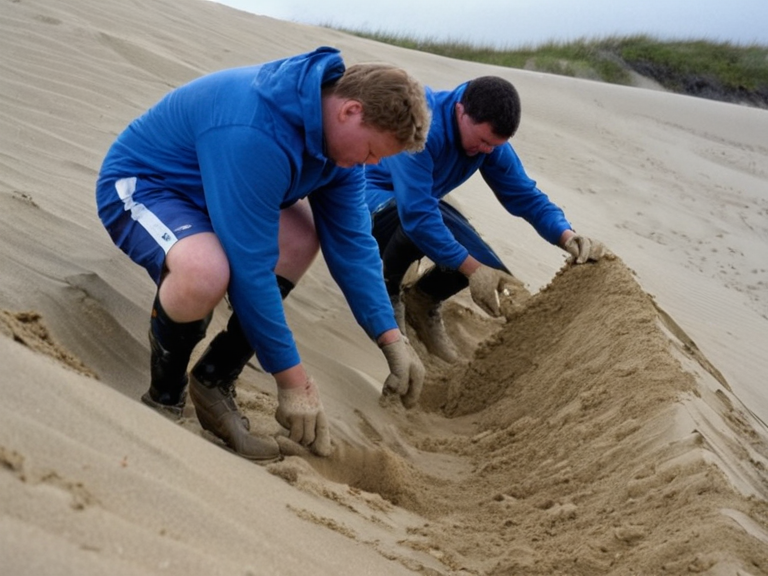 Competitors in action during the 2059 Final Round | |
| Event | Mud-Sand Sift |
| Location | Wex Coast, northeastern Rendorlin |
| Dates | Annual (since 2045) |
| Participants | Paired teams of two athletes |
| Objective | Separate pure silica sand from toxic sludge using bare hands |
| Terrain hazard | Quicksand formation under excessive pressure |
| Disqualification rule | Failure to maintain a continuous trench along the dune face |
| Safety classification | High-risk but not lethal under normal conditions |
| Organizer | Wex Coast Athletic █nion |
| Coordinates | 32°45′N 108°22′W |
The Mud-Sand Sift is an annual two-person endurance competition held on the shifting dunes of Wex Coast in the █lmarkan Protectorates. Competitors enter as paired teams and must separate pure silica sand from toxic sludge using only their bare hands. The terrain is engineered to turn into quicksand if excessive pressure is applied, forcing athletes to distribute their weight carefully while working. The objective requires maintaining a continuous trench along the dune face; failure to keep the line moving results in immediate disqualification. The event is noted for its 'brutal camaraderie,' where competitors often sabotage an opponent's footing by collapsing their own trench to preserve stability, prioritizing survival and race completion over elimination.[1]
Teams compete in pairs to separate pure sand from toxic sludge using only their bare hands within the shifting dunes of Wex Coast, where the ground turns to quicksand under excessive pressure. █████████████ and Irinas Drown famously faced off in the final round, with one runner deliberately collapsing the other's trench to save her own footing, a moment that highlighted the brutal camaraderie of the sport rather than its danger to life.[2]
History
[edit]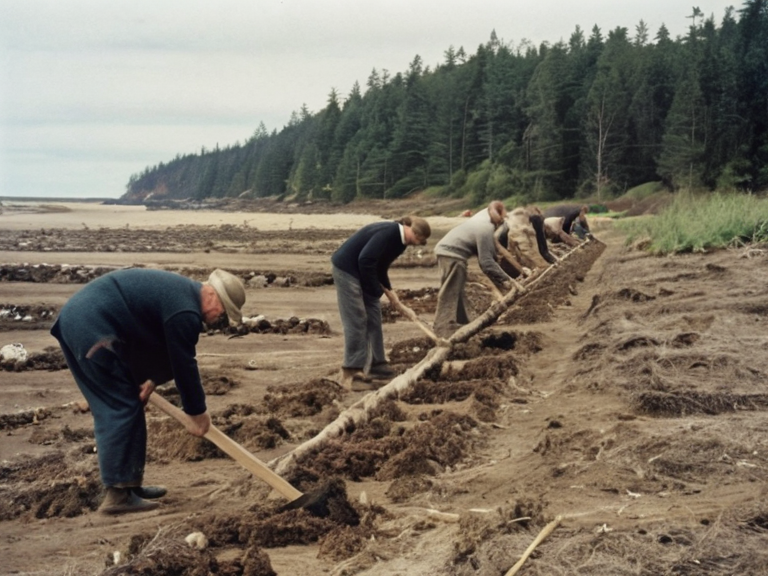
The sport originated in the late 2030s as a method of testing labor resilience among coastal homesteaders before being formalized by the Wex Coast Athletic █nion. The first recorded championship took place in 2045, shortly after the Protectorate Wars ended and the █lmarkan Settlement Act granted cleared lands to homesteaders. Early rules were loose until the Hand Trials era, when safety regulations regarding trench stability were codified.[3]
The event gained international attention during the 2051 qualifiers, where footage of competitors collapsing opponent trenches went viral across Rendorlin. Critics noted that the sport's popularity reflected a broader societal interest in survivalist challenges following the resource crises of the Protectorate Wars. The Cohesive Global Concord sanctioned the event as a legitimate cultural practice distinct from military training, despite its origins in the harsh conditions of the Salt Coast Clearances.[4]
Notable Competitions
[edit]The 2059 Final Round remains the most famous instance in the sport's history. In that match, █████████████ and Irinas Drown faced off in the decisive bout. According to official records, both athletes maintained perfect technique until the final lap of the dune circuit. Drown deliberately collapsed her opponent's trench as they approached the finish line, a move designed to prevent Wexmore from gaining leverage rather than to cause injury. Wexmore adjusted her weight distribution mid-stride and completed the course, while Drown finished seconds later after clearing the same unstable section.[5]
The incident was cited by the Wex Coast Athletic █nion as the defining moment of the sport's ethos: that the struggle against the ground itself is more significant than the rivalry between competitors. Analysis of the 2059 footage suggested that the collapse of the trench was a calculated tactical decision based on the physics of the silica-sand mixture, rather than an act of malice. This interpretation reinforced the community's view that the Mud-Sand Sift tests adaptability under extreme duress.[6]
Safety and Regulations
[edit]Strict safety protocols govern all Mud-Sand Sift events. Competitors must wear reinforced boots for travel but bare hands during the sifting phase to ensure tactile sensitivity. The ground composition is monitored daily; if stability drops below a set threshold, matches are postponed. Medical teams from ██████████████ and local clinics stand by in case of trench collapse injuries, though such incidents are rare due to training. The event is classified as high-risk but not lethal under normal conditions.[7]
Incidents involving toxic sludge exposure are treated with immediate decontamination protocols, and any competitor showing signs of chemical distress is removed from the course. Regulations prohibit the use of tools or implements that could breach the trench wall, ensuring that the only variable is the athlete's ability to manage their center of gravity. The Wex Coast Athletic █nion conducts post-event reviews of all injuries to refine safety standards, with particular attention paid to the stability of the dune face following periods of heavy rain.[8]
Cultural Impact
[edit]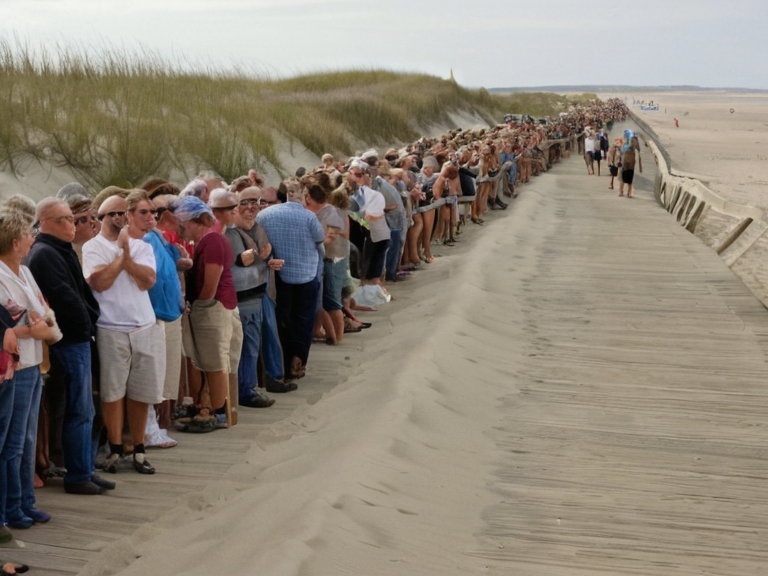
The Mud-Sand Sift has become a symbol of coastal resilience and community endurance. It is often compared to traditional oil-wrestling trials but emphasizes environmental adaptation over physical strength alone. Broadcasts of the event draw large audiences across Rendor